
CBSE Class 10 Science Question Paper 2026 (31/3/1) with Solutions
The complete CBSE Class 10 Science board paper of 2026, Q.P. code 31/3/1: all 39 questions exactly as set, with marks. 22 solutions are free below. The Class 10 Science PYQ Book: Solved Board Papers 2016-2026 (CBSE) solves all 17 papers in full and sorts every question chapter-wise.
Subject expert: Khushbu Gupta, B.Sc., M.Sc. Physics, B.Ed. · 8+ years teaching


Free: NCERT solutions for Class 10 Science →
Question paper
Jump to: Question paperSolutions
2026 · Q.P. Code 31/3/1
Maximum marks: 80
Section A · Biology
Pravin was given a list of characteristics associated with the process of anaerobic respiration in humans, in the table given below:

Which of the above characteristics is/are related to the above process?
Observe the figure given below and identify the incorrect step for the activity set-up:
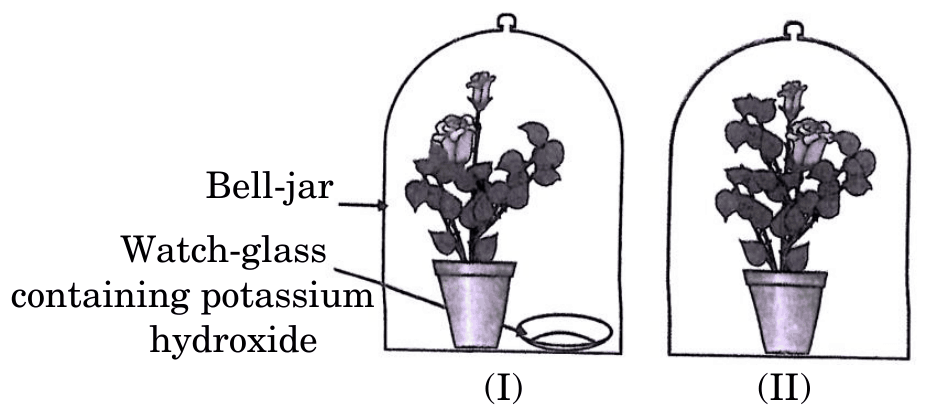
Walking in a straight line and riding a bicycle are activities which are possible due to coordination of which part of the brain?
| Part of the brain | Name of the area | |
|---|---|---|
| (A) | Fore-brain | Cerebrum |
| (B) | Mid-brain | Cerebellum |
| (C) | Hind-brain | Cerebellum |
| (D) | Hind-brain | Medulla |
In a synapse, the chemical signal is transmitted from:
Organisms of a higher trophic level which feed on several types of organisms belonging to a lower trophic level form the:
In accumulation of toxic substances at higher trophic levels of an ecosystem through the food chain, which of the following organisms is affected the most?
The growth of tendrils in grapes plants is due to:
Assertion (A): Natural replenishment of soil will not take place in absence of microbes.
Reason (R): Microbes, comprising of bacteria and fungi, break down dead remains and waste products of organisms, and they go into the soil.
Assertion (A): The basic filtration unit in the kidneys, like in the lungs, is a cluster of very thin-walled blood capillaries.
Reason (R): Each capillary cluster in the kidney is associated with the cup-shaped end of a coiled tube called Bowman’s capsule.
(i) Chlorofluorocarbons (CFCs) have been linked to depletion of ozone layer. In 1987, the United Nations Environment Programme (UNEP) succeeded in making an agreement. State this agreement.
(ii) What is the role of ozone in our atmosphere?
What kind of respiration provides more energy and why?
Separation of right side and left side of the heart is useful to keep oxygenated and deoxygenated blood from mixing. Various organisms have different types of heart.
(I) Fill in the blanks (i) to (iii) correctly according to the type of organisms and their evolution in terms of blood circulation:
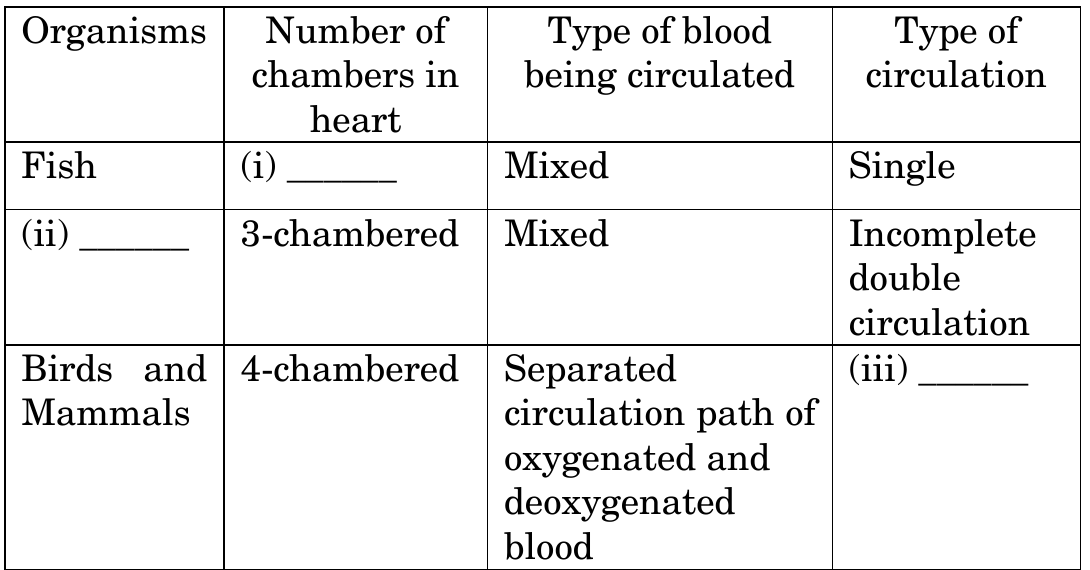
(II) Which type of circulation is most efficient?
In xylem tissue, vessels and tracheids of the roots, stems and leaves are interconnected to form a continuous system of water-conducting channels reaching all parts of the plant. Explain how this is achieved.
Show the cross and observations made by Mendel when he crossed pure tall pea plant with a pure short pea plant to get F1 progeny.
Read the following passage and answer the questions that follow:
Not all plants carry out photosynthesis by the same mechanism. In most plants, it depends directly on gaseous carbon dioxide that diffuses into the leaf. However, some plants can store carbon dioxide in the vacuole of the leaf cells as part of a complex carbon compound. This compound is transported to the chloroplast and releases carbon dioxide when required for photosynthesis. This special mechanism is believed to have evolved as an adaptation in such plants which do not open stomata during the daytime to conserve water for survival in dry conditions (desert conditions).
Attempt either (a) or (b):
(a) (i) Which process in these plants is minimised to help the plants survive in dry conditions? (ii) Which part of the leaf is responsible for exchange of gases during photosynthesis?
OR
(b) (i) List the events that occur during the process of photosynthesis. (ii) When are such desert plants likely to take in carbon dioxide from the environment, unlike other plants? (iii) Draw a labelled diagram of stomata with open stomatal pore.
(a) Observe the given diagram and answer the questions that follow:
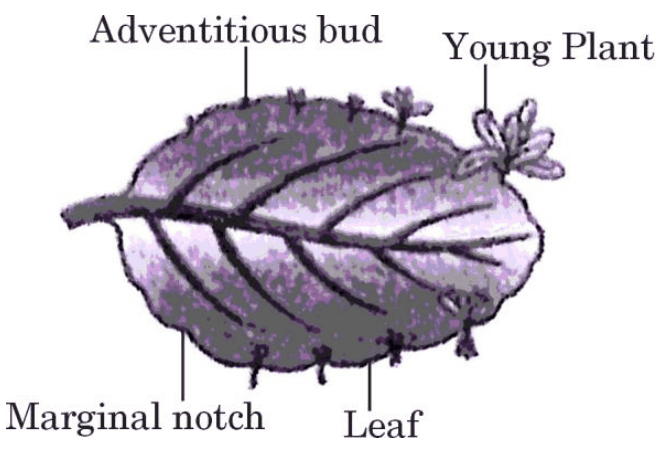
(i) Give the name of the structure and type of reproduction shown in the above diagram.
(ii) State one advantage and one disadvantage of the above mentioned method of reproduction.
(iii) Give reason: Asexual reproduction lacks genetic variation.
(iv) Why have higher organisms resorted to sexual reproduction in spite of its complexity?
(b) Observe the given diagram and answer the questions that follow:
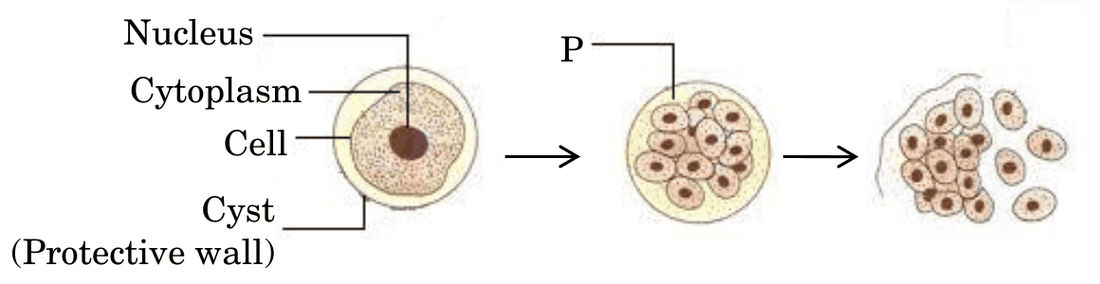
(i) Give the name and type of reproduction shown in the above diagram.
(ii) Comment on the processes taking place in stage P.
(iii) Name an organism which reproduces by the above mentioned method.
(iv) Name the method that can be used to raise plants that have lost their capacity to produce seeds. List any two advantages of growing plants by such a method.
Section B · Chemistry
Which of the following is an example of a displacement reaction?
To a small amount of copper oxide in a beaker, when we add dilute hydrochloric acid slowly with stirring, the change in the colour of the solution is due to the formation of:
In the following equation: x KI + H2O2 → I2 + y KOH, x and y respectively are:
Consider the structures ‘X’ and ‘Y’ given below:
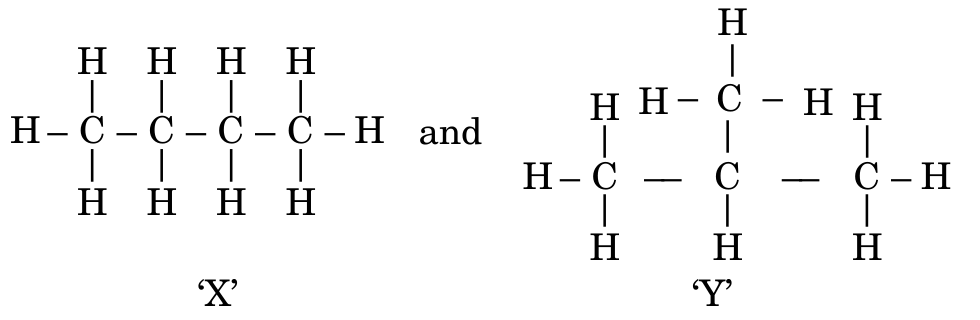
Which of the following statements are correct?
(i) ‘X’ and ‘Y’ are homologues.
(ii) ‘X’ and ‘Y’ have the same structural formula, but different molecular formula.
(iii) ‘X’ and ‘Y’ have the same molecular formula, but different structural formula.
(iv) ‘X’ and ‘Y’ are structural isomers.
The reaction of calcium with cold water is:
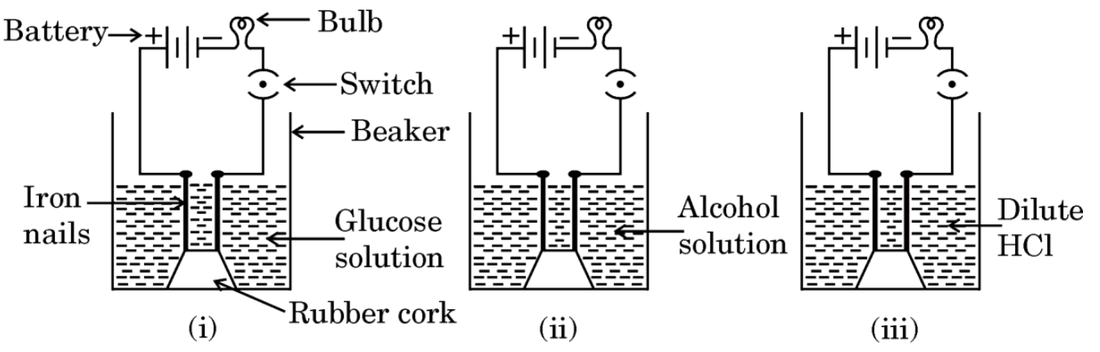
In which case/cases will the bulb glow considering that all other connections of electric circuit are complete and working?
When zinc reacts with NaOH, the product formed is:
Assertion (A): There are large number of compounds with many carbon atoms linked to each other.
Reason (R): Carbon-Carbon bond is very strong and stable.
Show the formation of the following ionic compounds by transfer of electrons between the combining atoms: (i) Sodium oxide (Na2O) (ii) Magnesium chloride (MgCl2) (Given: Atomic number: Na = 11, Mg = 12, O = 8, Cl = 17) 1+1
2 g of green coloured crystals of ferrous sulphate are heated in a dry boiling tube. Name the type of chemical reaction taking place. Write the balanced chemical equation for the reaction. Is this an exothermic or an endothermic reaction?
(a) Give reasons:
(i) For dilution of an acid, acid is added into water and not water into acid.
(ii) Dry HCl gas does not turn blue litmus red whereas dilute hydrochloric acid does.
(iii) Blue colour of Copper(II) sulphate crystals turns white on heating. 3×1
(b) Write the preparation of the following compounds with balanced chemical equation: (i) NaOH by chlor-alkali process (ii) Baking Soda (iii) Plaster of Paris 3×1
Read the following passage and answer the questions that follow:
An electrochemical process is used for refining metals by selectively dissolving and depositing them through electrolysis. Electrolytic refining is used for metals like Copper, Zinc, Tin, Nickel, Silver and Gold.
(a) Define anode mud. 1
(b) In electrolytic refining of copper, name the anode and the cathode. 1
(c) (i) With the help of chemical equations, show the extraction of copper from its ore Cu2S. 2
OR
(c) (ii) Draw a neat and labelled diagram showing electrolytic refining of copper. 2
(a) (i) What is homologous series? Which two of the following organic compounds belong to the same homologous series? C2H4, C4H10, C3H4, C4H8
(ii) Write the product(s) in the following reactions: (I) CH3–CH2–OH + CH3COOH →(Acid) (II) C2H5OH + O2 →(Burning)
(iii) Why does micelle formation take place when soap is added to water? 2+2+1
(b) (i) Name the following compounds:
(I) 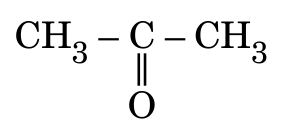 (II)
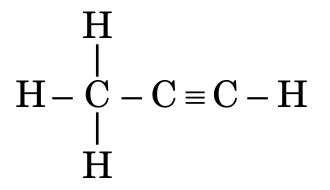
(ii) Name the reaction which is commonly used in the conversion of vegetable oils to fats.
(iii) Why is the melting point of C4H10 higher than C3H8?
(iv) What happens when a piece of sodium is dropped into ethanol?
(v) Write the products in the following reaction: CH3COOC2H5 + NaOH → 5×1
Section C · Physics
The correct way to connect an ammeter and a voltmeter in an electric circuit is:
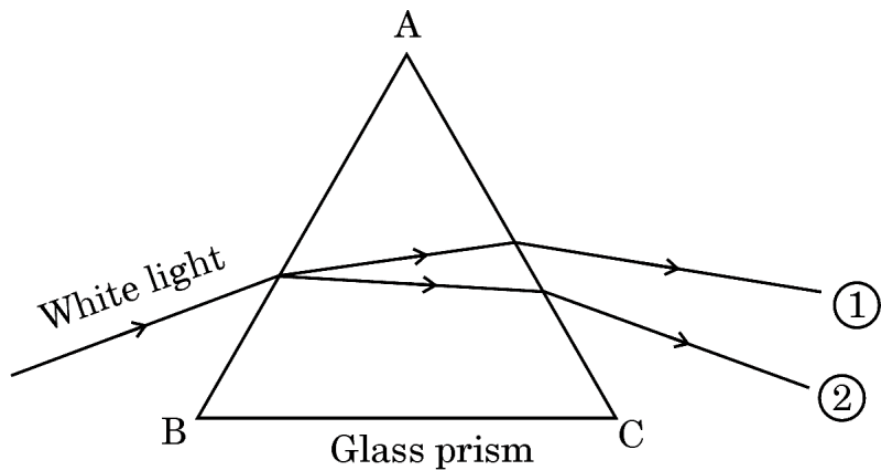
Observe the given ray diagram showing refraction through a prism and choose the correct option for colour of rays 1 and 2:
Assertion (A): The needle of a compass, kept in an external magnetic field, always aligns itself in the North-South direction of the Earth.
Reason (R): The behaviour of the needle of the compass is similar to the behaviour of a freely suspended bar magnet.
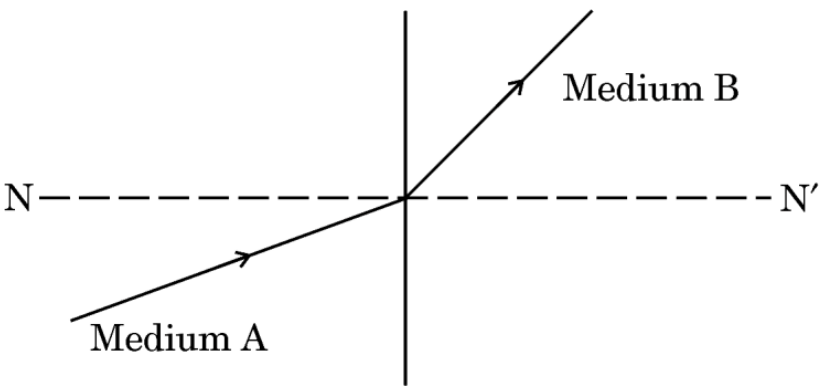
A ray of light enters into medium B from medium A as shown in the given figure:
(a) Which one of these two media is optically denser than the other medium? Justify your answer.
(b) If the speed of light in medium A is vA and in medium B is vB, then what is the refractive index of medium B with respect to medium A?
(a) What happens when light is scattered from (i) very fine particles and (ii) very large size particles of medium? Justify your answer in each case.
(b) With the help of a ray diagram, explain any phenomenon of formation of spectrum in nature.
Study the given diagram and answer the questions that follow:
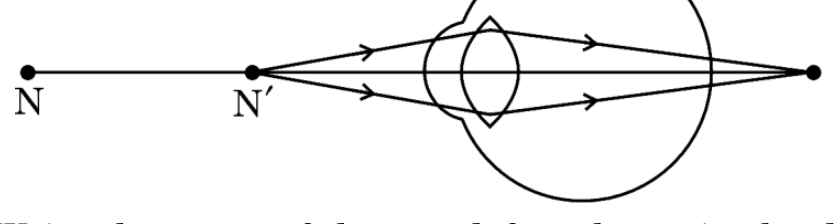
(a) Write the name of the eye defect shown in the diagram. Where is the image formed in this eye defect with respect to the retina of the eye?
(b) List two causes of this eye defect.
(c) With the help of a diagram, show how this eye defect of vision is corrected.
(a) Name a device which is used to: (i) Maintain a constant potential difference in a circuit. (ii) Change the electric current in an electric circuit.
(b) When the potential difference between the terminals of an electric heater is 110 V, a current of 5 A flows through it. What will be the value of current flowing through it when the potential difference is increased to 220 V?
Consider the given electric circuit:
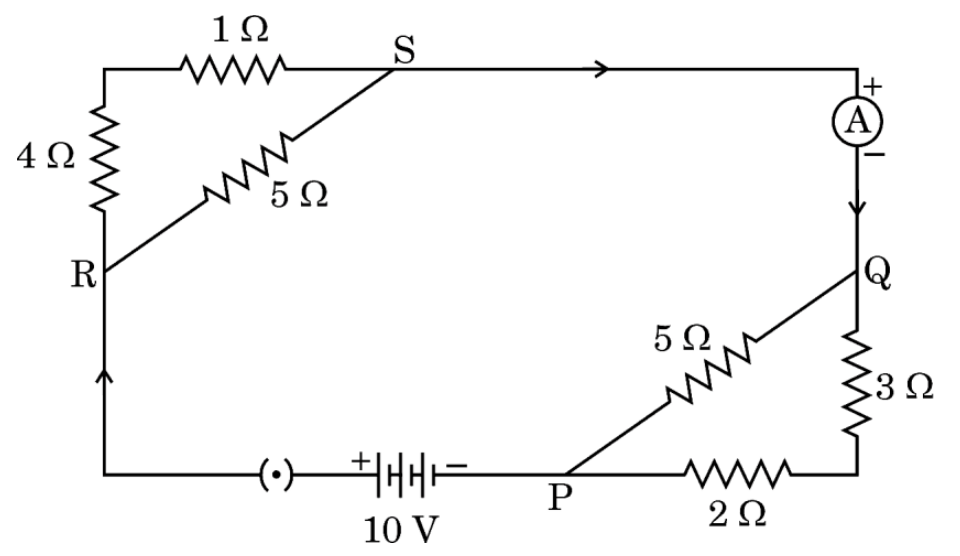
Calculate the following: (a) Total resistance of the circuit (b) The electric current drawn from the battery (c) Potential difference between points P and Q
The variation of image distance (v) with the object distance (u) for a convex lens is given in the following observation table. Analyse it and answer the questions given below:
| S. No. | 1 | 2 | 3 | 4 | 5 | 6 |
|---|---|---|---|---|---|---|
| u (cm) | −150 | −75 | −50 | −37.5 | −30 | −15 |
| v (cm) | +30 | +37.5 | +50 | +75 | +150 | +37.5 |
(a) Without calculation, find out the focal length of the given convex lens. Justify your answer. 1
(b) Which one of the observations given in the table is not correct and why? 1
(c) (i) Find out the value of magnification for u = –30 cm. Write the nature of the image formed. Give reason for your answer. 2
OR
(c) (ii) Analyse the data given in the table above and draw the labelled ray diagram for u = –30 cm and v = 150 cm. 2
(a) (i) What is a solenoid? Draw a diagram showing the magnetic field pattern due to a current-carrying solenoid (inside and outside).
(ii) Name any two factors on which the magnitude of the magnetic field due to a current-carrying solenoid depends.
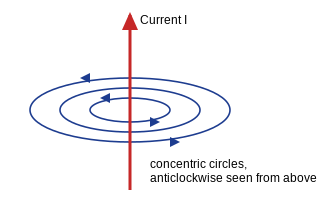
(iii) A current-carrying solenoid is stretched and converted into a straight wire carrying current. Draw a diagram showing the magnetic field pattern around it and mark the direction of the magnetic field.
(b) (i) With the help of a diagram, show that a current-carrying conductor placed in an external magnetic field, experiences a force. Indicate the direction of the field, current and force clearly.
(ii) The diagram given below shows an electron moving in a uniform magnetic field.
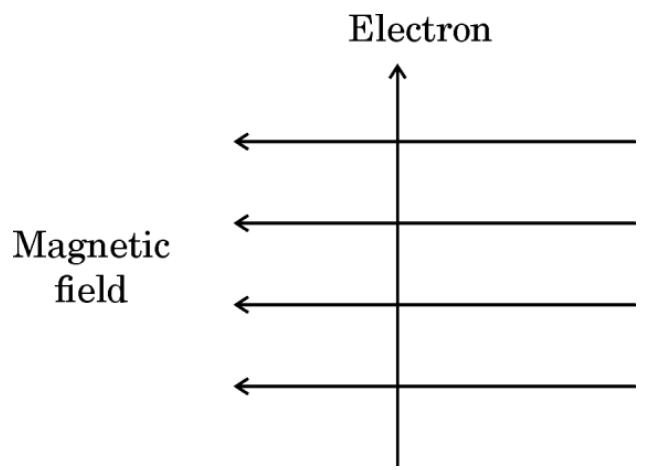
(I) What will be the direction of the force acting on the electron? (II) What will happen to the direction of the force acting on the electron, if the direction of the magnetic field as well as the direction of motion of the electron, both are reversed?
Solutions: CBSE 2026 · 31/3/1
Answer: (B) (i) and (iii)
In humans, anaerobic respiration takes place in muscle cells during heavy exercise, when oxygen is in short supply. Pyruvate is converted into lactic acid, a 3-carbon molecule. It does not need oxygen, so (ii) is wrong.
Answer: (C) Hind-brain — cerebellum
The cerebellum, part of the hind-brain, gives precision to voluntary actions and maintains posture and balance, which are needed for walking straight or riding a bicycle.
Answer: (A) Food web
When an organism feeds on several types of organisms, many food chains get interlinked, forming a branching network called a food web.
Answer: (D)
When a tendril touches a support, the part in contact with the support does not grow as fast as the part away from it. Faster growth on the far side makes the tendril coil around the support.
Answer: (B)
Both are true. The filtration unit is a cluster of thin-walled capillaries (glomerulus), and each cluster sits in the cup-shaped Bowman's capsule. But R only describes the structure; it does not explain why the filtration unit is a cluster of thin-walled capillaries.
Aerobic respiration (in the presence of oxygen) provides much more energy than anaerobic respiration.
Reason: in aerobic respiration glucose is broken down completely into carbon dioxide and water in the mitochondria, so almost all the energy stored in it is released. In anaerobic respiration glucose is broken down only partly (into ethanol + CO2 or lactic acid), so much less energy is released.
Water moves up through this continuous system of xylem channels in two ways:
1. Root pressure: cells of the root in contact with the soil actively take up ions. This creates a difference in ion concentration between the root and the soil, so water moves into the root from the soil. This makes a steady column of water that is pushed upwards.
2. Transpiration pull: water evaporates from the leaves through the stomata (transpiration). The water lost is replaced by water from the xylem vessels of the leaf. This creates a suction that pulls water up from the xylem cells of the roots through the continuous column.
Root pressure is important at night; during the day, transpiration pull is the major driving force for the movement of water in the xylem.
(a) (i) Transpiration (loss of water through stomata) is minimised by keeping the stomata closed during the day.
(ii) The stomata — tiny pores on the surface of the leaf — are where gases are exchanged during photosynthesis.
OR (b) (i) Events of photosynthesis: (1) absorption of light energy by chlorophyll; (2) conversion of light energy into chemical energy and splitting of water molecules into hydrogen and oxygen; (3) reduction of carbon dioxide to carbohydrates.
(ii) At night, when they open their stomata; the CO2 taken in is stored and used during the day.
(iii) 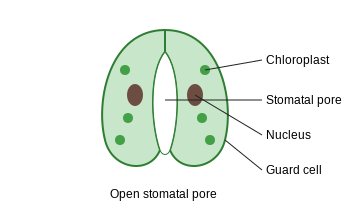
(i) Multiple fission — a type of asexual reproduction.
(ii) In stage P the cell is enclosed in a protective wall (cyst). Inside it the nucleus divides repeatedly to form many nuclei; a little cytoplasm collects around each, forming many daughter cells. When the cyst breaks, the daughter cells are released.
(iii) Plasmodium (the malarial parasite).
(iv) Vegetative propagation (by layering, grafting or cutting), as in banana, orange, rose and jasmine. Advantages: (1) the plants bear flowers and fruits earlier than plants grown from seed; (2) all the new plants are genetically similar to the parent, so they keep its desirable characters.
Answer: (C)
CuO + 2HCl → CuCl2 + H2O. Copper(II) chloride makes the solution blue-green. (A metal oxide reacts with an acid to give salt and water.)
Answer: (D) (iii) and (iv)
Both X (a straight chain) and Y (a branched chain) have 4 C and 10 H atoms: C4H10 (butane). Same molecular formula but different structures, so they are structural isomers, not homologues (homologues differ by –CH2–).
Answer: (D) Case (iii) only
Dilute HCl produces H+ (H3O+) and Cl− ions in water, which carry current, so the bulb glows. Glucose and alcohol do not form ions in solution, so they do not conduct electricity.
Answer: (A)
Both are true and R explains A. Because the C–C bond is very strong and stable, carbon can link with other carbon atoms to form long chains, branched chains and rings (catenation), giving a very large number of compounds.
Type: thermal decomposition reaction (one reactant breaks down into simpler products on heating). The green crystals first lose their water of crystallisation, then decompose; a smell of burning sulphur is noticed.
(ferrous sulphate → ferric oxide + sulphur dioxide + sulphur trioxide)
It is an endothermic reaction, because heat has to be supplied continuously for the decomposition.
(i) Electricity is passed through brine (aqueous NaCl); NaOH forms near the cathode, chlorine at the anode and hydrogen at the cathode:
(ii) Baking soda is made from sodium chloride:
(iii) Plaster of Paris is made by heating gypsum at 373 K:
(i) A homologous series is a series of carbon compounds that have the same functional group and similar chemical properties, in which successive members differ by a –CH2– unit (14 u in mass).
C2H4 and C4H8 belong to the same series — the alkenes (CnH2n).
(ii) (I) Ester and water (esterification):
(II) Carbon dioxide and water, with heat and light (combustion):
(iii) A soap molecule has an ionic (hydrophilic) end that dissolves in water and a long hydrocarbon (hydrophobic) tail that dissolves in oil. In water, the tails keep away from water and cluster together inside, while the ionic ends face the water. This cluster is a micelle; oily dirt collects in its centre and is washed away.
Answer: (C)
An ammeter measures the current through a component, so it is joined in series. A voltmeter measures the potential difference across a component, so it is joined in parallel across it.
Answer: (D)
A is false: in an external magnetic field (e.g. near a bar magnet) the needle aligns along that field, not necessarily north–south. R is true: a compass needle is a small bar magnet free to rotate.
(i) Very fine particles (such as air molecules) scatter mainly light of shorter wavelengths — the blue end of the spectrum. That is why the clear sky appears blue.
(ii) Large particles (larger than the wavelength of light, such as water droplets in clouds) scatter all wavelengths almost equally, so the scattered light appears white. That is why clouds look white.
Justification: the colour of scattered light depends on the size of the scattering particles.
(a) Hypermetropia (far-sightedness). Rays from a nearby object meet behind the retina, so near objects look blurred.
(b) Causes: (1) the focal length of the eye lens is too long; (2) the eyeball has become too small.
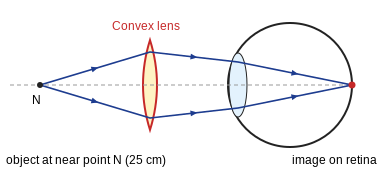
(c) It is corrected with a convex (converging) lens of suitable power. The lens gives the extra focusing power needed, so the image of a near object is formed on the retina:
Between R and S: the 4 Ω and 1 Ω are in series (4 + 1 = 5 Ω), and this is in parallel with the 5 Ω:
Between Q and P: the 3 Ω and 2 Ω are in series (5 Ω), in parallel with the 5 Ω: R2 = 2.5 Ω.
(a) R1 and R2 are in series with the battery: R = 2.5 + 2.5 = 5 Ω.
(b)
(c)
(i) A solenoid is a coil of many circular turns of insulated copper wire wrapped closely in the shape of a cylinder. Its field is like that of a bar magnet; inside, the field lines are parallel straight lines, showing a uniform field.
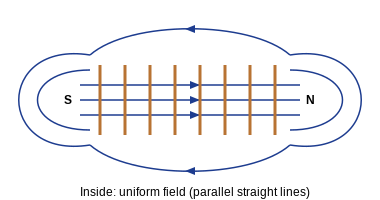
(ii) (1) The number of turns in the solenoid; (2) the strength of the current in it. (Also the nature of the core material.)
(iii) Around a straight current-carrying wire, the field lines are concentric circles centred on the wire. By the right-hand thumb rule, for current flowing upward the field is anticlockwise when seen from above.
Get every solution for all 17 papers
- Every board question of every chapter, each fully solved the way the board gives marks
- 17 complete board papers, each followed by its solutions
- Weightage and most-asked topics for every chapter
- Instant PDF download, colour and black & white print copies
Revising the chapter first? Complete Science Notes for Class 10 (NCERT 2026-27) →
What you get in the pack
- Questions from 126 CBSE papers, 2016 to 2026: every set code available
- Complete: 2405 different questions and parts from all set codes, 13 chapters and 17 full papers
- Part A: all 13 chapters, questions sorted chapter-wise and by marks
- Year-wise weightage table and most-asked topics for every chapter
- Part B: 17 full board papers, each followed by its complete solutions, for timed practice
- Answers written to the CBSE marking-scheme points, with labelled diagrams drawn in full
- Questions on topics out of the board syllabus flagged
All chapters in this pack
- PYQ Ch 1 Chemical Reactions and Equations
- PYQ Ch 2 Acids, Bases and Salts
- PYQ Ch 3 Metals and Non-metals
- PYQ Ch 4 Carbon and its Compounds
- PYQ Ch 5 Life Processes
- PYQ Ch 6 Control and Coordination
- PYQ Ch 7 How do Organisms Reproduce
- PYQ Ch 8 Heredity
- PYQ Ch 9 Light Reflection and Refraction
- PYQ Ch 10 The Human Eye and the Colourful World
- PYQ Ch 11 Electricity
- PYQ Ch 12 Magnetic Effects of Electric Current
- PYQ Ch 13 Our Environment
- Board Paper 2026 Set 31-2-1 with Solutions
- Board Paper 2026 Set 31-3-1 with Solutions
- Board Paper 2025 Set 31-1-1 with Solutions
- Board Paper 2025 Set 31-2-1 with Solutions
- Board Paper 2024 Set 31-4-1 with Solutions
- Board Paper 2024 Set 31-5-1 with Solutions
- Board Paper 2023 Set 31-2-1 with Solutions
- Board Paper 2023 Set 31-4-1 with Solutions
- Board Paper 2022 Term 2 Set 31-1-1 with Solutions
- Board Paper 2022 Term 2 Set 31-3-1 with Solutions
- Board Paper 2020 Set 31-2-1 with Solutions
- Board Paper 2020 Set 31-4-1 with Solutions
- Board Paper 2019 Set 31-2-1 with Solutions
- Board Paper 2019 Set 31-4-1 with Solutions
- Board Paper 2018 Set 31-1 with Solutions
- Board Paper 2017 Set 3 with Solutions
- Board Paper 2016 Set 31-1 with Solutions