
CBSE Class 10 Science Question Paper 2018 (31/1) with Solutions
The complete CBSE Class 10 Science board paper of 2018, Q.P. code 31/1: all 27 questions exactly as set, with marks. 17 solutions are free below. The Class 10 Science PYQ Book: Solved Board Papers 2016-2026 (CBSE) solves all 17 papers in full and sorts every question chapter-wise.
Subject expert: Khushbu Gupta, B.Sc., M.Sc. Physics, B.Ed. · 8+ years teaching


Free: NCERT solutions for Class 10 Science →
Question paper
Jump to: Question paperSolutions
2018 · Q.P. Code 31/1
Maximum marks: 80
Section A
A Mendelian experiment consisted of breeding pea plants bearing violet flowers with pea plants bearing white flowers. What will be the result in F1 progeny?
Write the energy conversion that takes place in a hydropower plant.
not in 2026-27 syllabusA compound ‘X’ on heating with excess conc. sulphuric acid at 443 K gives an unsaturated compound ‘Y’. ‘X’ also reacts with sodium metal to evolve a colourless gas ‘Z’. Identify ‘X’, ‘Y’ and ‘Z’. Write the equation of the chemical reaction of formation of ‘Y’ and also write the role of sulphuric acid in the reaction.
(a) Name one gustatory receptor and one olfactory receptor present in human beings. (b) Write a and b in the given flow chart of neuron through which information travels as an electrical impulse: Dendrite → a → b → End point of Neuron
If the image formed by a spherical mirror for all positions of the object placed in front of it is always erect and diminished, what type of mirror is it? Draw a labelled ray diagram to support your answer.
Decomposition reactions require energy either in the form of heat or light or electricity for breaking down the reactants. Write one equation each for decomposition reactions where energy is supplied in the form of heat, light and electricity.
(a) 2 mL of sodium hydroxide solution is added to a few pieces of granulated zinc metal taken in a test tube. When the contents are warmed, a gas evolves which is bubbled through a soap solution before testing. Write the equation of the chemical reaction involved and the test to detect the gas. Name the gas which will be evolved when the same metal reacts with dilute solution of a strong acid.
(b) The pH of a salt used to make tasty and crispy pakoras is 14. Identify the salt and write a chemical equation for its formation. List its two uses.
(a) Why are most carbon compounds poor conductors of electricity? (b) Write the name and structure of a saturated compound in which the carbon atoms are arranged in a ring. Give the number of single bonds present in this compound.
Name the hormones secreted by the following endocrine glands and specify one function of each: (a) Thyroid (b) Pituitary (c) Pancreas
Write one main difference between asexual and sexual mode of reproduction. Which species is likely to have comparatively better chances of survival – the one reproducing asexually or the one reproducing sexually? Give reason to justify your answer.
(a) State the laws of refraction of light. Explain the term ‘absolute refractive index of a medium’ and write an expression to relate it with the speed of light in vacuum.
(b) What is meant by power of a lens? Write its SI unit. A student uses a lens of focal length 40 cm and another of –20 cm. Write the nature and power of each lens.
(a) Show how would you join three resistors, each of resistance 9 Ω so that the equivalent resistance of the combination is (i) 13.5 Ω (ii) 6 Ω?
(b) (a) Write Joule’s law of heating. (b) Two lamps, one rated 100 W; 220 V, and the other 60 W; 220 V, are connected in parallel to electric mains supply. Find the current drawn by two bulbs from the line, if the supply voltage is 220 V.
(a) List the factors on which the resistance of a conductor in the shape of a wire depends. (b) Why are metals good conductors of electricity whereas glass is a bad conductor of electricity? Give reason. (c) Why are alloys commonly used in electrical heating devices? Give reason.
Students in a school listened to the news read in the morning assembly that the mountain of garbage in Delhi, suddenly exploded and various vehicles got buried under it. Several people were also injured and there was traffic jam all around. In the brain storming session the teacher also discussed this issue and asked the students to find out a solution to the problem of garbage. Finally they arrived at two main points – one is self management of the garbage we produce and the second is to generate less garbage at individual level. (a) Suggest two measures to manage the garbage we produce. (b) As an individual, what can we do to generate the least garbage? Give two points. (c) List two values the teacher instilled in his students in this episode.
What is a dam? Why do we seek to build large dams? While building large dams, which three main problems should particularly be addressed to maintain peace among local people? Mention them.
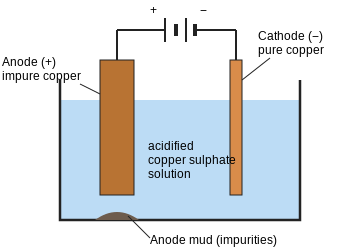
not in 2026-27 syllabus(a) Write the steps involved in the extraction of pure metals in the middle of the activity series from their carbonate ores. (b) How is copper extracted from its sulphide ore? Explain the various steps supported by chemical equations. Draw labelled diagram for the electrolytic refining of copper.
(a) The modern periodic table has been evolved through the early attempts of Dobereiner, Newland and Mendeleev. List one advantage and one limitation of all the three attempts. (b) Name the scientist who first of all showed that atomic number of an element is a more fundamental property than its atomic mass. (c) State Modern periodic law.
not in 2026-27 syllabus(a) (a) Mention any two components of blood. (b) Trace the movement of oxygenated blood in the body. (c) Write the function of valves present in between atria and ventricles. (d) Write one structural difference between the composition of artery and veins.
(b) (a) Define excretion. (b) Name the basic filtration unit present in the kidney. (c) Draw excretory system in human beings and label the following organs of excretory system which perform following functions: (i) form urine. (ii) is a long tube which collects urine from kidney. (iii) store urine until it is passed out.
(a) Write the function of following parts in human female reproductive system: (i) Ovary (ii) Oviduct (iii) Uterus (b) Describe in brief the structure and function of placenta.
(a) (a) A student is unable to see clearly the words written on the black board placed at a distance of approximately 3 m from him. Name the defect of vision the boy is suffering from. State the possible causes of this defect and explain the method of correcting it. (b) Why do stars twinkle? Explain.
(b) (a) Write the function of each of the following parts of human eye: (i) Cornea (ii) Iris (iii) Crystalline lens (iv) Ciliary muscles (b) Why does the sun appear reddish early in the morning? Will this phenomenon be observed by an astronaut on the Moon? Give reason to justify your answer.
(a) State Fleming’s left hand rule. (b) Write the principle of working of an electric motor. (c) Explain the function of the following parts of an electric motor. (i) Armature (ii) Brushes (iii) Split ring
not in 2026-27 syllabusSection B · Practical skills
A student added few pieces of aluminium metal to two test tubes A and B containing aqueous solutions of iron sulphate and copper sulphate. In the second part of her experiment, she added iron metal to another test tubes C and D containing aqueous solutions of aluminium sulphate and copper sulphate. In which test tube or test tubes will she observe colour change? On the basis of this experiment, state which one is the most reactive metal and why.
What is observed when a solution of sodium sulphate is added to a solution of barium chloride taken in a test tube? Write equation for the chemical reaction involved and name the type of reaction in this case.
List the steps of preparation of temporary mount of a leaf peel to observe stomata.
(a) Name the process by which an amoeba reproduces. Draw the various stages of its reproduction in a proper sequence.
(b) A student is viewing under a microscope a permanent slide showing various stages of asexual reproduction by budding in yeast. Draw diagrams of what he observes. (in proper sequence)
An object of height 4.0 cm is placed at a distance of 30 cm from the optical centre ‘O’ of a convex lens of focal length 20 cm. Draw a ray diagram to find the position and size of the image formed. Mark optical centre ‘O’ and principal focus ‘F’ on the diagram. Also find the approximate ratio of size of the image to the size of the object.
The values of current (I) flowing through a given resistor of resistance (R), for the corresponding values of potential difference (V) across the resistor are as given below:
| V (volts) | 0.5 | 1.0 | 1.5 | 2.0 | 2.5 | 3.0 | 4.0 | 5.0 |
|---|---|---|---|---|---|---|---|---|
| I (amperes) | 0.1 | 0.2 | 0.3 | 0.4 | 0.5 | 0.6 | 0.8 | 1.0 |
Plot a graph between current (I) and potential difference (V) and determine the resistance (R) of the resistor.
Solutions: CBSE 2018 · 31/1
All F1 plants will bear violet flowers (violet is dominant over white).
X = ethanol (C2H5OH); Y = ethene (CH2=CH2); Z = hydrogen (H2).
Conc. H2SO4 acts as a dehydrating agent — it removes water from ethanol.
A convex mirror.
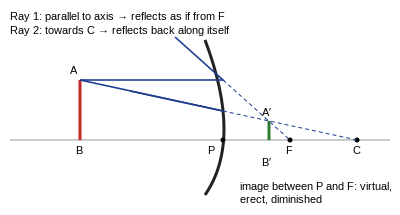
For any position of the object, the reflected rays diverge and appear to meet behind the mirror, between P and F — so the image is always virtual, erect and diminished.
Test: bring a burning candle near a soap bubble filled with the gas — it bursts with a pop sound, showing the gas is hydrogen.
With a dilute strong acid (e.g. H2SO4), zinc also gives hydrogen: Zn + H2SO4 → ZnSO4 + H2.
(a) Carbon compounds are covalent; the bonding in them does not give rise to ions, so there are no charged particles to carry current.
(b) Cyclohexane, C6H12 — six carbon atoms in a ring, each bonded to two hydrogen atoms (each CH2 joined to the next by a single bond).
Single bonds = 6 (C–C) + 12 (C–H) = 18.
Difference: asexual reproduction involves a single parent and no gametes; sexual reproduction involves two parents and the fusion of male and female gametes.
The species reproducing sexually has better chances of survival. Sexual reproduction combines DNA from two parents, producing more variations. If the environment changes, some variants are likely to survive, so the species continues.
Power of a lens is its degree of convergence or divergence of light rays; P = 1/f (f in metres). SI unit: dioptre (D).
f = −20 cm = −0.20 m: concave (diverging) lens, P = 1/(−0.20) = −5 D
(a) The heat produced in a resistor is directly proportional to the square of the current, the resistance and the time for which current flows: H = I2Rt.
(b) Total power = 100 + 60 = 160 W.
(a) (1) Segregate waste at home into biodegradable and non-biodegradable bins. (2) Compost biodegradable kitchen waste and send recyclable waste (plastic, paper, metal) for recycling.
(b) (1) Follow the 3 Rs — reduce, reuse and recycle; use cloth bags instead of plastic bags. (2) Avoid disposable and over-packaged products; repair and reuse things.
(c) Environmental awareness / responsibility and concern for society (civic sense, problem-solving).
(a) (1) Concentration of the ore (removal of gangue). (2) Calcination — heating strongly in limited air to convert the carbonate into oxide: ZnCO3 → ZnO + CO2. (3) Reduction of the oxide with carbon: ZnO + C → Zn + CO. (4) Refining of the impure metal (electrolytic refining).
(b) Copper glance (Cu2S) is roasted in air; part of it changes to oxide, which then reacts with the remaining sulphide to give copper (self-reduction):
2Cu2O + Cu2S →(heat) 6Cu + SO2
The impure copper is then refined electrolytically (impure copper as anode, pure copper strip as cathode, acidified copper sulphate as electrolyte):
(a) Plasma and red blood corpuscles (also white blood cells, platelets).
(b) Lungs → pulmonary vein → left atrium → left ventricle → aorta → arteries → capillaries in all body organs.
(c) Valves ensure that blood does not flow backwards when the atria or ventricles contract.
(d) Arteries have thick, elastic walls (blood flows under high pressure); veins have thin walls and have valves.
(a) (i) Ovary — produces eggs (one every month) and the hormones oestrogen and progesterone. (ii) Oviduct — carries the egg from the ovary to the uterus; fertilisation takes place here. (iii) Uterus — the embryo is implanted in its lining and develops into a foetus.
(b) Placenta: a special disc-like tissue embedded in the uterine wall. It has villi on the embryo's side, and on the mother's side there are blood spaces that surround the villi. This gives a large surface area for glucose and oxygen to pass from the mother's blood to the embryo, and for wastes from the embryo to pass into the mother's blood.
(a) (i) Cornea — light enters the eye through it; most of the refraction occurs at its outer surface. (ii) Iris — controls the size of the pupil and hence the amount of light entering the eye. (iii) Crystalline lens — fine-adjusts the focal length to focus the image on the retina. (iv) Ciliary muscles — change the curvature (focal length) of the lens (accommodation).
(b) In the morning the Sun is near the horizon; its light passes through thick layers of air and travels a long distance, so most of the blue light is scattered away and mainly red light reaches us.
No, an astronaut on the Moon will not see this: the Moon has no atmosphere, so there is no scattering of light (the sky there appears black).
Colour change in A, B and D:
• A: Al displaces Fe — pale green FeSO4 becomes colourless.
• B: Al displaces Cu — blue CuSO4 becomes colourless.
• D: Fe displaces Cu — blue solution turns pale green.
• C: no change (iron cannot displace aluminium).
Aluminium is the most reactive, because it displaces both iron and copper from their salt solutions.
1. Take a fresh leaf and remove a thin peel from its lower surface; keep it in water in a watch glass.
2. Stain it with a few drops of safranin for a minute; wash off the extra stain.
3. Place the peel on a clean slide and add a drop of glycerine.
4. Cover it gently with a cover slip using a needle (no air bubbles), remove extra glycerine with blotting paper and observe under a microscope.
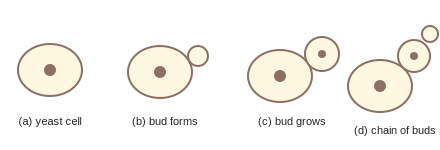
A small bud appears on the parent yeast cell, grows and may stay attached, forming a chain of buds; finally the buds separate as new yeast cells.
The points lie on a straight line through the origin (I ∝ V):
Slope = ΔI/ΔV = 1/R:
Get every solution for all 17 papers
- Every board question of every chapter, each fully solved the way the board gives marks
- 17 complete board papers, each followed by its solutions
- Weightage and most-asked topics for every chapter
- Instant PDF download, colour and black & white print copies
Revising the chapter first? Complete Science Notes for Class 10 (NCERT 2026-27) →
What you get in the pack
- Questions from 126 CBSE papers, 2016 to 2026: every set code available
- Complete: 2405 different questions and parts from all set codes, 13 chapters and 17 full papers
- Part A: all 13 chapters, questions sorted chapter-wise and by marks
- Year-wise weightage table and most-asked topics for every chapter
- Part B: 17 full board papers, each followed by its complete solutions, for timed practice
- Answers written to the CBSE marking-scheme points, with labelled diagrams drawn in full
- Questions on topics out of the board syllabus flagged
All chapters in this pack
- PYQ Ch 1 Chemical Reactions and Equations
- PYQ Ch 2 Acids, Bases and Salts
- PYQ Ch 3 Metals and Non-metals
- PYQ Ch 4 Carbon and its Compounds
- PYQ Ch 5 Life Processes
- PYQ Ch 6 Control and Coordination
- PYQ Ch 7 How do Organisms Reproduce
- PYQ Ch 8 Heredity
- PYQ Ch 9 Light Reflection and Refraction
- PYQ Ch 10 The Human Eye and the Colourful World
- PYQ Ch 11 Electricity
- PYQ Ch 12 Magnetic Effects of Electric Current
- PYQ Ch 13 Our Environment
- Board Paper 2026 Set 31-2-1 with Solutions
- Board Paper 2026 Set 31-3-1 with Solutions
- Board Paper 2025 Set 31-1-1 with Solutions
- Board Paper 2025 Set 31-2-1 with Solutions
- Board Paper 2024 Set 31-4-1 with Solutions
- Board Paper 2024 Set 31-5-1 with Solutions
- Board Paper 2023 Set 31-2-1 with Solutions
- Board Paper 2023 Set 31-4-1 with Solutions
- Board Paper 2022 Term 2 Set 31-1-1 with Solutions
- Board Paper 2022 Term 2 Set 31-3-1 with Solutions
- Board Paper 2020 Set 31-2-1 with Solutions
- Board Paper 2020 Set 31-4-1 with Solutions
- Board Paper 2019 Set 31-2-1 with Solutions
- Board Paper 2019 Set 31-4-1 with Solutions
- Board Paper 2018 Set 31-1 with Solutions
- Board Paper 2017 Set 3 with Solutions
- Board Paper 2016 Set 31-1 with Solutions