
Human Health and Disease: Class 12 PYQs 2016–2026 with solutions
All 61 CBSE board questions asked from Human Health and Disease in 17 board papers, with the year, set and marks of each. 32 are solved free below. The Class 12 Biology PYQ Book: Solved Board Papers 2016-2026 (CBSE) has every solution, all chapters and 19 full board papers.
Subject experts: Divya Harwani (B.Sc. Biotechnology, M.Sc. Biotechnology) and Jayant Sharma (B.Sc., B.Ed.)



Free: NCERT solutions for Class 12 Biology →
Human Health and Disease: board weightage
Board weightage 2016–2026
| Year | 2016 | 2017 | 2018 | 2019 | 2020 | 2022 | 2023 | 2024 | 2025 | 2026 |
|---|---|---|---|---|---|---|---|---|---|---|
| Questions | 1 | 3 | 4 | 7 | 7 | 7 | 7 | 9 | 9 | 7 |
| Marks | 3 | 8 | 7 | 22 | 12 | 17 | 22 | 22 | 19 | 20 |
Most asked topics
61 questions from 17 papers. Repeated questions are shown once with every year they were asked.
Jump to: 1 mark2 marks3 marks4 marks5 marks
1 mark: MCQ and Assertion–Reason
Which of the following is not a component of immune system ?
Solution
Answer: (C) Red Blood Cells
RBCs carry oxygen and have no role in immunity. Lymphocytes, antibodies (plasma proteins) and the bone marrow (a primary lymphoid organ) are all parts of the immune system.
What is the role of histamine released by mast cells ?
Solution
Answer: (B) Causes allergic symptoms
In allergy, IgE causes mast cells to release histamine and serotonin. These chemicals cause sneezing, watery eyes, running nose and difficulty in breathing.
In which of the following human diseases does self-defence mechanism attack self-cells ?
Solution
Answer: (D) Rheumatoid arthritis
It is an autoimmune disease. Thalassemia and phenylketonuria are genetic disorders, and filariasis is caused by a worm.
Assertion (A) : A person infected with malaria suffers from chill and high fever, recurring every three or four days.
Reason (R) : The parasite attacks the RBC resulting in their rupture and release of haemozoin.
Solution
Answer: (A) Both A and R are true and R is the correct explanation of A.
The toxin haemozoin, released when the RBCs burst, causes the chill and high fever.
Colostrum secreted by the mother's mammary glands in a human female during the initial days of lactation is rich in antibody :
Solution
Answer: (C) IgA
Colostrum gives the infant passive immunity through IgA antibodies.
In which of the following conditions/diseases is there a substantial increase in the activity of mast cells observed in the human body ?
Solution
Answer: (B) Allergy
In allergy, mast cells release histamine and serotonin, which cause the allergic symptoms.
The vector for dengue fever is :
Solution
Answer: (A) Female Aedes mosquito
Only female mosquitoes bite. Aedes also spreads chikungunya.
Assertion (A) : Virus-infected cells produce interferons.
Reason (R) : Interferons can cause inflammation of virus-infected cells.
Solution
Answer: (C) A is true but R is false.
Interferons do not cause inflammation. They protect the non-infected cells from further viral infection (cytokine barrier).
Select the options which is/are incorrect statement(s) with respect to T-lymphocytes in the human body.
(i) They are a type of white blood cells.
(ii) They are produced in bone marrow.
(iii) They remain active at all times in the body.
(iv) They mature in the bone marrow.
Assertion (A) : More and more children in metro cities of India suffer from allergies and asthma due to sensitivity to the environment.
Reason (R) : Modern day lifestyle and a protected environment in early life has resulted in lowering the immunity.
The main barrier that prevents the entry of micro-organisms into our body is
The diagnostic test that confirms typhoid in humans is
Name any two physiological barriers that provide innate immunity ?
Name two diseases whose spread can be controlled by the eradication of Aedes mosquitoes.
How do cytokine barriers provide innate immunity in humans ?
2 marks: very short answer
(a) Define Humoral immune response.
(b) Name any two types of antibodies found to give humoral immune response in humans.
Solution
(a) The humoral immune response is the antibody-mediated response. B-lymphocytes produce antibodies that circulate in the blood and lymph (body humours) and fight pathogens.
(b) Any two: IgA, IgM, IgE, IgG.
Explain how the immunity of a person is affected if there is atrophy (degeneration) of the thymus gland at an early stage of life.
Solution
Immunity will be greatly reduced, especially cell-mediated immunity. The thymus is a primary lymphoid organ: immature lymphocytes mature there into antigen-sensitive T-lymphocytes. Without it, T-cells will not develop and mature, so the person cannot fight infections well (and B-cell responses that need helper T-cells also suffer).
(i) What are interferons ? Explain their role in providing immunity to a person.
(ii) Which category of innate immunity defence barrier can interferons be classified into ?
Solution
(i) Interferons are proteins secreted by virus-infected cells. They protect non-infected cells from further viral infection.
(ii) Cytokine barriers.
Give an account of the generalised structure of an antibody molecule produced by B-lymphocytes in response to the pathogen.
Solution
• Each antibody molecule has four peptide chains: two small light chains and two longer heavy chains, so it is represented as H2L2.
• The chains are held together by disulphide bonds, forming a Y-shaped molecule.
• Each arm has an antigen-binding site at the variable (N-terminal) end, which binds a specific antigen.
Other than public awareness and counselling, enlist four measures taken up by NACO, WHO and other NGOs to prevent the spread of HIV infection in the society.
Solution
Any four:
• Ensuring the use of HIV-free blood from blood banks.
• Ensuring the use of only disposable needles and syringes in hospitals and clinics.
• Free distribution of condoms and advocating safe sex.
• Controlling drug abuse.
• Promoting regular check-ups for HIV in susceptible populations.
• Monitoring pregnant women for HIV.
A farmer while working on his farm was bitten by a poisonous snake. He was rushed to a nearby health centre where the doctor gave him an injection to save his life.
(i) What did the doctor inject and why ?
(ii) Name the kind of immunity provided by this injection.
Solution
(i) The doctor injected preformed antibodies (antitoxin/antivenom) against the snake venom. Snake venom acts fast, so a quick immune response is needed. The patient's own body would take too long to make antibodies.
(ii) Passive immunity.
Identify A, B, C and D in the following table :
| Scientific name of the plant | Drug | Effect on the human body/human system | |
|---|---|---|---|
| (a) | Papaver somniferum | A | Depressant/slows down body function |
| (b) | Cannabis sativa | Cannabinoids | B |
| (c) | Erythroxylum coca | C | D |
Solution
A – heroin (smack, diacetylmorphine; an opioid)
B – affects the cardiovascular system
C – cocaine (coca alkaloid, coke or crack)
D – stimulates the central nervous system, producing a sense of euphoria and increased energy (hallucinations in excess)
Though filariasis is not fatal, but the disease in humans is responsible for considerable suffering, gross deformities and disability. Write the scientific name of any two helminth worms causing the disease and state two chronic manifestations of filariasis.
Solution
Worms: Wuchereria bancrofti and Wuchereria malayi.
Chronic manifestations (any two): slowly developing chronic inflammation of the organs in which the worms live for many years (usually the lymphatic vessels of the lower limbs), causing gross swelling (elephantiasis); the genital organs are also often affected, resulting in gross deformities.
A person suffering from AIDS dies of opportunistic infections (ARC) i.e., infections that could have been otherwise overcome.
(i) State one reason as to why an 'HIV' patient dies of 'opportunistic infections'.
(ii) Give the scientific name of one bacterium and one parasite which mainly attack a person suffering from AIDS.
(iii) Write the full form of the name of the widely used diagnostic test for AIDS.
Solution
(i) HIV destroys the helper T-lymphocytes, so their number falls and immunity weakens. The person cannot fight even infections that a healthy body would overcome.
(ii) Bacterium: Mycobacterium; parasite: Toxoplasma.
(iii) ELISA – Enzyme-Linked ImmunoSorbent Assay.
In spite of the statutory warning on cigarette packets against 'smoking' and its injurious effects on health, smoking is still prevalent in the society. Enumerate four important health hazards to a smoker.
Solution
Any four:
• Increased carbon monoxide in the blood, which reduces the haem-bound oxygen and causes oxygen deficiency in the body.
• Increased incidence of cancers of the lung, urinary bladder and throat.
• Bronchitis and emphysema.
• Coronary heart disease, raised blood pressure and increased heart rate.
• Gastric ulcer.
Explain, giving two reasons, how immune response by "vaccine" is different from that by "antitoxin" in humans.
It is often observed that the chances of a person suffering from measles in his or her lifetime are low if he or she has suffered from the disease in their early childhood. Justify the statement.
A student on a field trip suddenly felt breathlessness and started to sneeze very badly. Name this response and explain what it is due to.
Name the type of immunity the mother provides the newborn baby. How does it happen?
Name the two primary lymphoid organs. State the importance of T-lymphocytes.
How are malignant tumors different from benign tumors ? Why are some patients treated with α-interferons ?
Explain the relationship between B-lymphocytes and T-lymphocytes in developing an immune response.
(a) Name the source plant of heroin drug. How is it obtained from the plant ?
(b) Write the effects of heroin on the human body.
Mention one application for each of the following: (a) Passive immunization (b) Antihistamine (c) Colostrum (d) Cytokinin-barrier
3 marks: short answer
(a) Mention the scientific name of the source plant and the part from which opioids are extracted.
(b) How are morphine and heroin related ? Mention the effect each one of them has on human body.
Solution
(a) The poppy plant, Papaver somniferum. Opioids are extracted from the latex of the plant.
(b) Heroin (smack) is diacetylmorphine, made by acetylation of morphine.
Morphine is a very effective sedative and painkiller, useful in patients who have undergone surgery.
Heroin is a depressant: it slows down body functions.
(a) A person inhales dust and pathogens but does not always fall sick. Explain how the body protects against such infections.
(b) Name and describe any two barriers involved in this protection.
Solution
(a) The body has immunity, the ability to fight disease-causing organisms. Innate immunity is present at birth and works through non-specific barriers that stop pathogens from entering or destroy them.
(b) Any two:
• Physical barriers: the skin stops entry of microbes; mucus coating the respiratory, gastro-intestinal and urinogenital tracts traps microbes.
• Physiological barriers: acid in the stomach, saliva in the mouth and tears from the eyes prevent microbial growth.
• Cellular barriers: neutrophils (PMNL) and monocytes in blood and macrophages in tissues phagocytose and destroy microbes, and natural killer lymphocytes kill infected cells.
• Cytokine barriers: virus-infected cells secrete interferons, which protect non-infected cells from further viral infection.
Identify A, B, C, D, E and F in the table given below :
| Name of Human Disease | Causative Organism | Symptoms |
|---|---|---|
| Pneumonia | Streptococcus | 'A' |
| Typhoid | 'B' | High fever, weakness, headache, stomach pain |
| Common Cold | Rhino virus | 'C' |
| Ringworm | 'D' | Dry scaly lesions on body parts, redness, itching |
| Ascariasis | Ascaris | 'E' |
| 'F' | Entamoeba histolytica | Constipation, cramps, stools with mucous and blood clots |
Solution
A – fever, chills, cough and headache; in severe cases the lips and finger nails turn grey to bluish (the alveoli fill with fluid)
B – Salmonella typhi
C – nasal congestion and discharge, sore throat, hoarseness, cough, headache, tiredness (lasting 3–7 days)
D – fungi: Microsporum, Trichophyton or Epidermophyton
E – internal bleeding, muscular pain, fever, anaemia and blockage of the intestinal passage
F – amoebiasis (amoebic dysentery)
(a) Differentiate between humoral immune response and cell-mediated immune response.
(b) Draw a schematic diagram of an antibody molecule and label any four parts.
Solution
(a)
| Humoral immune response | Cell-mediated immune response |
|---|---|
| Mediated by B-lymphocytes | Mediated by T-lymphocytes |
| Antibodies are produced and circulate in the blood and lymph | T-cells do not secrete antibodies (they help B-cells produce them, and kill infected cells) |
| Not responsible for graft rejection | Responsible for graft rejection |
(b) 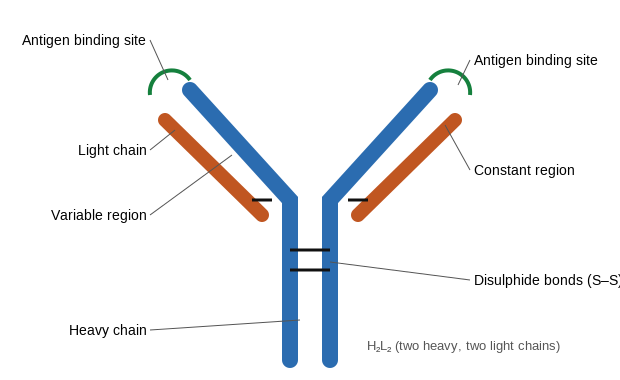
Labels: heavy chain, light chain, antigen-binding site, variable region, constant region, disulphide bonds.
(a) Differentiate between malignant and benign tumours.
(b) Name and explain the most feared property of a malignant tumour.
Solution
(a)
| Benign tumour | Malignant tumour |
|---|---|
| Stays confined to its original location and does not spread | Cells grow very rapidly, invade and damage the surrounding normal tissue |
| Causes little damage | Shows metastasis |
(b) Metastasis. Cells slough off from the tumour and reach distant sites through the blood. Wherever they get lodged in the body, they start a new tumour there.
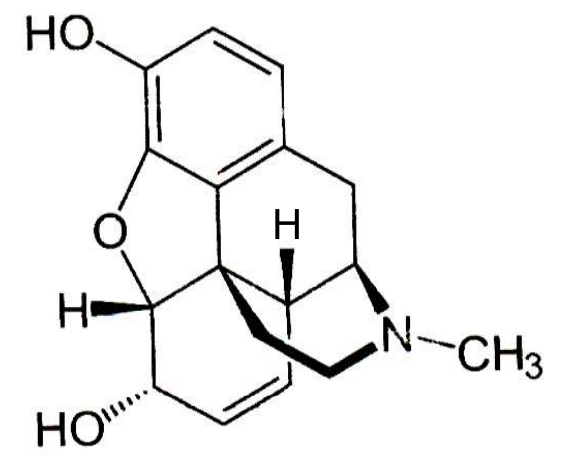
(a) Name the category of drugs represented by the chemical structure given above.
(b) If the methyl group is substituted by acetyl group we get a bitter crystalline compound. Name the compound.
(c) Name the natural source of these compounds.
(d) State the harmful effects of this class of drugs on the human body.
Solution
(a) Opioids (the structure is morphine).
(b) Heroin (smack), chemically diacetylmorphine, a white, odourless, bitter crystalline compound obtained by acetylation of morphine.
(c) The latex of the poppy plant, Papaver somniferum.
(d) They bind to specific opioid receptors in the CNS and gastrointestinal tract. Heroin is a depressant and slows down body functions. It is highly addictive, and taken by injection it carries a risk of AIDS and hepatitis B.
When Plasmodium sp. (malarial parasite) enters the human body, it reproduces asexually and increases its number. During this course, the affected person suffers from malaria. After a number of asexual cycles, the parasite, in order to complete its life cycle, enters the sexual phase of its life. Trace the sexual stages in the life cycle of Plasmodium in a female Anopheles mosquito, when it bites an infected person, up to the formation of mature infective stages of the parasite.
Solution
• The sexual stages (gametocytes) develop in the human RBCs.
• When a female Anopheles mosquito bites an infected person, it takes up the gametocytes with its blood meal.
• In the mosquito's gut, the gametes form and fertilisation and development take place.
• The mature infective stages, sporozoites, escape from the gut and migrate to the mosquito's salivary glands.
• When the mosquito bites another human, the sporozoites are injected with the bite.
(a) Name and state the type of immunity that acts as a 'biological shield' to the developing foetus against many infections in the mother's womb.
(b) A large proportion of infants remain free from potent infections at least three months after birth, or even longer if breast fed. Explain, giving suitable reasons.
Solution
(a) Natural passive immunity. Readymade antibodies (IgG) from the mother pass to the foetus through the placenta and protect it against foreign agents.
(b) The yellowish fluid colostrum, secreted by the mother during the initial days of lactation, has abundant antibodies (IgA) that protect the infant. Breast milk continues to give these antibodies, so breast-fed babies stay protected longer.
(a) Explain the roles of (i) primary, and (ii) secondary lymphoid organs that are responsible for developing defence to combat the action of pathogens/foreign antigens which enter our body.
(b) Doctors generally advise not to undergo surgery of tonsils. Why ?
(a) Name the causative agents of pneumonia and common cold.
(b) How do these differ in their symptoms ?
(c) Mention two symptoms common to both.
(a) Write the scientific names of the causative agent and vector of malaria, and write its symptoms.
(b) Name any two diseases spread by Aedes sp.
While on an excursion to a hill station, some of the children developed allergic symptoms.
(a) List any two allergic symptoms.
(b) Name any two allergens.
(c) List any two antiallergens.
Medically it is advised to all young mothers that breastfeeding is the best for their newborn babies. Do you agree ? Give reasons in support of your answer.
Name a human disease, its causal organism, symptoms (any three) and vector, spread by intake of water and food contaminated by human faecal matter.
(a) Why is there a fear amongst the guardians that their adolescent wards may get trapped in drug/alcohol abuse ?
(b) Explain 'addiction' and 'dependence' in respect of drug/alcohol abuse in youth.
(a) It is generally observed that the children who had suffered from chicken-pox in their childhood may not contract the same disease in their adulthood. Explain giving reasons the basis of such an immunity in an individual. Name this kind of immunity.
(b) What are interferons ? Mention their role.
4 marks: case-based / source-based
Deaths related to the use of drugs were estimated at about 5,00,000 in 2019, 17.5 percent more than in 2009. Liver diseases attributed to Hepatitis B are a major cause of drug-related deaths, according to UNODC, accounting for more than half of the total number of deaths attributed to the use of drugs. Drug overdoses account for a quarter of drug-related deaths. Opioids contribute to account for the most severe drug-related harm, including fatal overdoses, when used non-medically. At the global level, two-third of direct drug-related deaths are due to opioids, and in some sub-regions the proportion can be as high as three-quarters of such deaths.
(a) Why are people taking opioids more prone to liver diseases attributed to Hepatitis B ? (1)
(b) What is meant by direct drug-related disease ? (1)
(c) (i) What is the scientific name of the plant from which the opioids are derived and from which part of the plant is it extracted ? (2)
OR
(c) (ii) State two common warning signs of drug abuse among the youth. (2)
Solution
(a) Opioids such as heroin are usually taken by intravenous injection. Sharing contaminated needles and syringes spreads the hepatitis B virus, which damages the liver.
(b) A direct drug-related disease (or death) is one caused by the drug itself, e.g. a fatal overdose of opioids, as opposed to indirect causes such as infections from shared needles.
(c) (i) Papaver somniferum (poppy). The opioids are extracted from the latex of the plant.
OR (c) (ii) Any two: drop in academic performance; unexplained absence from school or college; lack of interest in personal hygiene; withdrawal, isolation, depression, fatigue; aggressive and rebellious behaviour; deteriorating relationships with family and friends; loss of interest in hobbies; change in sleeping and eating habits; fluctuations in weight and appetite.
In 2021, 5·3 percent of 15 to 16-year-olds worldwide (13·5 million individuals) had used Cannabis in the past year according to UNODC. The adolescent brain is still developing and drug use can have long-term negative effects. Early drug use initiation can lead to faster development of dependence than in adults and other problems in adulthood. Parts of the Amazon Basin are at the intersection of multiple forms of organised crimes that are accelerating devastation, with severe implications for the security, health and well-being of the population across the region. The direct impact of coca cultivation on deforestation is minimal, but indirectly it acts as a catalyst for "Narco-deforestation". The laundering of drug trafficking profits into land speculation etc. is posing a growing danger to the world's largest rainforest.
(a) Which age group or period of growth people are more vulnerable to drug abuse ? (1)
(b) Explain the negative impact of coca cultivation on the world's largest rainforest. (1)
(c) (i) From which part of the plant are cannabinoids mainly obtained ? Mention any one negative effect of this drug on adolescents. (2)
OR
(c) (ii) State the scientific name of the plant from which coca alkaloids are derived and state one negative impact of use of excessive dosage of cocaine. (2)
Solution
(a) Adolescence (12–18 years), here the 15–16 year olds.
(b) Coca cultivation leads indirectly to "narco-deforestation": drug profits are put into land speculation and forest clearing. This destroys the Amazon rain forest, causing habitat loss and extinction of species.
(c) (i) Cannabinoids are obtained from the inflorescences (flower tops) of Cannabis sativa (also from leaves and resin). Negative effect: they affect the cardiovascular system of the body (and harm the developing brain and lead to early dependence).
OR (c) (ii) Erythroxylum coca. Excessive dosage of cocaine causes hallucinations. (It interferes with the transport of the neurotransmitter dopamine.)
In 1981, the health workers of United States of America had become aware of the increased frequency of Kaposi's sarcoma, cancer of the skin and blood vessels and another disease pneumocystis pneumonia, a respiratory infection caused by a protozoan. Both these diseases were very rare in the general population, but occurred frequently in more severely "immunosuppressed" individuals. This led to the recognition of the immune system disorder that was named Acquired Immune Deficiency Syndrome (AIDS). In 1983, virologists working in the USA and France had identified a causative agent for 'AIDS', now known as Human Immunodeficiency Virus (HIV). 'HIV' follows a set path to attack the human body to cause the disease.
(a) Name the group of cells the HIV attacks after gaining entry into the human body and write the various events that occur within this cell. (1)
(b) Write the expanded form of the diagnostic test used for detecting AIDS. Write the possible treatment available for the disease at present. (1)
(c) Mention any two steps suggested by WHO for preventing the spread of this disease. (2)
OR
(c) "A patient suffering from AIDS does not die of this disease but from some other infection." Justify the statement. (2)
The diagram shows the life cycle of a pathogenic protozoan.
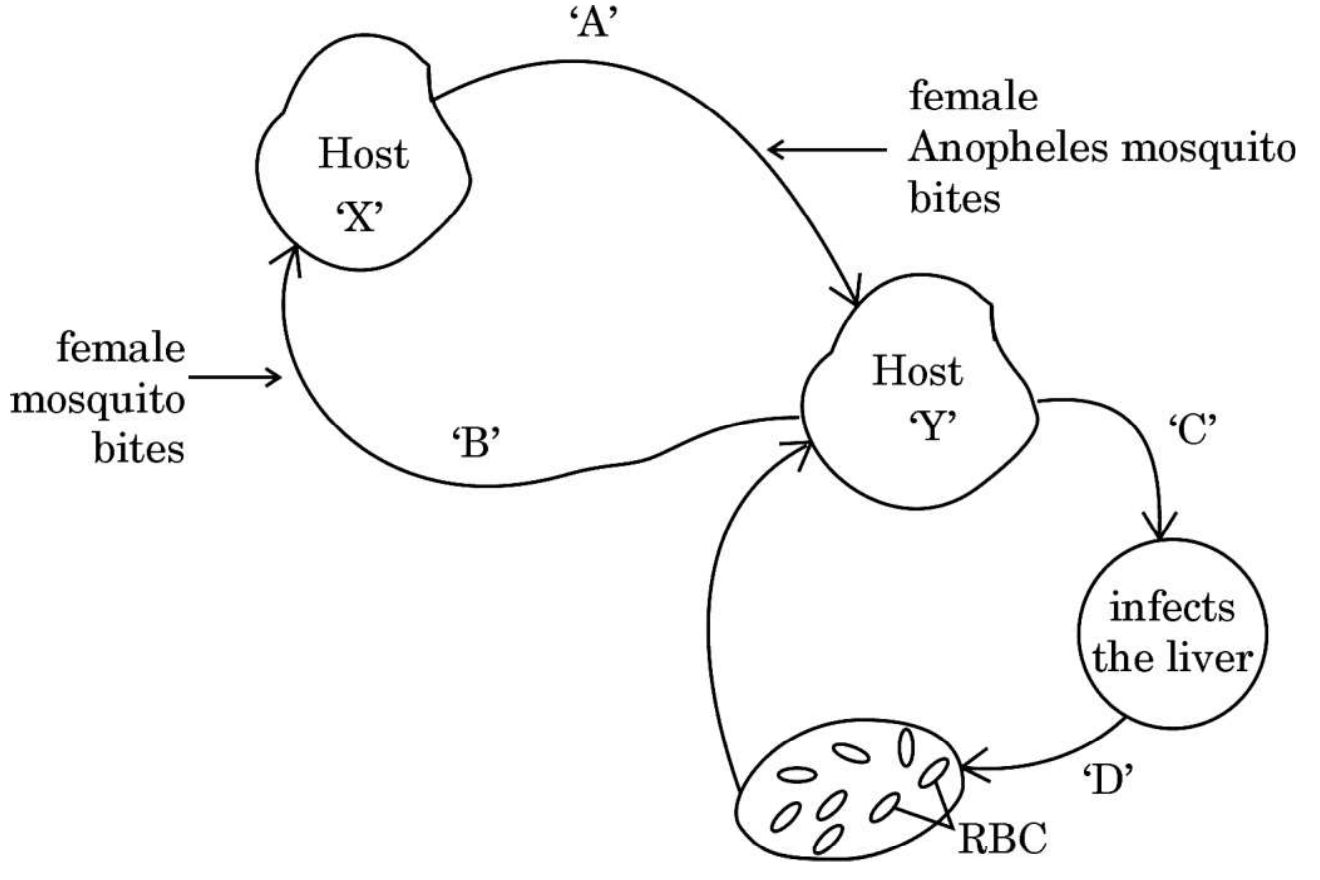
(i) Name the parasitic stage that is being transferred from host 'X' to host 'Y'. (1)
(ii) Write the changes the parasite undergoes in the liver. (1)
(iii) Write the changes the parasite undergoes when it enters the RBC. (1)
(iv) (a) Trace the changes the parasite undergoes when the host 'X' takes its blood meal from infected host 'Y'. (1)
OR
(iv) (b) At which stage during the life cycle of the pathogen does the host 'Y' experience the symptoms of the disease ? Name the disease and the toxic substance responsible for these symptoms. (1)
5 marks: long answer
(i) Name the protozoan species that is responsible for causing the most serious and even fatal malarial disease.
(ii) Name the host in which the parasite completes its sexual stages and explain the changes taking place.
(iii) How does the parasite damage the human body after entering the blood stream ?
(iv) Suggest two effective preventive measures to control the spread of this disease in endemic regions.
Solution
(i) Plasmodium falciparum (causes malignant malaria).
(ii) The female Anopheles mosquito.
• The mosquito picks up the gametocytes when it bites an infected person.
• Fertilisation and development take place in the mosquito's gut.
• The sporozoites formed migrate to the salivary glands, from where they are passed on at the next bite.
(iii) The sporozoites reach the liver and multiply asexually in the liver cells. The parasites then attack the red blood cells and multiply there, causing the RBCs to rupture. The rupture releases a toxic substance, haemozoin, which causes chills and high fever recurring every three to four days.
(iv) Any two: avoid stagnant water around homes; clean household coolers regularly; use mosquito nets; introduce larvivorous fish such as Gambusia in ponds; spray insecticides in ditches and drainage areas; fit wire mesh on doors and windows.
A 30 year old man was admitted to a hospital with recurrent infections, weight loss, prolonged fever. His blood report showed a decline in count of T-Lymphocytes thus affecting immune system.
(i) Identify the disease and its causative agent.
(ii) How did the pathogen affect the immune system once it entered the body ? Explain.
(iii) Mention two major modes of its transmission.
Solution
(i) Disease: AIDS (Acquired Immuno Deficiency Syndrome). Cause: HIV (Human Immunodeficiency Virus), a retrovirus.
(ii) • After entering the body, HIV enters the macrophages.
• Its RNA genome is copied into viral DNA by the enzyme reverse transcriptase.
• The viral DNA is incorporated into the host cell's DNA and directs the infected cell to produce virus particles. The macrophages go on producing virus and act as an HIV factory.
• At the same time, HIV enters the helper T-lymphocytes (TH), replicates and produces progeny viruses. These attack more helper T-cells, so their number falls steadily.
• The immune system becomes weak, and the person suffers repeated infections by bacteria, viruses, fungi and parasites (e.g. Mycobacterium, Toxoplasma).
(iii) Any two: sexual contact with an infected person; transfusion of contaminated blood or blood products; sharing infected needles (intravenous drug abusers); from an infected mother to her child through the placenta.
(i) Name and explain the property present in normal cells but is lost in cancer cells.
(ii) All normal human cells have genes that may become cancerous under certain conditions. Name them and explain how.
(iii) State the role of the following techniques in detection and diagnosis of cancer : (1) Biopsy and Histopathology (2) Magnetic Resonance Imaging
Solution
(i) Contact inhibition. In normal cells, contact with other cells inhibits their uncontrolled growth. Cancer cells have lost this property, so they keep dividing and form masses of cells called tumours.
(ii) Cellular oncogenes (c-onc) or proto-oncogenes. They are present in normal cells. When activated under certain conditions (e.g. by carcinogens: physical, chemical or biological agents), they can cause oncogenic transformation of the cells.
(iii) (1) Biopsy and histopathology: a piece of the suspected tissue is cut into thin sections, stained and examined under a microscope by a pathologist (histopathology), who looks for abnormal, increased cell counts.
(2) MRI: it uses strong magnetic fields and non-ionising radiations to accurately detect pathological and physiological changes in living tissue. It is used to detect cancers of internal organs.
A time-bound vaccination programme is followed for the children in our country from their birth up to ten years of age. A graph plotted below shows the effect of the vaccination followed by infection by the same pathogen, and the antibody concentration in the blood of the child.
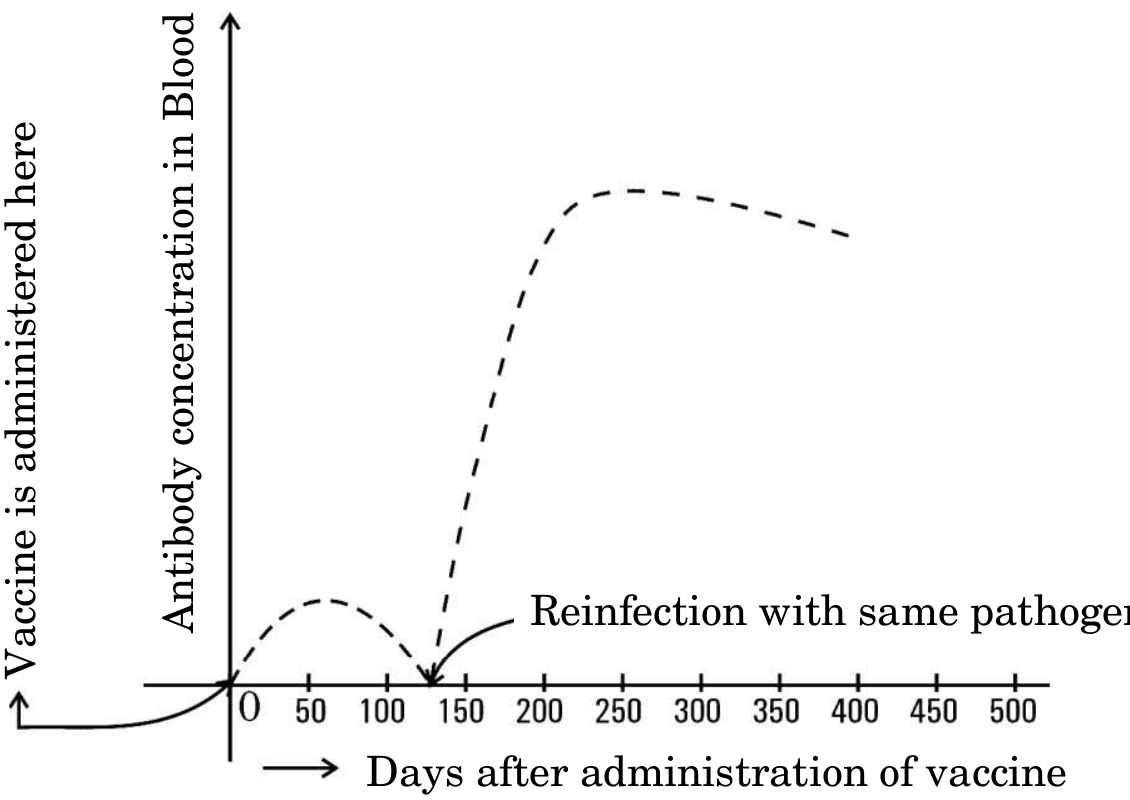
(i) Explain why the administration of a vaccine causes an increase in the antibody concentration.
(ii) If the child is infected with the same pathogen almost four months later, the antibody concentration in his/her blood increases very fast. Explain why.
(iii) A table given below gives information about different types of immunity and how they are attained. Identify 'P', 'Q', 'R', 'S' and 'T' in the table.
| Type of immunity | Production of antibodies | Presence of memory cells | Mode attained | |
|---|---|---|---|---|
| (1) | Natural, active | Yes | 'P' | 'Q' |
| (2) | Natural, passive | No | 'R' | Across the placenta during pregnancy/breast feeding |
| (3) | Acquired, active | 'S' | Yes | Getting a vaccine during breast feeding |
| (4) | Acquired, passive | 'T' | No | Getting an injection of antibodies |
Solution
(i) A vaccine contains the antigens of the pathogen (inactivated or weakened pathogen). They stimulate the B-lymphocytes to produce antibodies. This is the primary immune response, which is slow and of low intensity.
(ii) The first exposure (the vaccine) also produced memory B and T cells. On reinfection, these memory cells recognise the pathogen quickly and produce a large amount of antibodies very fast. This is the secondary (anamnestic) response.
(iii) P – Yes; Q – catching an infection (getting infected); R – No; S – Yes; T – No.
(i) What is the chemical name of 'smack' ? Why is the consumption of smack considered as an abuse ?
(ii) Name the source plant and one effect of the following drugs on the human body : (1) Marijuana (2) Cocaine (3) Morphine
(a) Differentiate between active and passive immunity.
(b) Comment on the role of vaccination and immunization in keeping human population healthy.
(a) Write the specific name of the genus Plasmodium that causes one of the most serious types of diseases in humans. Name the disease.
(b) Describe the events in the life cycle of Plasmodium which take place in the female Anopheles.
(c) Explain what happens in the RBCs of the humans when Plasmodium gains entry into them. How does the human body get affected ?
Get every solution for all chapters
- Every board question of every chapter, each fully solved the way the board gives marks
- 19 complete board papers, each followed by its solutions
- Weightage and most-asked topics for every chapter
- Instant PDF download, colour and black & white print copies
Revising the chapter first? Complete Biology Notes for Class 12 (NCERT 2026-27, CBSE Board 2027) →
What you get in the pack
- Questions from 122 CBSE papers, 2016 to 2026: every set code available
- Complete: 2114 different questions and parts from all set codes, 13 chapters and 19 full papers
- Part A: all 13 chapters, questions sorted chapter-wise and by marks
- Year-wise weightage table and most-asked topics for every chapter
- Part B: 19 full board papers, each followed by its complete solutions
- Labelled diagrams, Punnett squares, crosses and flow charts drawn in full
- Questions on topics out of the board syllabus flagged
All chapters in this pack
- PYQ Ch 1 Sexual Reproduction in Flowering Plants
- PYQ Ch 2 Human Reproduction
- PYQ Ch 3 Reproductive Health
- PYQ Ch 4 Principles of Inheritance and Variation
- PYQ Ch 5 Molecular Basis of Inheritance
- PYQ Ch 6 Evolution
- PYQ Ch 7 Human Health and Disease
- PYQ Ch 8 Microbes in Human Welfare
- PYQ Ch 9 Biotechnology: Principles and Processes
- PYQ Ch 10 Biotechnology and its Applications
- PYQ Ch 11 Organisms and Populations
- PYQ Ch 12 Ecosystem
- PYQ Ch 13 Biodiversity and Conservation
- Board Paper 2026 Set 57-1-1 with Solutions
- Board Paper 2026 Set 57-1-2 with Solutions
- Board Paper 2026 Set 57-1-3 with Solutions
- Board Paper 2026 Set 57-2-1 with Solutions
- Board Paper 2025 Set 57-4-1 with Solutions
- Board Paper 2025 Set 57-5-1 with Solutions
- Board Paper 2024 Set 57-1-1 with Solutions
- Board Paper 2024 Set 57-2-1 with Solutions
- Board Paper 2023 Set 57-1-1 with Solutions
- Board Paper 2023 Set 57-3-1 with Solutions
- Board Paper 2022 Term 2 Set 57-2-1 with Solutions
- Board Paper 2022 Term 2 Set 57-4-1 with Solutions
- Board Paper 2020 Set 57-1-1 with Solutions
- Board Paper 2020 Set 57-2-1 with Solutions
- Board Paper 2019 Set 57-2-1 with Solutions
- Board Paper 2019 Set 57-3-1 with Solutions
- Board Paper 2018 Set 57-1 with Solutions
- Board Paper 2017 Set 57-1 with Solutions
- Board Paper 2016 Set 57-1 with Solutions