
CBSE Class 12 Biology Question Paper 2026 (57/2/1) with Solutions
The complete CBSE Class 12 Biology board paper of 2026, Q.P. code 57/2/1: all 33 questions exactly as set, with marks. 20 solutions are free below. The Class 12 Biology PYQ Book: Solved Board Papers 2016-2026 (CBSE) solves all 19 papers in full and sorts every question chapter-wise.
Subject experts: Divya Harwani (B.Sc. Biotechnology, M.Sc. Biotechnology) and Jayant Sharma (B.Sc., B.Ed.)



Free: NCERT solutions for Class 12 Biology →
Question paper
Jump to: Question paperSolutions
2026 · Q.P. Code 57/2/1
Maximum marks: 70
Section A · Multiple choice and Assertion–Reason (1 mark each)
To separate repetitive DNA from bulk genomic DNA, which of the following method is used ?
Select the correct option :
In a dihybrid cross, 2400 individuals are produced in F2 generation. Approximately how many will be phenotypically similar to parents ?
What could be the reason of extinction of Abingdon Tortoise from Galapagos Islands ?
What conclusion can be drawn if the forelimbs of an aquatic animal and a terrestrial animal have similar anatomical structure ?
How many of the following features are related to Nirodh – a popular brand of condoms ?
(i) Prevention of sexually transmitted infections.
(ii) Phagocytosis of sperms.
(iii) Male contraceptive device.
(iv) Acts as chemical barrier.
(v) Physiological changes in cervical mucus.
A bacterium having radioactive thymidine in its DNA is allowed to multiply in a medium having non-radioactive thymidine for two generations. What percentage of bacteria will have radioactive thymidine in its DNA ?
What is the role of histamine released by mast cells ?
Which of the following is used to visualize DNA bands under UV light after gel electrophoresis ?
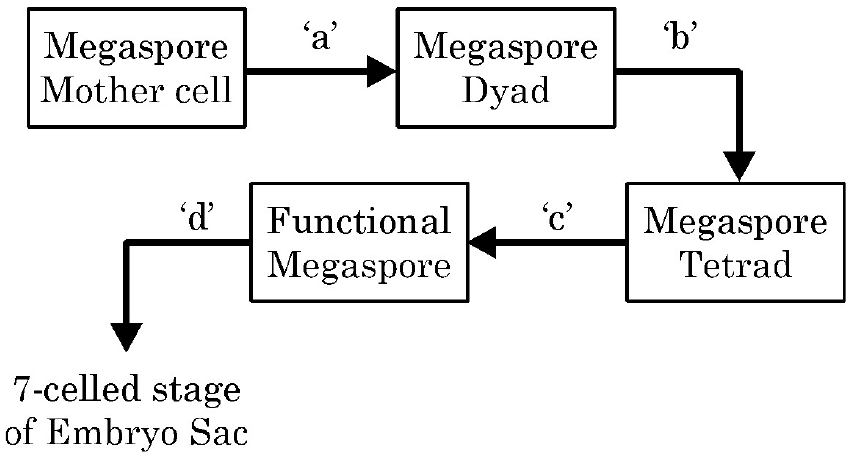
Given below are stages of embryo sac formation from megaspore mother cell. Identify the correct option for the cell division marked a, b, c and d.
Genetically modified tobacco plants were produced using Agrobacterium vectors. Which property of Agrobacterium helps in carrying nematode specific genes into the host plant ?
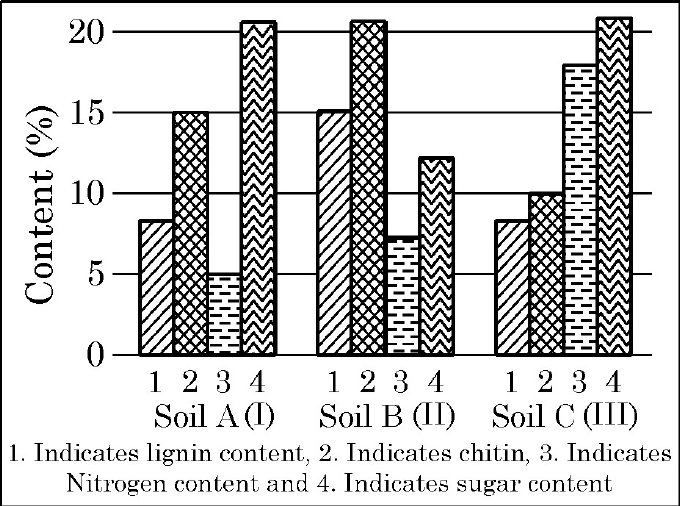
Observe the contents 1, 2, 3 and 4 of soil samples I, II and III shown in the graph. If the temperature and moisture of all soil samples are identical, which soil sample(s) will show faster decomposition ?
Assertion (A) : Apomixis leads to production of genetically identical off-springs.
Reason (R) : Apomixis involves fertilization between two genetically similar plants.
Assertion (A) : Microbes are used for commercial production of alcohol and beverages.
Reason (R) : Yeast converts glucose into ethanol and carbon dioxide during fermentation.
Assertion (A) : IUCN Red List helps in identifying and protecting endangered species worldwide.
Reason (R) : The list includes the species facing risk of extinction.
Assertion (A) : DNA Ligase is used to join DNA fragments.
Reason (R) : It catalyses the formation of glycosidic bonds between nucleotides.
Section B · Very short answer (2 marks each)
(a) The diagram below shows the sequence of amino acids in part of haemoglobin molecule.
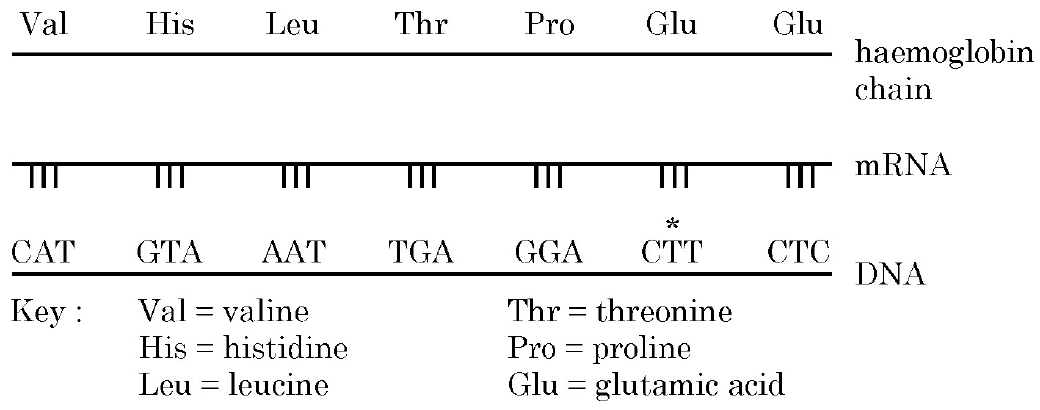
(i) If the base T* is substituted with A, in 'CTT' of DNA strand how would it affect the haemoglobin chain ?
(ii) Name the condition and the effects associated with the above substitution.
(b) DNA is considered a more stable genetic material than RNA. Justify this statement with suitable reasons.
How do scientists use microinjection and gene gun in biotechnology ?
After significant reduction of BOD during secondary treatment of sewage, what further processes are carried out ? Mention any one important outcome of these processes.
(a) In some cases, measuring population density by counting individuals may not be feasible. Mention two other parameters that can be used and justify their use with suitable examples.
(b) What factors contribute to the Amazonian rain forests in South America being the most biodiverse regions on Earth ?
(a) (i) Name the organ that forms a connection between foetus and the uterus of a pregnant human female.
(ii) How does it support both nutrition and hormonal regulation ?
(b) Give reasons for :
(i) All copulations do not lead to pregnancy.
(ii) Meiosis I in spermatogenesis and oogenesis are markedly different.
Section C · Short answer (3 marks each)
There are limitations of traditional breeding techniques that led to promotion of micro-propagation ?
(a) Mention two advantages of micropropagation.
(b) Give two examples where it is commercially adopted.
(a) Give the scientific name of the organism used by Morgan to study sex-linked traits.
(b) Write any four reasons why this organism made it an ideal experimental model.
Draw a neat diagram of enlarged view of one microsporangium of a Young anther of an angiosperm. Label the different layers of the wall and write the functions of the outermost and innermost layer.
Study the diagram given below :
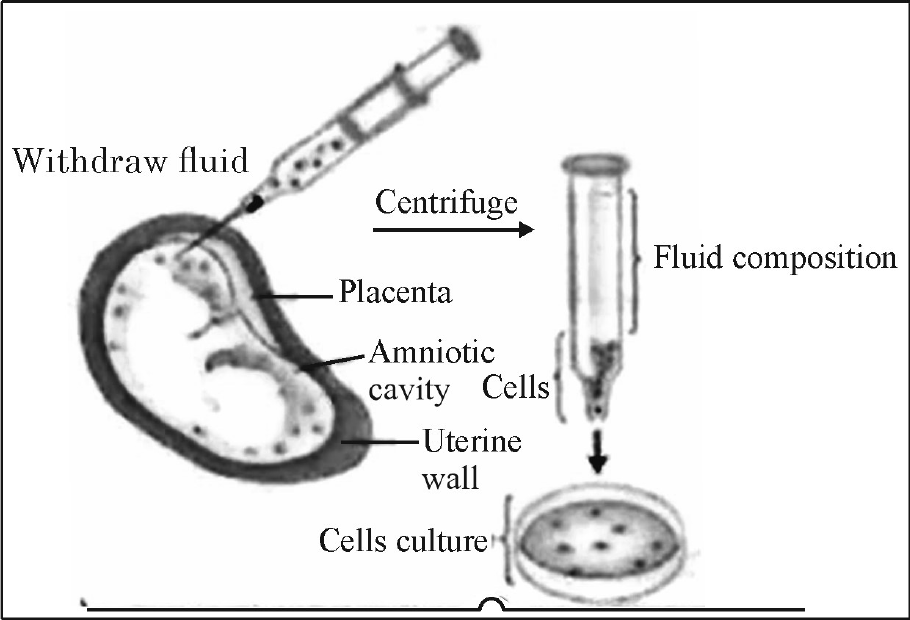
(a) Name and explain the procedure shown in the diagram. Mention one of its advantage and one disadvantage.
(b) How is 'Saheli' different from other oral pills in terms of its composition and advantage ?
S.L. Miller conducted an experiment in 1953 to simulate the conditions of early earth in a laboratory setup. Answer the following questions based on the experiment :
(a) What was the aim of his experiment ?
(b) Name the gases used and the source of energy.
(a) What is a genetic code ?
(b) Why did scientists feel the need to propose a genetic code ?
(c) Genetic code is said to be 'Universal'. Why ?
(a) A person inhales dust and pathogens but does not always fall sick. Explain how the body protects against such infections.
(b) Name and describe any two barriers involved in this protection.
Section D · Case-based (4 marks each)
Gene manipulation is a fast emerging science. It started with the development of recombinant DNA molecules. This technology which mostly involves cutting and pasting of desired DNA fragments is based on two most important discoveries in bacteria – presence of plasmid and restriction endonucleases. The science of r-DNA technology took birth when Cohen and Boyer (1973) were able to produce a piece of gene containing foreign DNA introduced into plasmid of E.coli.
(a) Name one core technique of biotechnology that alters the genetic material. (1)
(b) What is a plasmid ? Mention its importance in biotechnology. (2)
(c) Which gene was isolated by Cohen and Boyer and from which bacteria ? (1)
OR
(c) How is the action of exonuclease different from that of endonuclease ? (1)
Below is shown a pond that represents a self-sustaining natural ecosystem with both biotic and abiotic components interacting in a balanced food web.
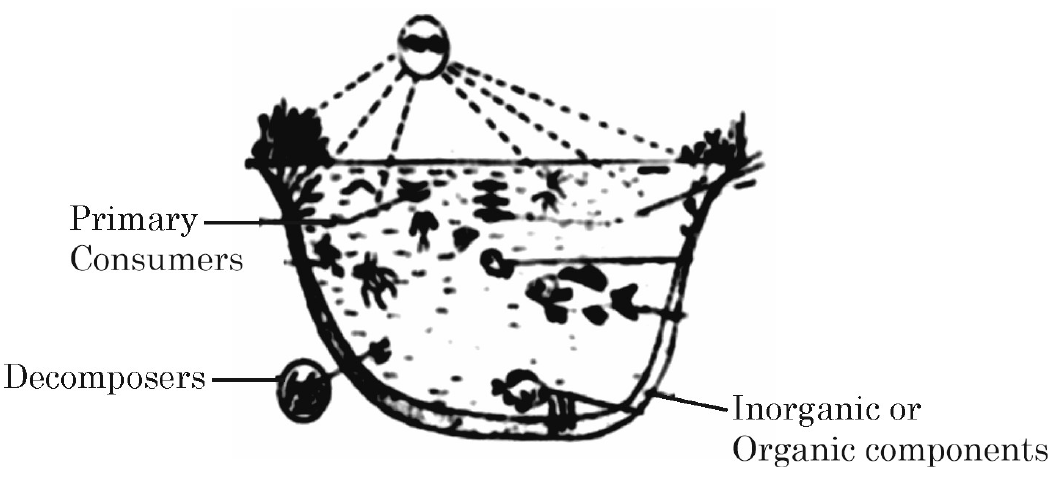
Based on the diagram, answer the questions :
(a) Mention two abiotic components of a pond ecosystem. (1)
(b) Differentiate between the roles of producers and decomposers in such an ecosystem. (2)
(c) Draw a simple food chain operating in such an ecosystem and label each trophic level. (1)
OR
(c) Why is transfer of energy not 100% efficient between trophic levels ? (1)
Section E · Long answer (5 marks each)
(a) (i) Explain the role of stigma in pollen pistil interaction.
(ii) Describe the post pollination events leading to double fertilization in angiosperms starting with 2-celled pollen grain.
(b) (i) Explain menstrual phase in the menstrual cycle of human female.
(ii) Why is follicular phase also called proliferative phase ?
(iii) Explain the events that occur in Graafian follicle at the time of ovulation and thereafter.
(iv) Draw a Graafian follicle and label – Antrum and secondary oocyte.
(a) Observe the segment of mRNA given below and answers the questions given below :
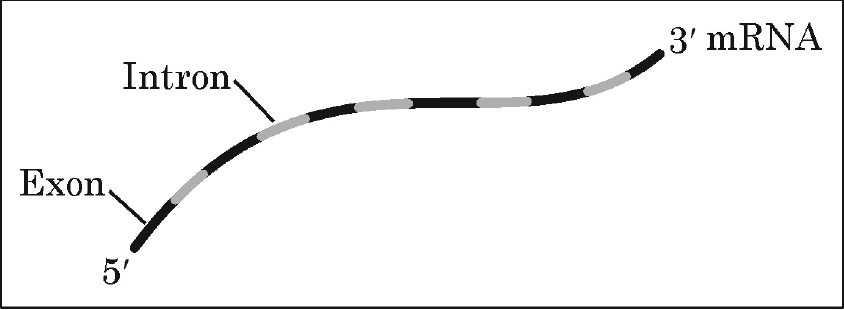
(i) Explain and illustrate the steps involved to make fully processed hn RNA.
(ii) Gene encoding RNA polymerase I and RNA polymerase III have been affected by mutation. Explain its impact on the synthesis of polypeptide giving reasons.
(b) In a particular cattle, the coat colour red and white are controlled by single pair of alleles. A calf that receives allele for red coat from mother and allele for white coat from father shows equal number of red and white hairs on its coat.
(i) Is this an example of Co-dominance or incomplete dominance. Give a reason for your answer.
(ii) With the help of a genetic cross upto F2 generation, explain what will be the consequent phenotype of calf when (1) Red is dominant over white, (2) Red is incompletely dominant.
(a) A 30 year old man was admitted to a hospital with recurrent infections, weight loss, prolonged fever. His blood report showed a decline in count of T-Lymphocytes thus affecting immune system.
(i) Identify the disease and its causative agent.
(ii) How did the pathogen affect the immune system once it entered the body ? Explain.
(iii) Mention two major modes of its transmission.
(b) (i) Why are microbes considered effective biocontrol agents in sustainable agriculture ?
(ii) Explain the role of the following as biocontrol agents naming the pests or diseases they help to control : (1) A Bacterium (2) A Fungus (3) Virus
Solutions: CBSE 2026 · 57/2/1
Answer: (D) Density Gradient Centrifugation
In density gradient centrifugation, the bulk DNA forms a major peak. The repetitive (satellite) DNA has a different base composition, so it forms small separate peaks.
Answer: (B) 1500
In the F2 ratio 9 : 3 : 3 : 1, the parental phenotypes are the 9 (both dominant) and the 1 (both recessive) classes, so .
Answer: (B) Share common ancestors
Forelimbs of a whale and a cheetah have the same basic bone plan but different functions. They are homologous organs, which shows divergent evolution from a common ancestor.
Answer: (B) 50
Replication is semi-conservative. After the 1st generation, both daughter bacteria have one labelled strand. After the 2nd generation there are 4 bacteria: 2 still carry a labelled strand and 2 are fully unlabelled. So 2/4 = 50%.
Answer: (C) Ethidium Bromide
DNA stained with ethidium bromide shows bright orange bands under UV light.
Answer: (B)
Agrobacterium tumefaciens naturally infects dicots such as tobacco. It carries the Ti plasmid, which transfers a piece of DNA (T-DNA) into the plant cell. The disarmed Ti plasmid is used as the vector.
Answer: (C) A is true but R is false.
Apomixis is the formation of seeds without fertilisation (an asexual process that mimics sexual reproduction), so the offspring are clones of the parent.
Answer: (A) Both A and R are true and R is the correct explanation of A.
The Red List records species that are threatened with extinction, so conservation efforts can be directed to them.
(i) The DNA strand shown is the template. CTT is transcribed into the mRNA codon GAA (glutamic acid). If T* becomes A, the triplet becomes CAT and the codon becomes GUA (valine). So glutamic acid at the sixth position of the β-globin chain is replaced by valine.
(ii) The condition is sickle-cell anaemia. Under low oxygen tension the mutant haemoglobin polymerises. The RBCs change from biconcave discs to elongated sickle shapes, and their oxygen-carrying capacity falls.
• Microinjection: recombinant DNA is injected directly into the nucleus of an animal cell with a fine micro-needle.
• Gene gun (biolistics): plant cells are bombarded with high-velocity micro-particles of gold or tungsten coated with DNA.
Both are ways of putting the foreign (recombinant) DNA into host cells.
Any two:
• Percent cover or biomass: one huge banyan tree with a large canopy matters more than 200 Parthenium plants in the same area, so counting numbers would underestimate the banyan.
• Relative density: for example, the number of fish caught per trap, or bacteria in a Petri dish, when absolute numbers are not needed.
• Indirect estimates: a tiger census in national parks uses pug marks and faecal pellets, without counting or seeing the animals.
(i) The placenta.
(ii) Nutrition: chorionic villi and uterine tissue interdigitate, so oxygen and nutrients pass from the mother's blood to the embryo, and CO2 and wastes pass back. The umbilical cord carries them to and from the embryo.
Hormonal regulation: the placenta is also an endocrine tissue. It produces hCG, hPL, estrogens and progestogens, which maintain the pregnancy.
(a) Any two: a very large number of plants are produced in a short time; the plants are genetically identical to the parent (somaclones); healthy, virus-free plants can be raised from meristems.
(b) Any two: tomato, banana, apple (also sugarcane, orchids).
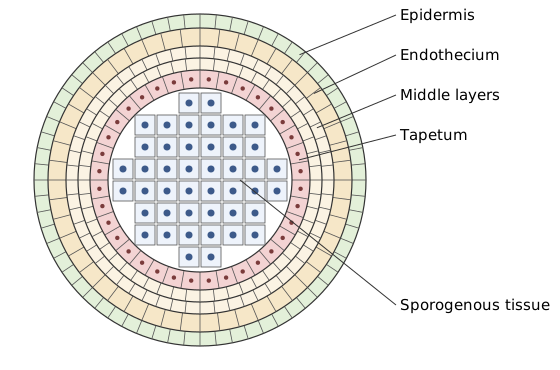
Wall layers from outside in: epidermis, endothecium, middle layers, tapetum. The centre holds the sporogenous tissue.
• Outermost layer, the epidermis: protects the anther and helps in its dehiscence to release the pollen.
• Innermost layer, the tapetum: nourishes the developing pollen grains. Its cells have dense cytoplasm and often more than one nucleus.
(a) To show that the first organic molecules could form spontaneously from inorganic ones, so that life was preceded by chemical evolution (testing the Oparin–Haldane hypothesis). He obtained amino acids.
(b) Gases: CH4, H2, NH3 and water vapour, in a closed flask at 800 °C.
Energy source: electric discharge (sparks).
(a) The body has immunity, the ability to fight disease-causing organisms. Innate immunity is present at birth and works through non-specific barriers that stop pathogens from entering or destroy them.
(b) Any two:
• Physical barriers: the skin stops entry of microbes; mucus coating the respiratory, gastro-intestinal and urinogenital tracts traps microbes.
• Physiological barriers: acid in the stomach, saliva in the mouth and tears from the eyes prevent microbial growth.
• Cellular barriers: neutrophils (PMNL) and monocytes in blood and macrophages in tissues phagocytose and destroy microbes, and natural killer lymphocytes kill infected cells.
• Cytokine barriers: virus-infected cells secrete interferons, which protect non-infected cells from further viral infection.
(a) Any two: water, the soil deposit at the bottom, sunlight, temperature, dissolved inorganic and organic substances.
(b)
| Producers | Decomposers |
|---|---|
| Phytoplankton, algae and floating, submerged and marginal plants | Fungi, bacteria and flagellates, especially on the pond bottom |
| Make organic food from inorganic materials using sunlight (photosynthesis) | Break down dead organic matter into simple inorganic substances, which are released for reuse |
(c) Phytoplankton (producer, 1st trophic level) → Zooplankton (primary consumer, 2nd trophic level) → Small fish (secondary consumer, 3rd trophic level)
OR (c) At each trophic level, most of the energy is used in respiration and lost as heat, and some is lost in undigested and dead matter. Only about 10% of the energy is passed to the next level (10 per cent law).
(i) Menstrual phase: if the released ovum is not fertilised, the endometrial lining of the uterus and its blood vessels break down. They form a liquid that comes out through the vagina. The flow lasts for 3–5 days.
(ii) In the follicular phase, the endometrium of the uterus regenerates by proliferation under the influence of estrogens from the growing follicles, hence the name proliferative phase.
(iii) In mid-cycle (about day 14), the LH surge makes the Graafian follicle rupture and release the secondary oocyte (ovulation). After ovulation, the remaining part of the follicle changes into the corpus luteum. The corpus luteum secretes large amounts of progesterone, which maintains the endometrium.
(iv) 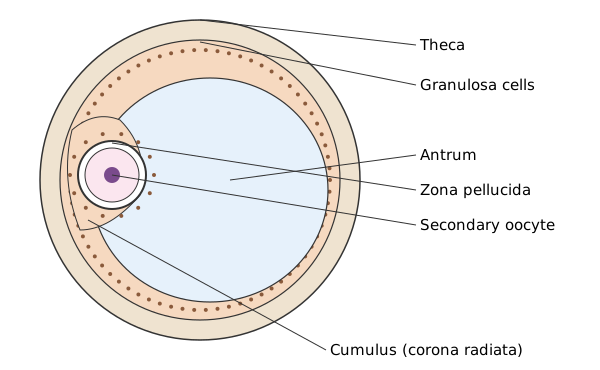
(i) Co-dominance. Both alleles express themselves fully and separately in the hybrid: it has distinct red hairs and white hairs (roan). There is no blending into an intermediate colour.
(ii) (1) Red dominant over white (R = red, r = white):
P: RR (red) × rr (white); gametes R and r
F1: all Rr – red coat
F1 × F1: Rr × Rr
| R | r | |
|---|---|---|
| R | RR red | Rr red |
| r | Rr red | rr white |
F2 phenotypic ratio 3 red : 1 white (genotypic ratio 1 RR : 2 Rr : 1 rr). The calf (Rr) would be red.
(2) Red incompletely dominant:
P: RR (red) × rr (white)
F1: all Rr – an intermediate colour (pink, a blend of red and white)
F1 × F1: Rr × Rr
| R | r | |
|---|---|---|
| R | RR red | Rr pink |
| r | Rr pink | rr white |
F2 phenotypic ratio = genotypic ratio = 1 red : 2 intermediate (pink) : 1 white. The calf (Rr) would have an intermediate colour.
(i) They greatly reduce the use of toxic chemicals and pesticides that pollute the environment. Pests are not wiped out but kept at manageable levels by natural checks and balances. Many are species-specific and do not harm plants, mammals, birds, fish or non-target insects.
(ii) (1) Bacterium – Bacillus thuringiensis (Bt): controls butterfly caterpillars. Dried Bt spores are mixed with water and sprayed on plants (e.g. brassicas, fruit trees). Larvae eat the spores, the toxin is released in their gut, and the larvae are killed. Bt cry genes are also put into plants (Bt cotton).
(2) Fungus – Trichoderma: a free-living fungus common in root ecosystems. It is an effective biocontrol agent against several plant pathogens.
(3) Virus – baculoviruses (genus Nucleopolyhedrovirus): attack insects and other arthropods. They are species-specific with narrow-spectrum insecticidal action, and have no negative effect on non-target organisms. This makes them ideal for integrated pest management, especially in ecologically sensitive areas.
Get every solution for all 19 papers
- Every board question of every chapter, each fully solved the way the board gives marks
- 19 complete board papers, each followed by its solutions
- Weightage and most-asked topics for every chapter
- Instant PDF download, colour and black & white print copies
Revising the chapter first? Complete Biology Notes for Class 12 (NCERT 2026-27, CBSE Board 2027) →
What you get in the pack
- Questions from 122 CBSE papers, 2016 to 2026: every set code available
- Complete: 2114 different questions and parts from all set codes, 13 chapters and 19 full papers
- Part A: all 13 chapters, questions sorted chapter-wise and by marks
- Year-wise weightage table and most-asked topics for every chapter
- Part B: 19 full board papers, each followed by its complete solutions
- Labelled diagrams, Punnett squares, crosses and flow charts drawn in full
- Questions on topics out of the board syllabus flagged
All chapters in this pack
- PYQ Ch 1 Sexual Reproduction in Flowering Plants
- PYQ Ch 2 Human Reproduction
- PYQ Ch 3 Reproductive Health
- PYQ Ch 4 Principles of Inheritance and Variation
- PYQ Ch 5 Molecular Basis of Inheritance
- PYQ Ch 6 Evolution
- PYQ Ch 7 Human Health and Disease
- PYQ Ch 8 Microbes in Human Welfare
- PYQ Ch 9 Biotechnology: Principles and Processes
- PYQ Ch 10 Biotechnology and its Applications
- PYQ Ch 11 Organisms and Populations
- PYQ Ch 12 Ecosystem
- PYQ Ch 13 Biodiversity and Conservation
- Board Paper 2026 Set 57-1-1 with Solutions
- Board Paper 2026 Set 57-1-2 with Solutions
- Board Paper 2026 Set 57-1-3 with Solutions
- Board Paper 2026 Set 57-2-1 with Solutions
- Board Paper 2025 Set 57-4-1 with Solutions
- Board Paper 2025 Set 57-5-1 with Solutions
- Board Paper 2024 Set 57-1-1 with Solutions
- Board Paper 2024 Set 57-2-1 with Solutions
- Board Paper 2023 Set 57-1-1 with Solutions
- Board Paper 2023 Set 57-3-1 with Solutions
- Board Paper 2022 Term 2 Set 57-2-1 with Solutions
- Board Paper 2022 Term 2 Set 57-4-1 with Solutions
- Board Paper 2020 Set 57-1-1 with Solutions
- Board Paper 2020 Set 57-2-1 with Solutions
- Board Paper 2019 Set 57-2-1 with Solutions
- Board Paper 2019 Set 57-3-1 with Solutions
- Board Paper 2018 Set 57-1 with Solutions
- Board Paper 2017 Set 57-1 with Solutions
- Board Paper 2016 Set 57-1 with Solutions