
CBSE Class 12 Biology Question Paper 2026 (57/1/1) with Solutions
The complete CBSE Class 12 Biology board paper of 2026, Q.P. code 57/1/1: all 33 questions exactly as set, with marks. 20 solutions are free below. The Class 12 Biology PYQ Book: Solved Board Papers 2016-2026 (CBSE) solves all 19 papers in full and sorts every question chapter-wise.
Subject experts: Divya Harwani (B.Sc. Biotechnology, M.Sc. Biotechnology) and Jayant Sharma (B.Sc., B.Ed.)



Free: NCERT solutions for Class 12 Biology →
Question paper
Jump to: Question paperSolutions
2026 · Q.P. Code 57/1/1
Maximum marks: 70
Section A · Multiple choice and Assertion–Reason (1 mark each)
Identify the plant in which emasculation is not required for artificial hybridization.
Which of the following is not a component of immune system ?
Select the option that shows correct statements :
(i) Corpus luteum secretes progesterone.
(ii) Only FSH attains a peak level in middle of cycle.
(iii) LH surge induces rupture of graafian follicle.
(iv) Luteal phase of menstrual cycle is also called proliferative phase.
Select the mismatched pair :
Pomato was produced by fusing protoplasts of
In an ecosystem, different species occupy different levels and vertical distribution is called
Which of the following sacred groves is found in Meghalaya ?
In the following figure, two ways of pairing of two homologous pairs of chromosomes are shown. Which of the following phenomena is expressed ?
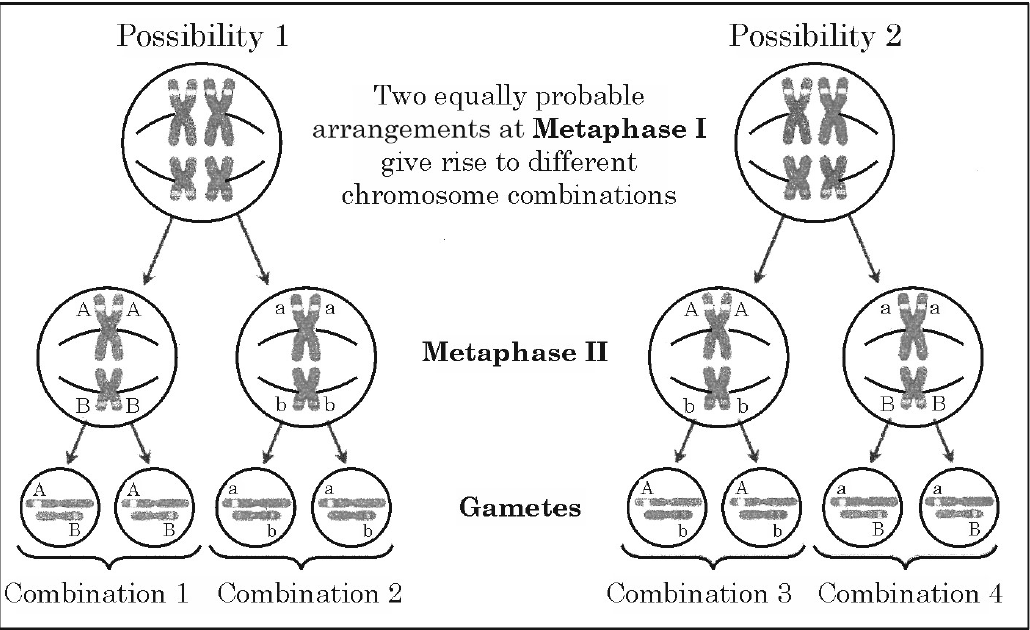
Match Column-I with Column-II and choose the correct option :
| Column-I | Column-II |
|---|---|
| a. Biolistic gun | i. Bacterial cell |
| b. Chitinase | ii. Tumour inducing |
| c. Ti | iii. Animal cell |
| d. Ca++ | iv. Fungal cell |
| v. Plant cell |
The idea of use and disuse of organs for evolution of organism was proposed by
Which of the following statements about plasmids is incorrect ?
Which connective tissue connects ovary to pelvic wall and uterus ?
Assertion (A) : The population of melanized moths increased in industrial areas after Industrial Revolution.
Reason (R) : In Industrial environment lichen covered trees were replaced by soot-covered trees offering better camouflage to dark coloured moths.
Assertion (A) : The milk produced by transgenic cow 'Rosie' was nutritionally more balanced product for human babies than natural cow milk.
Reason (R) : It was human protein enriched milk containing human alpha lactaglobulin.
Assertion (A) : Flocs are masses of bacteria associated with fungal filaments in secondary treatment of sewage.
Reason (R) : Flocs help in digestion of solid waste by anaerobic respiration.
Assertion (A) : In terrestrial ecosystem much larger fraction of energy flows through grazing food chain.
Reason (R) : Grazing food chain may be connected to Detritus food chain at some levels.
Section B · Very short answer (2 marks each)
(a) Define Humoral immune response.
(b) Name any two types of antibodies found to give humoral immune response in humans.
(a) (i) How does a farmer use dormancy of seed to his advantage ?
(ii) Differentiate between pea seed and castor seed.
(b) Identify the stage of follicle where primary oocyte undergoes first meiotic division. Also mention the products of this division.
Study the sequence of bases in a DNA molecule that is shown below and answer the questions.
5' – GAATTC – 3'
3' – CTTAAG – 5'
(a) What are such sequences called ? Name the enzyme used that recognises such nucleotide sequences.
(b) How do these enzymes function ?
(a) Analyse the following two cases of sex determination in different organisms :
Case I : Males have (XO) sex chromosomes and females have two copies of same sex chromosome (XX).
Case II : Females have two different sex chromosomes (ZW) and males have two copies of same sex chromosome (ZZ).
Identify the type of heterogamety in each case, giving one example of each.
(b) (i) Differentiate between a DNA and RNA nucleotide.
(ii) Name the two types of bonds present within a single nucleotide.
(a) Given below is a pyramid found in an ecosystem, where each bar represents the standing crop available in the trophic level.
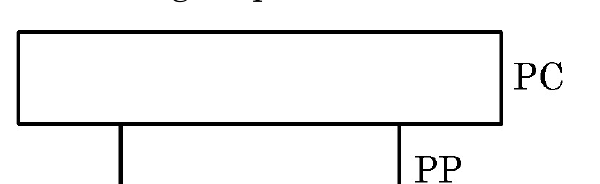
(i) Identify the kind of pyramid and with the help of an example explain the conditions where this kind of pyramid is possible in nature.
(ii) Write any two limitations of ecological pyramids.
(b) In an ecosystem there was loss of biodiversity due to some project in that area.
(i) How will biodiversity be affected ? (2 points)
(ii) List two major causes of loss of biodiversity.
Section C · Short answer (3 marks each)
(a) Do all pollen grains remain viable for the same length of time ? Support your answer with two suitable examples.
(b) How are pollen grains stored in pollen banks ?
(a) What is pedigree analysis ? Mention its importance in human genetics. (2 pts.)
(b) Analyse the following pedigree and write the (i) Pattern of inheritance. (ii) Give one example of disease showing such an inheritance pattern.
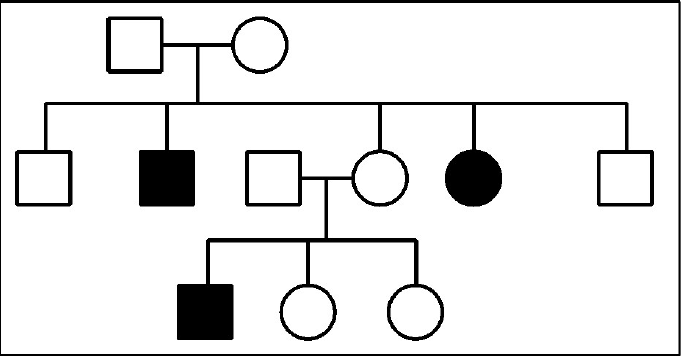
(a) How is Hardy-Weinberg expression () derived ?
(b) List any two factors that disturb the genetic equilibrium.
Draw a neat diagram of megasporangium of an angiosperm and label any six parts.
(a) Mention the scientific name of the source plant and the part from which opioids are extracted.
(b) How are morphine and heroin related ? Mention the effect each one of them has on human body.
A farmer grew two varieties of corn crop in field A and B. He grew normal corn crops in field A and GM corn crops in field B. He observed that corn borers attacked only in field A. To control it, spores of Bt were sprayed on field A.
(a) Name the gene in the spores responsible for control of pest.
(b) What effect will the spores of Bt have on insect pest ?
(c) How has corn plants of field B developed resistance against this pest ? Explain.
Observe the given picture carefully. A mixture of DNA with fragments ranging from 100 base pairs to 1800 base pairs were separated by electrophoresis on agarose gel with the following arrangement :
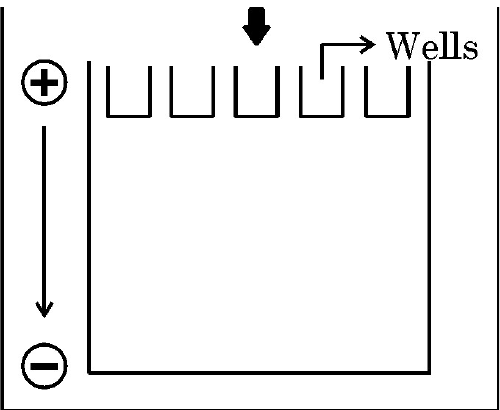
(a) What result will be obtained in staining with ethidium bromide ? Explain with reasons.
(b) The above setup was modified as shown below and a band with 100 base pairs was obtained at X.
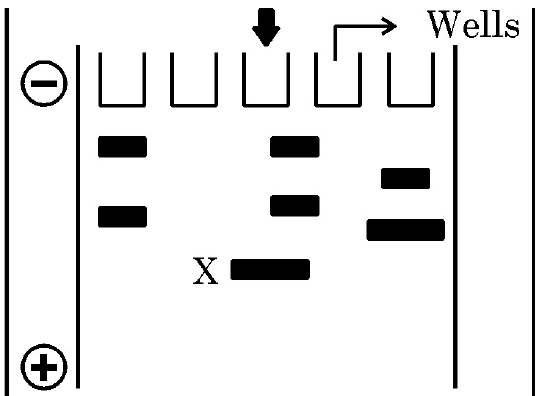
What changes were made to the previous design to get a band at 'X'. Why did the band appear at 'X' ?
Section D · Case-based (4 marks each)
The diagram below shows the distribution of two barnacle species, Chthamalus and Balanus on a rocky sea shore. When Balanus is experimentally removed, Chthamalus expands its range in lower intertidal zone.
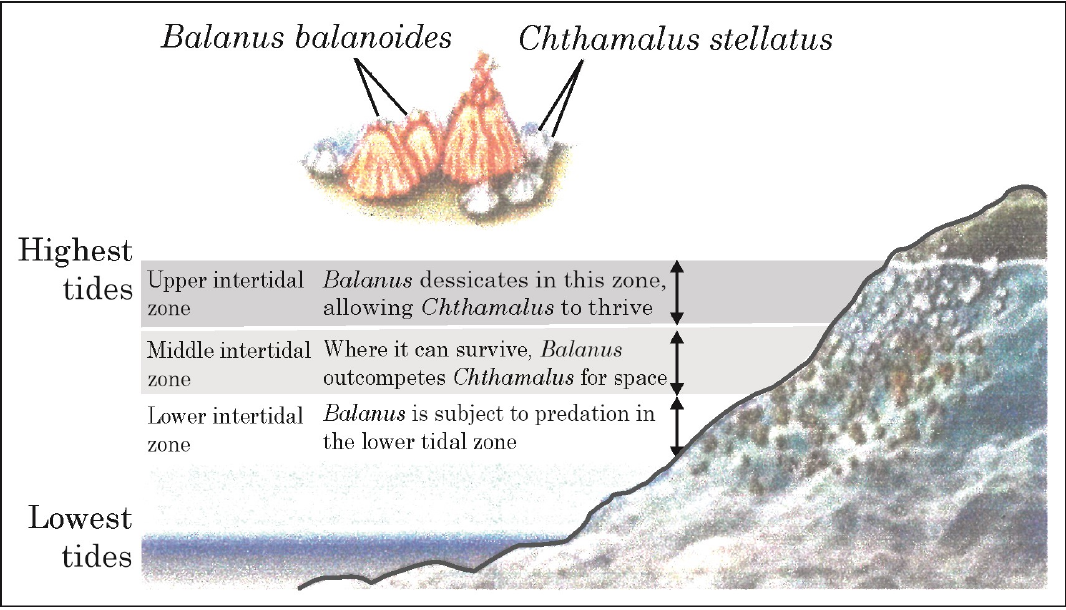
(a) Identify and define the ecological phenomenon demonstrated by this observation. (1)
OR
(a) State the principle that explains the elimination of one species. (1)
(b) Two different species can compete for the same resource. Give another example of it. (1)
(c) How do species avoid competition in nature ? Explain with an example. (2)
A student performed some crosses in plants and represented the result in the form of bar graphs as shown below. Each graph displays the phenotypic proportion of the progeny. Study the graphs and answer the questions :
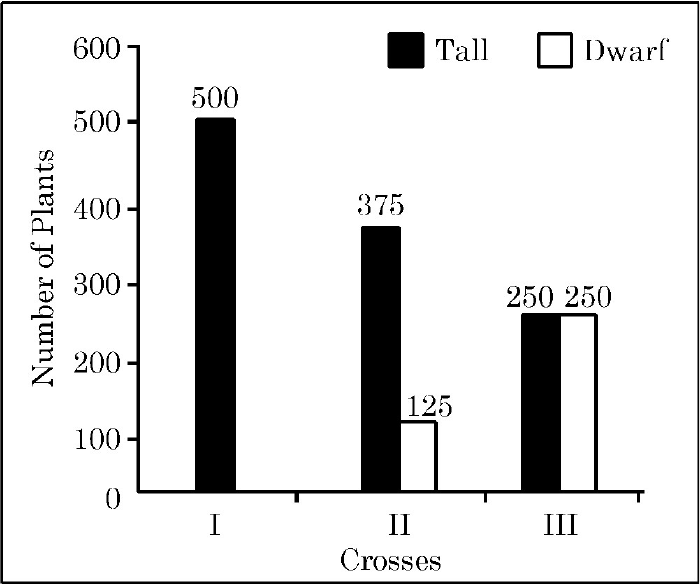
(a) What can you infer about the genotype of parents in crosses I and II ? (1)
OR
(a) Which genetic cross is represented by these crosses ? (1)
(b) Looking at bar graph of cross III, identify the type of cross performed and its importance in genetics. (2)
(c) What conclusion can you draw from the results of bar graphs of crosses I and II ? Name the genetic principle illustrated. (1)
Section E · Long answer (5 marks each)
(a) Trace the events from fertilization till implantation of blastocyst in human female. Also mention the site where fertilization takes place.
(b) (i) Case studies of some couples are given below. They were not able to have kids even though the parents were not taking any precautions. They also do not wish to adopt a child or take the help of donors. Study these cases and suggest an appropriate Assisted Reproductive Technology that could help them.
Case I – Female – Normal Reports; Male – Normal sperms but no connection between epididymis and vas deferens.
Case II – Female – Normal eggs but Fallopian tube blocked. Male – Normal sperms. Male reports are normal.
Case III – Female – Normal Reports. Male – Low sperm count with less motility.
(ii) Copper releasing intrauterine devices are very effective and popular contraceptive devices. Name any two copper releasing IUDs. Write two reasons that make them effective contraceptives.
(a) (i) Watson and Crick's discovery of double helical structure was based on which two findings. Also mention the name of the scientists associated with these findings.
(ii) Write down the salient features of double helix structure of DNA (any three points).
(b) Given below is a stretch of DNA showing the coding strand of structural gene of transcription unit.
5' - ATG ACC GTA TTT TCT GTA GTG CCC GTA CTT CAG GCA TTA 3'
(i) Write the corresponding template strand and m-RNA strand that will be transcribed along with its polarity.
(ii) If GUA of transcribed mRNA is an intron, then depict the sequence involved in formation of mRNA / mature / processed hnRNA strand : (1) In a bacterium (2) In humans
(iii) How many amino acids the resulting polypeptide will have after the process of translation in humans ?
(a) (i) Name the protozoan species that is responsible for causing the most serious and even fatal malarial disease.
(ii) Name the host in which the parasite completes its sexual stages and explain the changes taking place.
(iii) How does the parasite damage the human body after entering the blood stream ?
(iv) Suggest two effective preventive measures to control the spread of this disease in endemic regions.
(b) (i) What are bio-fertilizers ?
(ii) Name the different types of microorganisms used as bio-fertilizers in organic farming and explain how each contributes to soil fertility.
(iii) Write two advantages of using bio-fertilizers over chemical fertilizers.
Solutions: CBSE 2026 · 57/1/1
Answer: (D) Papaya
Papaya is dioecious: male and female flowers are on separate plants, so the female flower has no anthers to remove. It only needs bagging before pollination. Rice, wheat and pea have bisexual flowers and must be emasculated.
Answer: (B) (i) and (iii) are correct.
(ii) is wrong: both LH and FSH peak in mid-cycle. (iv) is wrong: the follicular phase is the proliferative phase, while the luteal phase is the secretory phase.
Answer: (A) Tomato and Potato
Pomato is a somatic hybrid made by fusing the protoplasts of tomato and potato.
Answer: (A) Jaintia hills
The Khasi and Jaintia hills are in Meghalaya. Bastar, Chanda and Sarguja are in Madhya Pradesh and Chhattisgarh.
Answer: (C) a – v, b – iv, c – ii, d – i
A biolistic (gene) gun shoots DNA-coated gold or tungsten particles into plant cells. Chitinase breaks the fungal cell wall. The Ti plasmid is the tumour-inducing plasmid of Agrobacterium. Divalent Ca2+ ions make bacterial cells competent to take up DNA.
Answer: (B)
Plasmids replicate autonomously, independent of the chromosomal DNA, because each has its own origin of replication (ori).
Answer: (A) Both A and R are true and R is the correct explanation of A.
On soot-darkened bark, dark moths were hidden from predatory birds and white moths were picked off. Natural selection therefore increased the number of melanised moths.
Answer: (C) A is true but R is false.
Flocs grow in the aeration tank, where air is pumped in. They consume the organic matter by aerobic respiration and so lower the BOD. Anaerobic digestion happens later, in the sludge digester.
(a) The humoral immune response is the antibody-mediated response. B-lymphocytes produce antibodies that circulate in the blood and lymph (body humours) and fight pathogens.
(b) Any two: IgA, IgM, IgE, IgG.
The primary oocyte completes its first meiotic division inside the tertiary follicle (as it matures into the Graafian follicle).
The products are a large haploid secondary oocyte and a tiny first polar body.
Case I: male heterogamety (the male makes two kinds of sperm, with and without X). Example: grasshopper (many insects).
Case II: female heterogamety (the female makes two kinds of eggs, Z and W). Example: birds (hen).
(i) It is an inverted pyramid of biomass: the primary consumers (PC) have a larger standing crop than the producers (PP). It is seen in the sea, where a small standing crop of phytoplankton supports a large standing crop of zooplankton or fish. The phytoplankton reproduce very fast, so their small biomass at any moment can feed a larger consumer biomass.
(ii) Any two:
• They do not account for a species that belongs to two or more trophic levels.
• They assume a simple food chain and cannot show a food web.
• Saprophytes (decomposers) are not shown, though they play a vital role.
(a) No. The period of viability varies a lot and depends on temperature and humidity.
• In rice and wheat (cereals), pollen loses viability within 30 minutes of release.
• In some members of Rosaceae, Leguminosae and Solanaceae, pollen stays viable for months.
(b) Pollen is stored by cryopreservation in liquid nitrogen at –196 °C and used later in crop breeding programmes.
(a) In a population, the frequencies of the alleles of a gene stay constant across generations, and their sum is 1. Let alleles A and a have frequencies p and q, so p + q = 1.
The chance that allele A is present on both homologous chromosomes of a diploid individual is p × p = p², the frequency of AA. Similarly aa = q², and Aa = 2pq (A from the father and a from the mother, or the reverse).
So .
(b) Any two: gene migration (gene flow), genetic drift, mutation, genetic recombination, natural selection.
(a) The poppy plant, Papaver somniferum. Opioids are extracted from the latex of the plant.
(b) Heroin (smack) is diacetylmorphine, made by acetylation of morphine.
Morphine is a very effective sedative and painkiller, useful in patients who have undergone surgery.
Heroin is a depressant: it slows down body functions.
(a) No bands will be seen in the gel. DNA is negatively charged and moves towards the anode (+). Here the wells are at the anode end, so the DNA does not move through the gel towards the cathode and no fragments are separated.
(b) The electrodes were interchanged: the wells are now at the cathode (–) end and the anode (+) is at the far end.
Agarose acts as a sieve, so fragments separate by size. The smallest fragment moves fastest and farthest towards the anode. So the 100 bp fragment, the smallest in the mixture, forms the band at X.
(a) Cross I (all 500 tall): at least one parent is homozygous tall, TT × TT or TT × tt (or TT × Tt).
Cross II (375 tall : 125 dwarf = 3 : 1): both parents are heterozygous, Tt × Tt.
OR (a) Monohybrid crosses (one character, plant height, is studied).
(b) Cross III gives 250 tall : 250 dwarf = 1 : 1, so it is a test cross (Tt × tt).
Importance: crossing an organism showing the dominant phenotype with the recessive parent tells whether its genotype is homozygous (TT, all tall) or heterozygous (Tt, 1 : 1).
(c) Tall is dominant over dwarf: in cross I dwarf does not appear, and in cross II it reappears only in a quarter of the progeny. The principle is the law of dominance.
(i) Case I: the sperms cannot reach the ejaculate, so sperms are collected from the epididymis and used in IVF followed by embryo transfer (ZIFT/IUT) (or artificial insemination, IUI).
Case II: the eggs cannot reach the site of fertilisation, so IVF followed by intra-uterine transfer (IUT) of the embryo (with more than 8 blastomeres) into the uterus.
Case III: ICSI (intracytoplasmic sperm injection: a sperm is injected directly into the ovum), or artificial insemination (IUI) using the husband's semen collected and concentrated.
(ii) Copper-releasing IUDs: CuT, Cu7, Multiload 375 (any two).
Why effective:
• They increase phagocytosis of sperms within the uterus.
• The Cu ions released suppress sperm motility and the fertilising capacity of sperms.
(i) Template strand: 3' – TAC TGG CAT AAA AGA CAT CAC GGG CAT GAA GTC CGT AAT – 5'
mRNA (same as the coding strand, with U for T): 5' – AUG ACC GUA UUU UCU GUA GUG CCC GUA CUU CAG GCA UUA – 3'
(ii) (1) In a bacterium, genes are not split and there is no splicing; the mRNA is used as it is:
5' – AUG ACC GUA UUU UCU GUA GUG CCC GUA CUU CAG GCA UUA – 3'
(2) In humans, the hnRNA is spliced (the three GUA introns are removed), capped (methyl guanosine triphosphate at the 5' end) and tailed (poly-A at the 3' end):
5' – mGppp – AUG ACC UUU UCU GUG CCC CUU CAG GCA UUA – AAAA…(poly A tail) – 3'
(iii) The mature mRNA has 10 codons (AUG … UUA), so the polypeptide has 10 amino acids.
(i) Biofertilisers are organisms that enrich the nutrient quality of the soil. The main sources are bacteria, fungi and cyanobacteria.
(ii) • Bacteria: Rhizobium forms root nodules on leguminous plants and fixes atmospheric nitrogen into organic forms used by the plant. Azospirillum and Azotobacter are free-living in the soil and also fix atmospheric nitrogen.
• Fungi: fungi of the genus Glomus form mycorrhiza with plant roots. The fungus absorbs phosphorus from the soil and passes it to the plant. Such plants also resist root-borne pathogens, tolerate salinity and drought, and grow better overall.
• Cyanobacteria: autotrophic microbes such as Anabaena, Nostoc and Oscillatoria fix atmospheric nitrogen. They are important biofertilisers in paddy fields and also add organic matter to the soil.
(iii) Any two: they do not pollute the soil or ground water; they are cheap and renewable; they conserve beneficial soil microbes; they do not harm human health. Chemical fertilisers do the opposite.
Get every solution for all 19 papers
- Every board question of every chapter, each fully solved the way the board gives marks
- 19 complete board papers, each followed by its solutions
- Weightage and most-asked topics for every chapter
- Instant PDF download, colour and black & white print copies
Revising the chapter first? Complete Biology Notes for Class 12 (NCERT 2026-27, CBSE Board 2027) →
What you get in the pack
- Questions from 122 CBSE papers, 2016 to 2026: every set code available
- Complete: 2114 different questions and parts from all set codes, 13 chapters and 19 full papers
- Part A: all 13 chapters, questions sorted chapter-wise and by marks
- Year-wise weightage table and most-asked topics for every chapter
- Part B: 19 full board papers, each followed by its complete solutions
- Labelled diagrams, Punnett squares, crosses and flow charts drawn in full
- Questions on topics out of the board syllabus flagged
All chapters in this pack
- PYQ Ch 1 Sexual Reproduction in Flowering Plants
- PYQ Ch 2 Human Reproduction
- PYQ Ch 3 Reproductive Health
- PYQ Ch 4 Principles of Inheritance and Variation
- PYQ Ch 5 Molecular Basis of Inheritance
- PYQ Ch 6 Evolution
- PYQ Ch 7 Human Health and Disease
- PYQ Ch 8 Microbes in Human Welfare
- PYQ Ch 9 Biotechnology: Principles and Processes
- PYQ Ch 10 Biotechnology and its Applications
- PYQ Ch 11 Organisms and Populations
- PYQ Ch 12 Ecosystem
- PYQ Ch 13 Biodiversity and Conservation
- Board Paper 2026 Set 57-1-1 with Solutions
- Board Paper 2026 Set 57-1-2 with Solutions
- Board Paper 2026 Set 57-1-3 with Solutions
- Board Paper 2026 Set 57-2-1 with Solutions
- Board Paper 2025 Set 57-4-1 with Solutions
- Board Paper 2025 Set 57-5-1 with Solutions
- Board Paper 2024 Set 57-1-1 with Solutions
- Board Paper 2024 Set 57-2-1 with Solutions
- Board Paper 2023 Set 57-1-1 with Solutions
- Board Paper 2023 Set 57-3-1 with Solutions
- Board Paper 2022 Term 2 Set 57-2-1 with Solutions
- Board Paper 2022 Term 2 Set 57-4-1 with Solutions
- Board Paper 2020 Set 57-1-1 with Solutions
- Board Paper 2020 Set 57-2-1 with Solutions
- Board Paper 2019 Set 57-2-1 with Solutions
- Board Paper 2019 Set 57-3-1 with Solutions
- Board Paper 2018 Set 57-1 with Solutions
- Board Paper 2017 Set 57-1 with Solutions
- Board Paper 2016 Set 57-1 with Solutions