
Biotechnology and its Applications: Class 12 PYQs 2016–2026 with solutions
All 39 CBSE board questions asked from Biotechnology and its Applications in 17 board papers, with the year, set and marks of each. 20 are solved free below. The Class 12 Biology PYQ Book: Solved Board Papers 2016-2026 (CBSE) has every solution, all chapters and 19 full board papers.
Subject experts: Divya Harwani (B.Sc. Biotechnology, M.Sc. Biotechnology) and Jayant Sharma (B.Sc., B.Ed.)



Free: NCERT solutions for Class 12 Biology →
Biotechnology and its Applications: board weightage
Board weightage 2016–2026
| Year | 2016 | 2017 | 2018 | 2019 | 2020 | 2022 | 2023 | 2024 | 2025 | 2026 |
|---|---|---|---|---|---|---|---|---|---|---|
| Questions | 2 | 2 | 2 | 5 | 4 | 5 | 6 | 6 | 4 | 3 |
| Marks | 4 | 4 | 4 | 12 | 8 | 19 | 15 | 14 | 14 | 5 |
Most asked topics
39 questions from 17 papers. Repeated questions are shown once with every year they were asked.
Jump to: 1 mark2 marks3 marks5 marks
1 mark: MCQ and Assertion–Reason
Assertion (A) : The milk produced by transgenic cow 'Rosie' was nutritionally more balanced product for human babies than natural cow milk.
Reason (R) : It was human protein enriched milk containing human alpha lactaglobulin.
Solution
Answer: (C) A is true but R is false.
Rosie's milk was more balanced for human babies, but the human protein it contained was alpha-lactalbumin (2.4 g per litre), not "alpha lactaglobulin".
Genetically modified tobacco plants were produced using Agrobacterium vectors. Which property of Agrobacterium helps in carrying nematode specific genes into the host plant ?
Solution
Answer: (B)
Agrobacterium tumefaciens naturally infects dicots such as tobacco. It carries the Ti plasmid, which transfers a piece of DNA (T-DNA) into the plant cell. The disarmed Ti plasmid is used as the vector.
The technique for the early detection of a disease based on the principle of antigen-antibody interaction is :
Solution
Answer: (D) ELISA
ELISA (Enzyme-Linked ImmunoSorbent Assay) detects the antigens of a pathogen, or the antibodies made against it.
Which one of the following transgenic animals is being used to test the safety of the polio vaccine ?
Solution
Answer: (D) Mice
If transgenic mice prove reliable, they can replace monkeys in testing the safety of batches of polio vaccine.
The improved trait that is found in the genetically modified transgenic crop Golden rice is :
Solution
Answer: (D) High vitamin-A content
Golden rice is rich in β-carotene (provitamin A).
Assertion (A) : Indian Government has set up an organisation known as GEAC to decide the validity of GM research.
Reason (R) : Genetic modification of organisms has no effect when such organisms are introduced in the ecosystem.
Solution
Answer: (C) A is true but R is false.
GEAC (Genetic Engineering Appraisal Committee) was set up precisely because GM organisms can have unpredictable effects when introduced into the ecosystem. It decides on the validity of GM research and the safety of introducing GM organisms for public services.
Who among the following challenged the patent right granted to the University of Mississippi Medical Centre for turmeric ?
Solution
Answer: (d) Dr. R.A. Mashelkar
As Director General of CSIR, he challenged the US patent on the wound-healing use of turmeric, a traditional Indian remedy (a case of biopiracy). The patent was revoked.
Assertion (A) : A patient of ADA deficiency undergoing treatment for gene therapy requires periodic infusion of genetically engineered lymphocytes.
Reason (R) : Lymphocytes are immortal.
Nematode specific genes were introduced into the tobacco host plant using a vector
Which one of the following is not the product of transgenic experiments?
Mention the chemical change that pro-insulin undergoes, to be able to act as mature insulin.
What are Cry genes? In which organism are they present ?
What is biopiracy ?
2 marks: very short answer
Explain how recombinant DNA technology is used to detect a disease even before any clinical symptom appears.
Solution
Early diagnosis is possible because very small amounts of the pathogen's DNA can be detected:
• PCR: the nucleic acid of the pathogen is amplified using pathogen-specific primers, so its presence is detected even when its concentration is very low, before symptoms appear (e.g. suspected HIV in AIDS patients, mutations in suspected cancer patients).
• Probe hybridisation: a single-stranded DNA or RNA tagged with a radioactive molecule (probe) is allowed to hybridise to its complementary DNA in a clone of cells, followed by detection by autoradiography. The clone with the mutated gene will not appear on the photographic film, because the probe is not complementary to the mutated gene.
A corn farmer has perennial problem of corn-borer infestation in his crop. Being environmentally conscious he does not want to spray insectides. Suggest solution based on your knowledge of biotechnology. Write the steps to be carried out to achieve it.
Solution
Grow Bt corn.
• Isolate the Bt toxin gene, cryIAb, from the bacterium Bacillus thuringiensis (it controls corn borer).
• Incorporate it into corn plants (e.g. using Agrobacterium or a gene gun) to make transgenic Bt corn.
• The corn makes the Bt toxin itself. When the corn borer feeds on it, the toxin is activated in its alkaline gut and the pest dies, so no insecticide spray is needed.
Why has the Indian Government set up the organisation named GEAC ? Give any two reasons.
Give a schematic representation of the transformation of a pro-insulin into insulin.
3 marks: short answer
A farmer grew two varieties of corn crop in field A and B. He grew normal corn crops in field A and GM corn crops in field B. He observed that corn borers attacked only in field A. To control it, spores of Bt were sprayed on field A.
(a) Name the gene in the spores responsible for control of pest.
(b) What effect will the spores of Bt have on insect pest ?
(c) How has corn plants of field B developed resistance against this pest ? Explain.
Solution
(a) cry IAb (it controls corn borer).
(b) The insect larvae eat the Bt spores along with the leaves. The Bt toxin is an inactive protoxin; the alkaline pH of the insect gut activates it. The active toxin binds to the midgut epithelial cells and makes pores, so the cells swell and burst (lyse) and the insect dies.
(c) The cry gene of Bacillus thuringiensis was transferred into the corn plants of field B (Bt corn). These GM plants make the Bt toxin themselves, so a corn borer feeding on them is killed.
Enlist three advantages of genetically modified plants.
Solution
Any three:
• They are more tolerant to abiotic stresses (cold, drought, salt, heat).
• They reduce reliance on chemical pesticides (pest-resistant crops such as Bt cotton).
• They help to reduce post-harvest losses.
• They use minerals more efficiently, which prevents early exhaustion of soil fertility.
• They have enhanced nutritional value (e.g. Golden rice, rich in vitamin A).
• They supply alternative resources to industries: starches, fuels and pharmaceuticals.
(i) What are transgenic animals ?
(ii) Name the first transgenic cow and state its importance.
Solution
(i) Animals whose DNA has been manipulated to possess and express an extra (foreign) gene.
(ii) Rosie (1997). It produced human-protein-enriched milk (2.4 g per litre) containing human alpha-lactalbumin, which is nutritionally a more balanced product for human babies than natural cow milk.
The picture given below shows : (a) Roots of a typical control tobacco crop plant (infected). (b) Transgenic tobacco plant showing healthy roots even after deliberate infection by nematode.
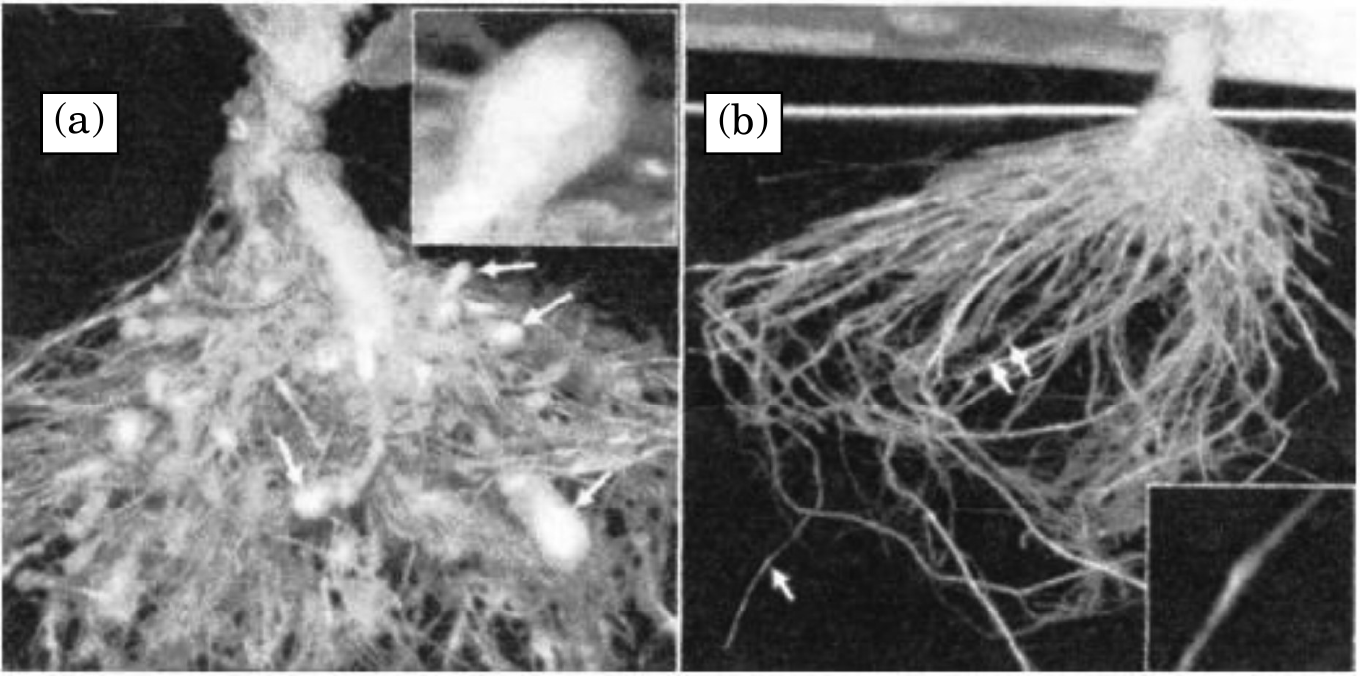
Explain how this transformation was achieved in the tobacco plant.
Solution
The transformation was done by RNA interference (RNAi), against the nematode Meloidogyne incognita, which infects tobacco roots.
• Using Agrobacterium vectors, nematode-specific genes were introduced into the tobacco plant.
• The DNA was introduced so that it produced both sense and anti-sense RNA in the host cells.
• These two complementary RNAs formed a double-stranded RNA (dsRNA).
• The dsRNA started RNAi and silenced the specific mRNA of the nematode, so its protein could not be made.
• The parasite could not survive in the transgenic host expressing the interfering RNA, so the plant's roots stayed healthy.
(a) Write the characteristics of 'stem cells'.
(b) From where can one obtain 'stem cells' in humans ?
(c) State any two applications of 'stem cells' in curing human diseases.
Solution
(a) Stem cells are unspecialised cells with two properties: self-renewal (they keep dividing to make more stem cells) and potency (they can differentiate into many kinds of specialised cells, tissues and organs).
(b) Any one: the inner cell mass of the blastocyst (embryonic stem cells); umbilical cord blood; bone marrow (adult stem cells).
(c) Any two: forming insulin-producing islet cells to treat diabetes; repairing damaged heart muscle; treating spinal cord injuries; restoring vision; treating blood cancers (bone-marrow transplant); treating genetic disorders such as cystic fibrosis.
(a) Write the scientific name of the nematode that infests the tobacco plants and the part that it infests.
(b) How is Agrobacterium used to protect tobacco plant from this attack ?
Solution
(a) Meloidogyne incognita; it infests the roots of tobacco plants.
(b) By RNA interference (RNAi): using Agrobacterium vectors, nematode-specific genes were introduced into the tobacco plant. The DNA produced both sense and anti-sense RNA in the host cells. These complementary RNAs formed double-stranded RNA (dsRNA), which started RNAi and silenced the specific mRNA of the nematode. The parasite could not survive in the transgenic host.
An application of biotechnology in agriculture involves production of pest resistant plants using 'cry' genes from a bacterium. Name the bacterium. Explain why the 'cry' gene kills the pest but not the bacterium itself.
Solution
The bacterium is Bacillus thuringiensis (Bt).
The cry genes code for Bt toxin, which forms protein crystals inside the bacterium. In the bacterium, the toxin exists as an inactive protoxin, so it does not kill the bacterium.
When an insect eats it, the alkaline pH of the insect's gut solubilises the crystals and activates the toxin. The active toxin binds to the midgut epithelial cells and creates pores, which cause the cells to swell and lyse, and the insect dies.
Bacillus thuringiensis plays an important role in Integrated Pest Management strategy. Explain how. Name any two crops that are protected efficiently from pests.
Solution
• Dried spores of B. thuringiensis are available in sachets. They are mixed with water and sprayed on vulnerable plants such as brassicas and fruit trees. Insect larvae eat them, the toxin is released in their gut, and the larvae are killed. This biological control reduces the use of chemical pesticides.
• Scientists have also introduced the Bt toxin (cry) genes into plants. Such plants make the toxin themselves, and insects eating them die.
Crops (any two): Bt cotton, Bt corn, Bt rice, Bt tomato, Bt potato, Bt soybean (sprays: brassicas, fruit trees).
With the help of a storyboard or a flowchart only, explain all the stages of how human insulin is produced through r-DNA technology.
Insulin in the human body is secreted by pancreas as prohormone/proinsulin. The schematic polypetide structure of proinsulin is given below. This proinsulin needs to undergo processing before it becomes functional in the body. Answer the questions that follow :
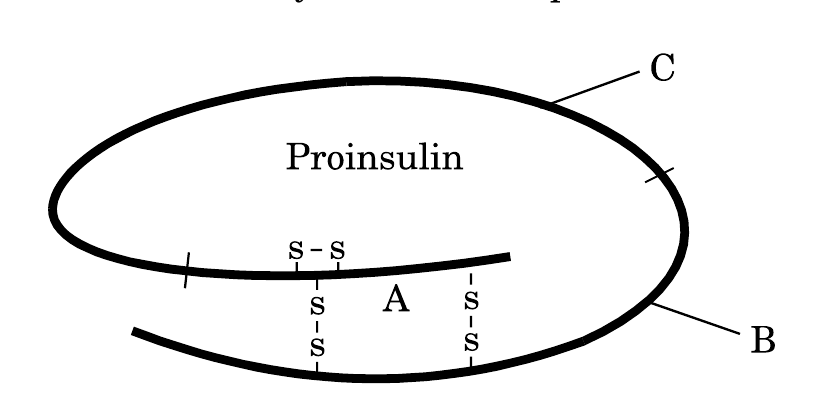
(a) State the change the proinsulin undegoes at the time of its processing to become functional.
(b) Name the technique the American company Eli Lilly used for the commercial production of human insulin.
(c) How are the two polypeptides of a functional insulin chemically held together ?
When Bacillus thuringiensis enters a certain insect's body, the insect gets killed, but itself remains unaffected. Explain how it is possible.
A child is born with ADA-deficiency (a) Suggest and explain a procedure for possible life-long (permanent) cure. (b) Name any other possible treatment for this disease.
Write any two biochemical/molecular diagnostic procedures for early detection of viral infection. Explain the principle of any one of them.
How has the use of Agrobacterium as vectors helped in controlling Meloidegyne incognitia infestation in tobacco plants ? Explain in correct sequence.
Explain the various steps involved in the production of artificial insulin.
Explain enzyme-replacement therapy to treat adenosine deaminase deficiency. Mention two disadvantages of this procedure.
5 marks: long answer
Name and explain the biotechnological strategy wherein the infection by the nematode Meloidegyne incognitia can be prevented using Agrobacterium vectors in the roots of tobacco plant by RNA interference.
Solution
The strategy is RNA interference (RNAi), a method of cellular defence in all eukaryotes. It silences a specific mRNA by a complementary double-stranded RNA (dsRNA) molecule, which binds to the mRNA and prevents its translation.
• The nematode Meloidogyne incognita infects the roots of tobacco plants and greatly reduces yield.
• Using Agrobacterium vectors, nematode-specific genes were introduced into the host (tobacco) plant.
• The DNA was introduced so that it produced both sense and anti-sense RNA in the host cells.
• The two RNAs are complementary, so they form a dsRNA, which starts RNAi.
• RNAi silences the specific mRNA of the nematode. As a result, the parasite could not survive in the transgenic host expressing the specific interfering RNA, and the plant was protected.
Define transgenic animals. Explain in detail any four areas where they can be used for human benefit.
Solution
Transgenic animals are animals whose DNA has been manipulated to possess and express an extra (foreign) gene. Over 95% of existing transgenic animals are mice; rats, rabbits, pigs, sheep, cows and fish have also been made.
Any four uses:
1. Normal physiology and development: they are designed to study how genes are regulated and how they affect the normal functions of the body and its development, e.g. complex factors involved in growth such as insulin-like growth factor.
2. Study of disease: they help us understand how genes contribute to diseases such as cancer, cystic fibrosis, rheumatoid arthritis and Alzheimer's, so that new treatments can be studied.
3. Biological products: they make useful products for treating diseases, e.g. human α-1-antitrypsin to treat emphysema. In 1997, the transgenic cow Rosie produced human-protein-enriched milk (2.4 g per litre) containing human alpha-lactalbumin, nutritionally more balanced for human babies.
4. Vaccine safety: transgenic mice are used to test the safety of vaccines before use on humans, e.g. the polio vaccine.
5. Chemical safety testing (toxicity testing): they carry genes that make them more sensitive to toxic substances than non-transgenic animals, so effects can be seen quickly.
Bt cotton, the genetically modified crop, has greatly helped the cotton farmers to increase their crop yield.
(i) How was Bt cotton plant made resistant to bollworm ? Explain.
(ii) Describe the mechanism that leads to the death of bollworms feeding on Bt cotton plants.
Solution
(i) Specific Bt toxin genes, cryIAc and cryIIAb, were isolated from the bacterium Bacillus thuringiensis and incorporated into cotton plants. The cotton plants then make the Bt toxin protein themselves and resist bollworms.
(ii) • B. thuringiensis forms insecticidal protein crystals (Bt toxin) during a particular phase of growth.
• The Bt toxin exists in the plant as an inactive protoxin.
• When a bollworm eats the plant, the alkaline pH of its gut solubilises the crystals and converts the protoxin into the active toxin.
• The activated toxin binds to the surface of the midgut epithelial cells and creates pores.
• The cells swell and lyse (burst), and the insect dies.
Answer the following questions based on Bt-crops :
(i) Why do farmers prefer to grow Bt cotton crop than genetically unmodified cotton crops ?
(ii) Name any two insects that are killed by Bt toxin.
(iii) Explain the mechanism by which Bt toxin kills the insects but not the bacterium which possesses the toxin.
RNA interference (RNAi) holds great potential as a therapeutic agent for the treatment of human diseases and as a bicontrol agent for controlling pests in the agricultural fields. An experiment was conducted to study the use of 'RNAi' for the potential treatment of disorders of cholesterol metabolism. Some people possess genetic mutations with elevated levels of 'ApoB' gene which predisposes them to coronary artery diseases. Lowering the amount of 'ApoB' can reduce the number of lipoproteins and lower the blood cholesterol. Tracy Zimmerman and her colleagues used RNAi in 2006 to reduce the level of 'ApoB' in non-human primates Cynomolgus monkeys. (i) One group of monkeys were given RNAi treatment (Small interfering RNAs, SiRNAs) (doses 1 mg/kg SiRNAs), (ii) Second group of monkeys were given RNAi treatment (doses 2·5 mg/kg SiRNAs), and (iii) Third group of monkeys were injected saline as control. The results of the experiments are illustrated in the graph given below :
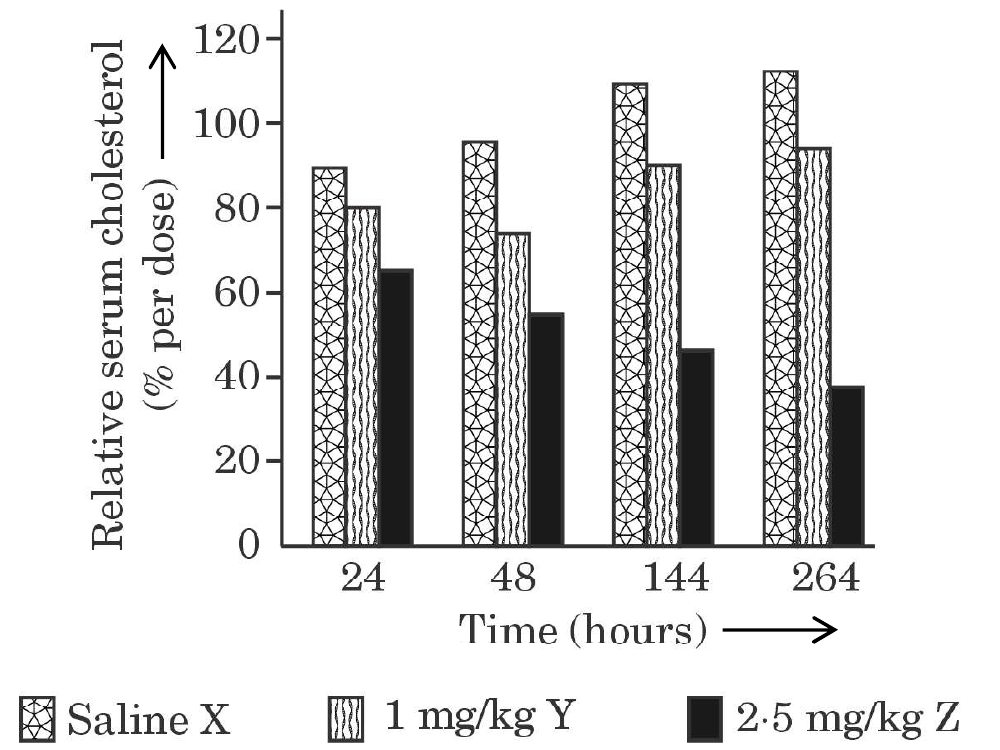
(i) What do you interpret from the bars (X and Z) obtained after 264 hours of treatment of monkeys with saline and 2·5 mg/kg SiRNAs treatment ?
(ii) Name the category of organisms in the living world, where RNA interference (RNAi) takes place. Why ?
(iii) What is the basic principle involved in RNA interference (RNAi) in silencing the preferred genes ?
There are two different farm lands, one where Bt-cotton crop was cultivated and the other where non Bt-cotton crop (indigenous) was cultivated. Farmers responsible for this experimental cultivation were free to use the farming practices of their choice. During the cultivation period, the data was collected with respect to the amount of pesticide used, water required for irrigation and at harvesting time, the crop productivity. Based on the data collected, a bar graph was plotted which is shown below.
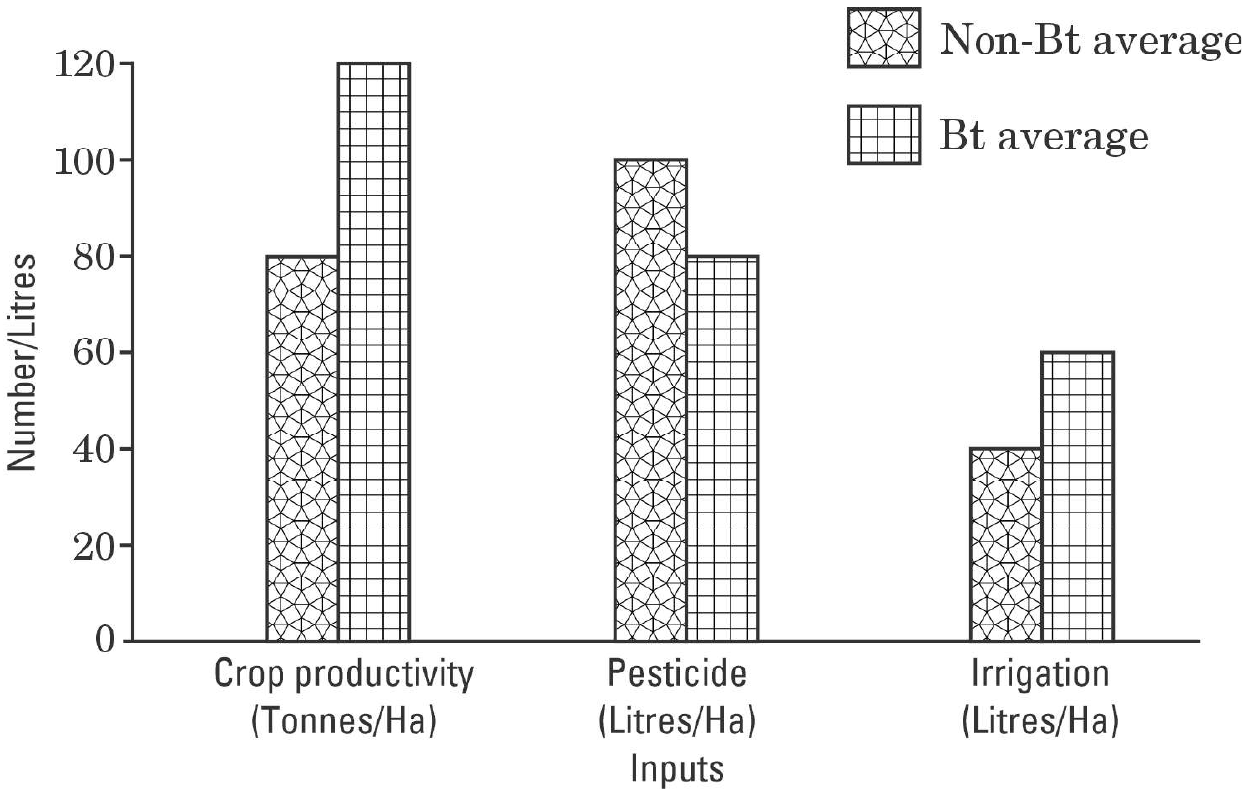
(i) Write your interpretation, with reason, on the basis of the three parameters plotted in the graph.
(ii) Which one of the crops would you like to cultivate in your farm and why ?
(iii) Which one out of these two crops would a farmer from Rajasthan like to cultivate and why ?
Get every solution for all chapters
- Every board question of every chapter, each fully solved the way the board gives marks
- 19 complete board papers, each followed by its solutions
- Weightage and most-asked topics for every chapter
- Instant PDF download, colour and black & white print copies
Revising the chapter first? Complete Biology Notes for Class 12 (NCERT 2026-27, CBSE Board 2027) →
What you get in the pack
- Questions from 122 CBSE papers, 2016 to 2026: every set code available
- Complete: 2114 different questions and parts from all set codes, 13 chapters and 19 full papers
- Part A: all 13 chapters, questions sorted chapter-wise and by marks
- Year-wise weightage table and most-asked topics for every chapter
- Part B: 19 full board papers, each followed by its complete solutions
- Labelled diagrams, Punnett squares, crosses and flow charts drawn in full
- Questions on topics out of the board syllabus flagged
All chapters in this pack
- PYQ Ch 1 Sexual Reproduction in Flowering Plants
- PYQ Ch 2 Human Reproduction
- PYQ Ch 3 Reproductive Health
- PYQ Ch 4 Principles of Inheritance and Variation
- PYQ Ch 5 Molecular Basis of Inheritance
- PYQ Ch 6 Evolution
- PYQ Ch 7 Human Health and Disease
- PYQ Ch 8 Microbes in Human Welfare
- PYQ Ch 9 Biotechnology: Principles and Processes
- PYQ Ch 10 Biotechnology and its Applications
- PYQ Ch 11 Organisms and Populations
- PYQ Ch 12 Ecosystem
- PYQ Ch 13 Biodiversity and Conservation
- Board Paper 2026 Set 57-1-1 with Solutions
- Board Paper 2026 Set 57-1-2 with Solutions
- Board Paper 2026 Set 57-1-3 with Solutions
- Board Paper 2026 Set 57-2-1 with Solutions
- Board Paper 2025 Set 57-4-1 with Solutions
- Board Paper 2025 Set 57-5-1 with Solutions
- Board Paper 2024 Set 57-1-1 with Solutions
- Board Paper 2024 Set 57-2-1 with Solutions
- Board Paper 2023 Set 57-1-1 with Solutions
- Board Paper 2023 Set 57-3-1 with Solutions
- Board Paper 2022 Term 2 Set 57-2-1 with Solutions
- Board Paper 2022 Term 2 Set 57-4-1 with Solutions
- Board Paper 2020 Set 57-1-1 with Solutions
- Board Paper 2020 Set 57-2-1 with Solutions
- Board Paper 2019 Set 57-2-1 with Solutions
- Board Paper 2019 Set 57-3-1 with Solutions
- Board Paper 2018 Set 57-1 with Solutions
- Board Paper 2017 Set 57-1 with Solutions
- Board Paper 2016 Set 57-1 with Solutions