
Environment and Sustainable Development: Class 12 PYQs 2020–2026 with solutions
All 29 CBSE board questions asked from Environment and Sustainable Development in 19 board papers, with the year, set and marks of each. 16 are solved free below. The Class 12 Economics PYQ Book: Solved Board Papers 2016-2026 (CBSE) has every solution, all chapters and 15 full board papers.

Environment and Sustainable Development: board weightage
Board weightage 2020–2026
| Year | 2016 | 2017 | 2018 | 2019 | 2020 | 2022 | 2023 | 2024 | 2025 | 2026 |
|---|---|---|---|---|---|---|---|---|---|---|
| Questions | – | – | – | – | 2 | 2 | 3 | 6 | 8 | 9 |
| Marks | – | – | – | – | 10 | 4 | 10 | 28 | 21 | 27 |
Most asked topics
30 questions from 19 papers. Repeated questions are shown once with every year they were asked.
Jump to: 1 mark2 marks3 marks4 marks6 marks
1 mark: MCQ and Assertion–Reason
The Montreal Protocol was signed in the year 1987 committing nations to____. (Choose the correct option to fill in the blank)
Solution
Answer: (C)
"Sustainable development refers to the development that meets the need of the present generation without compromising the ability of the future generations, to meet their own needs." The above mentioned definition has been given by __________. (Choose the correct option to fill in the blank)
Solution
Answer: (A) (UNCED, following the Brundtland Commission).
Identify that strategy given in the image that can be utilised for sustainable development.
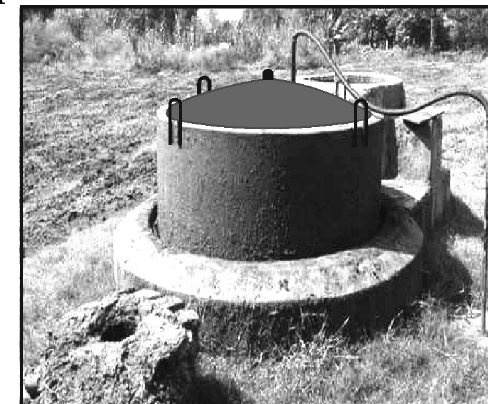
(For Visually Impaired Candidates only in lieu of Q. No. 24: If a nation fails to enforce the regulations of the Montreal Protocol, the likely long term environmental and biological consequence of this will be _________. (i) Rapid deforestation (ii) Increased possibility of skin cancer (iii) Greenhouse effect causing rise in global temperature (iv) Possibility of acid rain. Options: (A) Only (i) (B) (ii), (iii) and (iv) (C) (i) and (iv) (D) (i) and (iii))
Solution
Which is not a strategy of sustainable development? (A) solar panels (B) bio-pests (C) coal to produce electricity (D) mini-hydel plants
Solution
Study the following picture: Identify and select, the recent phenomenon in which demand for resources surpasses their supply.
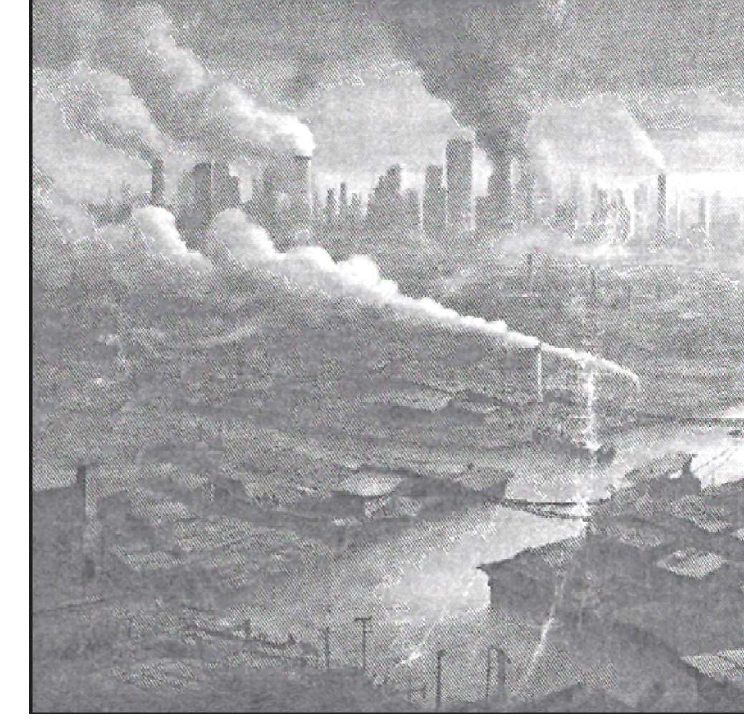
(For visually impaired candidates in lieu of Q. No. 19: Identify, which of the following is NOT one of the strategies for Sustainable Development. (A) Use of non-conventional sources of energy (B) Use of fossil fuel for transportation (C) Use of traditional knowledge (D) Use of organic compost manure)
Solution
When demand for environmental resources exceeds their supply (and wastes exceed absorptive capacity), there is an environmental crisis. Answer: (B) (Visually impaired: (B), use of fossil fuel.)
Read the following statements carefully : Statement 1 : Environmental concerns of waste generation and pollution have become critical, due to reversal of demand and supply relationship. Statement 2 : Environmental crisis happens, when the rate of resource extraction is less than that of regeneration of resource. In the light of the given statements, choose the correct option from the following :
Identify the incorrect statement about the functions of the environment: (A) provides resources (B) absorbs waste (C) sustains life (D) deteriorates quality of life
Statement 1: To address water and air pollution, the government established the Central Pollution Control Board. Statement 2: Deforestation leads to the permanent destruction of indigenous forests. (A) 1 true, 2 false (B) 1 false, 2 true (C) both true (D) both false
Which is not a correct function of the environment? (i) Exclusion of waste (ii) Sustenance of life (iii) Providing aesthetic services. (A) (i) only (B) (ii) only (C) (ii) and (iii) (D) (i) and (ii)
Mini-hydel plants are good for the environment because: (i) they generate electricity only for local areas. (ii) they do not change the land use pattern. (iii) they rely on the perennial streams. (Choose the correct alternative)
2 marks: very short answer
State any two harmful effects of Global warming.
Solution
1. Melting of polar ice and glaciers, raising sea levels and causing coastal flooding.
2. Greater incidence of tropical diseases, and more extreme weather (droughts, cyclones) that harms agriculture.
State any two advantages of 'sustainable development'.
Solution
1. It minimises environmental problems such as pollution and resource depletion.
2. It ensures that future generations enjoy at least the same quality of life as the present generation.
3 marks: short answer
Discuss the long term implications of increased demand for environmental resources exceeding their natural regenerative capacity.
Solution
Interpret the given picture and explain any one strategy to control it from becoming an ecological disaster.
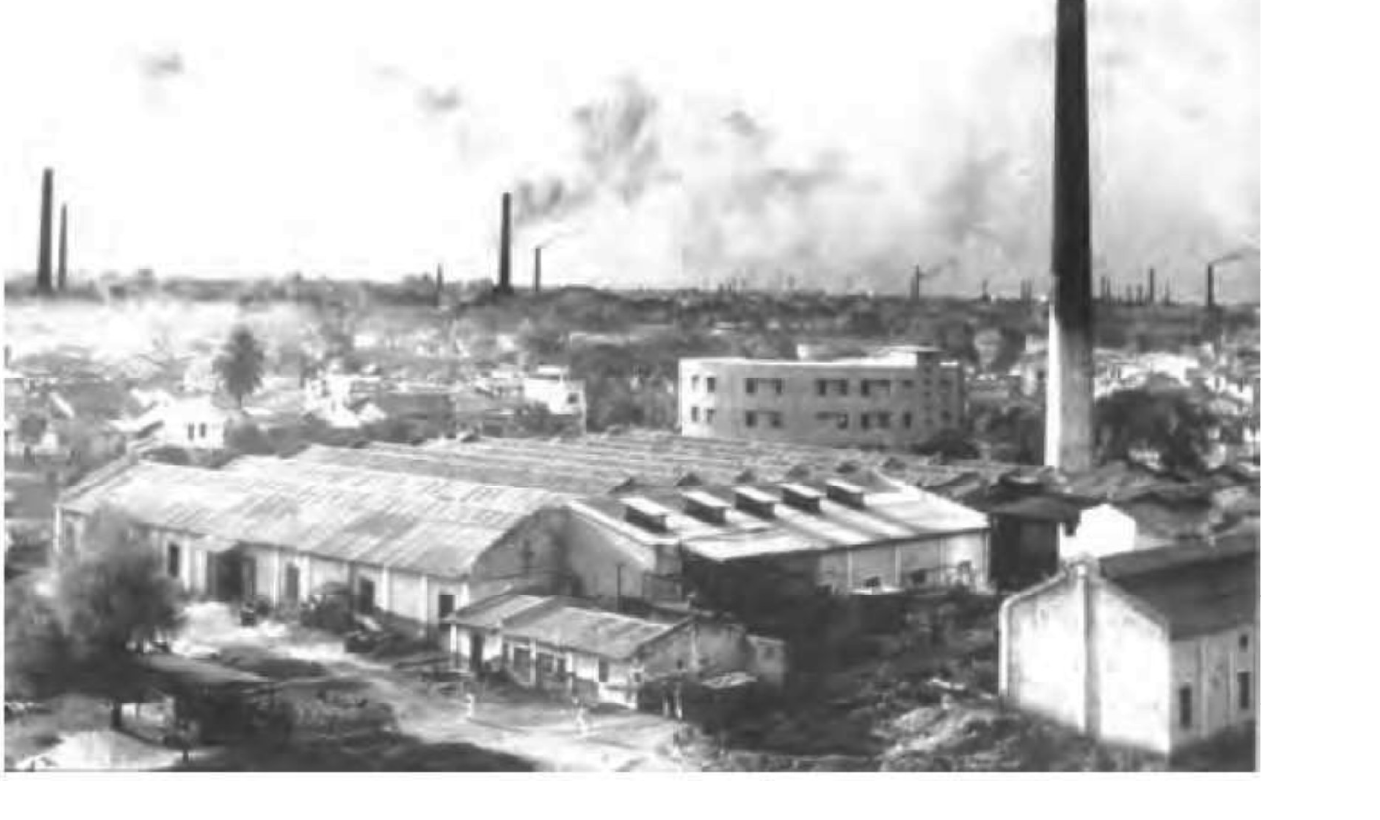
(For Visually Impaired Candidates only, in lieu of Q. No. 29: State any two strategies to achieve the objective of sustainable development.)
Solution
Interpret the given picture, on account of current environmental challenges :
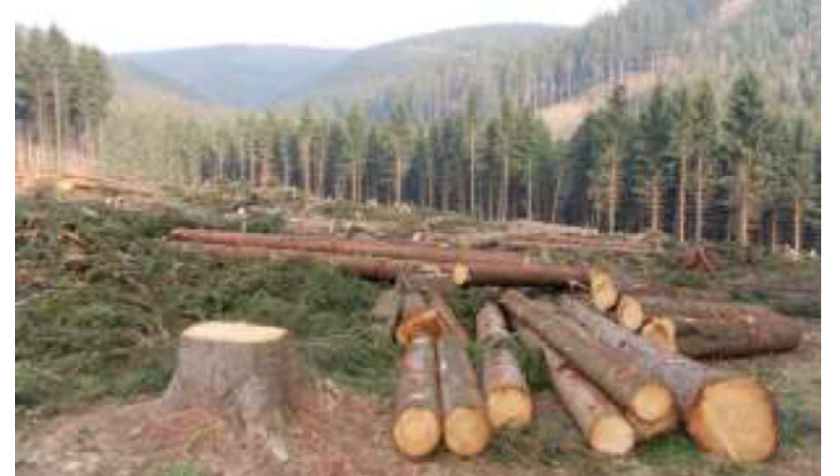
(For visually impaired candidates, in lieu of Q. 28: Explain any one current environmental challenge.)
4 marks: case-based / source-based
"Traditional knowledge and practices are still applicable in ensuring sustainable development." Do you agree? Give reasons.
Solution
The image shows the earth under stress from factories, vehicles, felled forests and a growing population. Interpret it and comment on environmental crisis as a result of changed production and consumption patterns. (Visually impaired: "Environmental crisis is a recent phenomenon, a result of changing production and consumption patterns." Justify.)
Solution
(a) "Bio-pesticides help to reduce the ill-impacts of green revolution on soil and water bodies while promoting sustainable development." Justify the given statement with valid explanation. (b) Define Absorptive capacity.
Define any two of the following : (a) Absorptive Capacity of Environment (b) Carrying Capacity of Environment (c) Poverty Line (in terms of Calorific values)
6 marks: long answer
Read the passage on green investment (India a global leader on climate change; PM Ujjwala Yojana for cleaner air; Jal Jeevan Mission for water security; the greenhouse effect: gases trap heat from the sun and keep the planet warm; rising temperature a global concern). (a) Discuss any two steps for sustainable development in India. (b) Mention two factors that challenged the carrying capacity of the environment. (c) Define the greenhouse effect.
Solution
(b) (1) The rising population of developing countries. (2) The affluent consumption and production standards of the developed world.
(c) The greenhouse effect is the natural process in which certain gases in the atmosphere (CO2, methane, etc.) trap the heat of the sun and re-emit it, warming the earth's surface; more of these gases causes global warming.
Read the passage (2021 World Air Quality Report: India has 63 of the 100 most polluted cities; PM 2.5 in 48% of cities more than 10 times the WHO level; sources: vehicular emission, industrial waste, cooking smoke, construction, crop burning, power generation; India second only to Bangladesh, average PM 2.5 58.1 µg/m³; exposure linked to heart and lung disease and 7.5 million premature deaths a year). (a) State four sources of air pollution in India. (b) Discuss the adverse impacts of rising PM 2.5. (c) State the full form of CPCB.
Solution
(b) Persistent exposure to PM 2.5 is linked to long-term health problems including heart and lung disease and about 7.5 million premature deaths a year; it lowers productivity and raises health-care costs, so it reduces human capital and wellbeing.
(c) Central Pollution Control Board.
Read the following text carefully: Climate change and sustainability of environment are two pressing issues that have captured global attention. In recent years, the world has witnessed a surge in extreme weather events including severe droughts, cloud bursts, floods, land slides, receding coastlines and the alarming melting of arctic ice and Himalayan Glaciers. Wildfires have become more frequent and intense. In this context, sustainable agriculture emerges as a crucial solution. This refers to those farming practices that meet today's requirements while preserving resources for the future generation. This means adopting methods that protect the environment, reduce dependence on chemical inputs, efficiently use water and land and ensuring socio-economic equity for farmers. On one hand sustainable agricultural practices are necessary, on the other, they are often more expensive to implement compared to conventional methods. Sustainable practices like organic farming, climate-smart technologies, modern irrigation system may seem costly upfront, but they offer long-term benefits by improving productivity, and environmental stewardship. Without accessible and affordable financing options, the much-needed shift to sustainable farming practices will remain a distant dream for many. Therefore, sustainable finance should not only promote eco-friendly practices but also ensure that financial resources are available to the farmers who need it. (Source: rbi.org.in, adopted and modified) On the basis of the given text and common understanding, answer the following questions: (a) Define Sustainable Agriculture. (b) "Sustainable Agriculture practices, like organic farming may seem costly initially, but offer long term benefits." Discuss the long term benefits these practices can offer. (c) State any two strategies to promote sustainable development in a developing country like India.
Solution
(b) Over time such practices improve productivity and soil fertility; they restore, maintain and enhance ecological balance; they reduce dependence on chemical inputs (and their cost) and protect soil and water; they use water and land efficiently; and organic produce fetches better prices, improving farmers' incomes.
(c) (1) Use of solar power. (2) Use of mini-hydel plants (also wind power, CNG in transport, LPG and gobar gas in rural areas).
Read the text on green financing (power and steel sectors' carbon footprint; green financing aims to increase financial flows from banking, micro-credit, insurance and investment from the public, private and not-for-profit sectors to sustainable development priorities; it improves environmental quality, energy efficiency and the organic economy). (a) State the meaning and objective of green finance. (b) Discuss any two benefits of green financing.
Solution
(b) (1) It improves environmental quality by reducing greenhouse gas emissions. (2) It improves energy efficiency by investing in projects that promote the green economy (renewable energy, organic farming), and supports long-term economic development.
Read the following text carefully: In order to address two major environmental concerns in India, viz. water and air pollution, the government set up the Central Pollution Control Board (CPCB) in 1974. This was followed by states establishing their own state level boards to address all the environmental concerns. They investigate, collect and disseminate information relating to water, air and land pollution, lay down standards for sewage/trade effluent and emissions. These boards provide technical assistance to governments in promoting cleanliness of streams and wells by prevention, control and abatement of water pollution, and improve the quality of air and to prevent, control or abate air pollution in the country. These boards also carry out and sponsor investigation and research relating to problems of water and air pollution and for their prevention, control or abatement. They organize, through mass media, a comprehensive mass awareness programme for the same. The PCBs prepare manuals, codes and guidelines relating to treatment and disposal of sewage and trade effluents. They assess the air quality through regulation of industries. In fact, state boards, through their district level officials, periodically inspect every industry under their jurisdiction to assess the adequacy of treatment measures provided to treat the effluent and gaseous emissions. It also provides background air quality data needed for industrial siting and town planning. The pollution control boards collect, collate and disseminate technical and statistical data relating to water pollution. They monitor the quality of water in 125 rivers (including the tributaries), wells, lakes, creeks, ponds, tanks, drains and canals. On the basis of the given text and common understanding, answer the following questions: (a) State any two concerns owing to which the Central Pollution Control Board (CPCB) was established. (b) Explain any two functions performed by the Central Pollution Control Board (CPCB). (c) Elaborate any two strategies to ensure sustainable development as adopted by India.
Solution
(b) (i) It investigates, collects and disseminates information relating to water, air and land pollution. (ii) It lays down standards for sewage and trade effluents and for emissions. (Also: it monitors the quality of water in rivers, wells and lakes; it conducts mass awareness programmes; it inspects industries for treatment of effluents.)
(c) (i) Wind energy: in areas where wind speed is high, windmills generate electricity without any adverse impact on the environment; the initial cost is high but the benefit is lasting. (ii) Solar energy: photovoltaic cells/solar panels convert sunlight into electricity; this is especially useful in remote areas and is free from pollution. (Also: LPG and gobar gas in rural areas, CNG in urban transport, mini-hydel plants, traditional knowledge, biocomposting, biopest control.)
Read the text on green growth and net-zero emissions ("green growth: economic growth achieved in a way that minimises environmental impact; net zero: balance between anthropogenic emission of greenhouse gases and their removal…"). (i) State the meaning of green growth and net-zero emissions. (ii) Discuss briefly the interconnection between them. (iii) Illustrate any one factor to promote net-zero emissions.
Read the text from the G-20 New Delhi Leaders' Declaration ("One Earth, One Family, One Future"; resolve to implement the 2030 Agenda and the SDGs; no country should have to choose between fighting poverty and fighting for our planet; G-20 2023 Action Plan on hunger, health, One Health approach and quality education). (a) State and discuss the importance of a collective fight in achieving the SDGs. (b) Discuss briefly the action plan of G-20 leaders in promoting the "One Health" approach.
Read the text on green finance and Sovereign Green Bonds (India aims to cut carbon intensity by 45% by 2030; projects worth ₹ 25,000 crore to be financed by sovereign green bonds for renewable energy, climate change, clean transport, water and waste management, pollution control; businesses gain by following norms, brand value and cost saving). (a) Define sustainable development. (b) State the public project areas where Sovereign Green Bonds are focused. (c) How can businesses benefit from green finance?
(i) State and discuss any one strategy involved in attaining sustainable development in India. (ii) Discuss briefly the importance of micro credit programme in rural India.
(a) "Ujjwala Yojana has been a game changer for rural India." State any three conventional fuels being targeted under the LPG cylinder distribution scheme (Ujjwala Yojana). (b) "Indian Health System needs a stronger dose of public expenditure to cure itself." Justify the given statement with valid arguments.
Get every solution for all chapters
- Every board question of every chapter, each fully solved the way the board gives marks
- 15 complete board papers, each followed by its solutions
- Weightage and most-asked topics for every chapter
- Instant PDF download, colour and black & white print copies
Revising the chapter first? Complete Economics Notes for Class 12 (NCERT 2026-27, CBSE Board 2027) →
What you get in the pack
- Questions from 129 CBSE Economics papers, 2016 to 2026: every set code available
- Complete: 1783 different questions and parts from all set codes, 14 chapters and 15 full papers
- Part A: all 14 chapters, questions sorted chapter-wise and by marks
- Year-wise weightage table and most-asked topics for every chapter
- Part B: each full board paper followed by its complete solutions
- National income, multiplier, budget and BOP numericals worked step by step
- Questions on topics out of the board syllabus flagged
All chapters in this pack
- PYQ Ch 1 Introduction to Macroeconomics
- PYQ Ch 2 National Income and Related Aggregates
- PYQ Ch 3 Money and Banking
- PYQ Ch 4 Determination of Income and Employment
- PYQ Ch 5 Government Budget and the Economy
- PYQ Ch 6 Open Economy: Balance of Payments and Exchange Rate
- PYQ Ch 7 Indian Economy on the Eve of Independence
- PYQ Ch 8 Indian Economy 1950–1990
- PYQ Ch 9 Liberalisation, Privatisation and Globalisation
- PYQ Ch 10 Human Capital Formation in India
- PYQ Ch 11 Rural Development
- PYQ Ch 12 Employment: Growth, Informalisation and Other Issues
- PYQ Ch 13 Environment and Sustainable Development
- PYQ Ch 14 Comparative Development Experiences of India and its Neighbours
- Board Paper 2026 Set 58-1-1 with Solutions
- Board Paper 2026 Set 58-1-2 with Solutions
- Board Paper 2026 Set 58-1-3 with Solutions
- Board Paper 2026 Set 58-2-1 with Solutions
- Board Paper 2025 Set 58-1-1 with Solutions
- Board Paper 2025 Set 58-2-1 with Solutions
- Board Paper 2024 Set 58-1-1 with Solutions
- Board Paper 2024 Set 58-2-1 with Solutions
- Board Paper 2023 Set 58-1-1 with Solutions
- Board Paper 2022 Term 2 Set 58-1-1 with Solutions
- Board Paper 2020 Set 58-1-1 with Solutions
- Board Paper 2019 Set 58-1-1 with Solutions
- Board Paper 2018 Set 58-1 with Solutions
- Board Paper 2017 Set 58-1 with Solutions
- Board Paper 2016 Set 58-1 with Solutions