
Marketing Management: Class 12 PYQs 2016–2026 with solutions
All 79 CBSE board questions asked from Marketing Management in 21 board papers, with the year, set and marks of each. 41 are solved free below. The Class 12 Business Studies PYQ Book: Solved Board Papers 2016-2026 (CBSE) has every solution, all chapters and 11 full board papers.

Marketing Management: board weightage
Board weightage 2016–2026
| Year | 2016 | 2017 | 2018 | 2019 | 2022 | 2023 | 2024 | 2025 | 2026 |
|---|---|---|---|---|---|---|---|---|---|
| Questions | 3 | 2 | 3 | 6 | – | 6 | 20 | 21 | 19 |
| Marks | 11 | 4 | 7 | 14 | – | 11 | 56 | 71 | 57 |
Most asked topics
80 questions from 21 papers. Repeated questions are shown once with every year they were asked.
Jump to: 1 mark3 marks4 marks5 marks6 marks
1 mark: MCQ and Assertion–Reason
Sudha is a corporate executive and has to attend a felicitation function to be held in her office tomorrow. So she decides to colour her hair. On recommendation of her friend, she purchased 'NATURO' hair colour. After reading essential details such as shade, its ingredients, usage instructions and expiry date mentioned on the box, Sudha opened the box. She took out the colour tube and developer bottle from the box and threw away the box. The level of packaging of box thrown away by Sudha was:
Solution
Customers recognise 'Lima' sportswear by the tiger symbol on all its products; Lima has legally registered its name and the tiger symbol so no other company can use them. The tiger symbol is Lima's: (A) brand name (B) brand mark (C) trade mark (D) both brand mark and trade mark
Solution
Reena's Raksha Bandhan gift: under the wrapping a decorative cardboard box, inside it a small glass bottle of expensive face cream; both had labels. The glass bottle is: (A) primary packaging (B) transportation packaging (C) secondary packaging (D) general packaging
Solution
A pouch contains packets of different flavours of chips. The level of packaging of the pouch: (A) primary (B) secondary (C) transportation (D) general. (Visually impaired: 'A variety of programmes designed to promote or protect a company's image and its products in the eyes of the public' is: (A) advertising (B) personal selling (C) sales promotion (D) public relations.)
Solution
Statement I: The production concept assumes customers will not buy, or not buy enough, unless adequately convinced and motivated. Statement II: The selling concept assumes consumers favour products widely available at an affordable price. (A) I true, II false (B) I false, II true (C) both false (D) both true
Solution
Which pricing objective results in a higher price? (A) market share leadership (B) surviving in a competitive market (C) attaining product quality leadership (D) profit maximisation in the long run
Solution
Picture I shows mass production of televisions; Picture II shows a television used as a computer monitor. The shift in philosophy: (A) production to product concept (B) production to societal marketing (C) societal marketing to production (D) product to production. (Visually impaired: giving a name, sign or symbol to a product is: (A) brand (B) branding (C) labelling (D) packaging.)
Solution
Shridhan wanted to purchase an electric car. He visited a retail showroom of a car company where these cars were displayed. The Marketing Manager of this showroom told Shridhan that the company offers credit facilities, maintenance services and many other services that help in bringing repeat sales and developing brand loyalty for their cars. The marketing function being discussed by the Marketing Manager in the above case is:
Solution
Which of the following statement is correct with respect to 'Exchange Mechanism', a feature of Marketing?
Solution
Which of the following statement is correct about personal selling:
Solution
Match the concepts of marketing in Column I with their focus in Column II: Column-I: (a) Product concept (b) Selling concept (c) Marketing concept (d) Societal concept. Column-II: (i) Its main focus is on quality, performance and feature of the product. (ii) Its main focus is on satisfaction of customer needs. (iii) Its main focus is on aggressively persuading buyer to purchase the existing product. (iv) Its main focus is on satisfaction of customer needs and society's well-being. Choose the correct options from the following: (a) (b) (c) (d)
Solution
A buyer buys a product for the benefits it provides: (i) functional (ii) social and (iii) ______. (A) technological (B) economic (C) psychological (D) environmental
Solution
From the picture (a "Buy 1 Get 1 Free" offer), identify the promotional tool: (A) advertising (B) personal selling (C) sales promotion (D) public relations. (Visually impaired: which function of marketing gives detailed information to consumers, ensures safety of the product and serves as a promotional tool? (A) product designing and development (B) branding (C) marketing planning (D) packaging and labelling.)
Solution
Assertion (A): Marketing is only a post-production activity. Reason (R): Marketing includes identifying customer needs, collecting information for developing the product, designing a suitable package and giving it a brand name. (A) both true, R explains A (B) both false (C) A true, R false (D) A false, R true
Solution
Identify the marketing function in the picture (a product pack showing name, contents and instructions): (A) product designing (B) branding (C) marketing planning (D) packaging and labelling. (Visually impaired: which marketing function gives detailed information, ensures safety of the product and serves as a promotional tool?)
Solution
The marketing management philosophy which uses availability and affordability as a means to achieve the objectives is:
Solution
Identify the tool of promotion used by 'Mehta Sons Garments' to boost its sales:
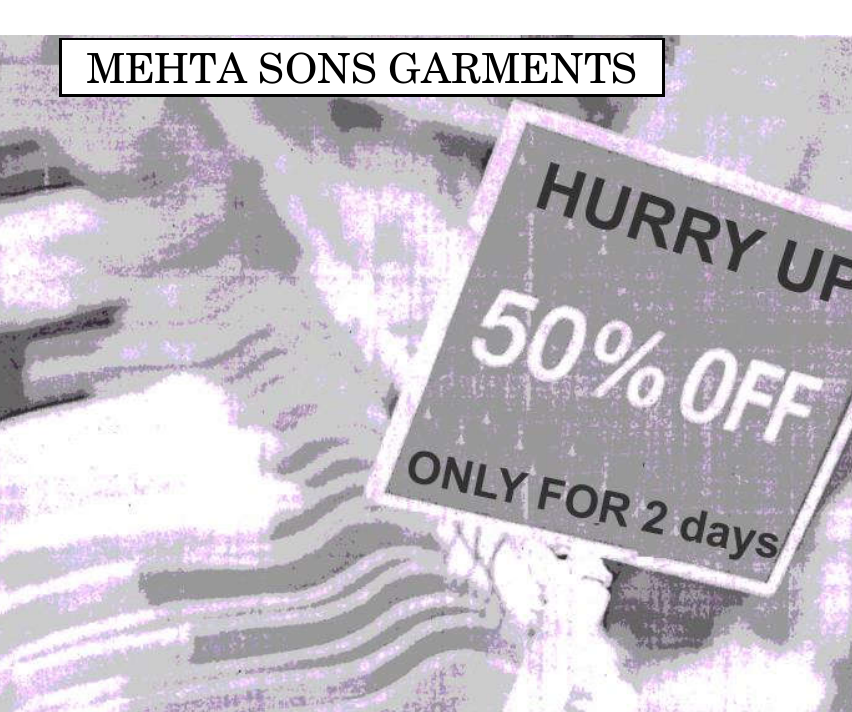
Solution
Which of the following is not a component of 'Physical Distribution'?
Solution
Beenu had a bookstore in Sabad called 'Book-mark'. For years, the bookstore was doing reasonably well but with the rise of digital books and online retailers, her sales had declined. Beenu's daughter, who had just completed her MBA with a specialisation in marketing decided to launch a marketing campaign to revive the bookstore. The campaign's focus was on the joy of reading books in physical form, the joy of turning pages and the warm atmosphere of the bookstore. She organised story writing and other competitions every weekend. The information of these was given to the parents and children through television, radio, children's magazines, etc. Attractive prizes were offered to the winners. This increased the footfall of the children and their parents and the bookstore soon became popular.
The tool of communication used by Beenu's daughter to revive the bookstore was:
Solution
'Lens-o', an online eyewear company selling on its website, recently set up its own offline showroom. The channel of distribution: (A) zero level (B) one level (C) two level (D) three level
Which is not a feature of marketing? (A) needs and wants (B) storage and warehousing (C) customer value (D) creating a market offering
A sweets box shows the words 'Amar Sweets' and a distinctive 'AS' symbol. What is depicted? (A) trade mark only (B) brand name only (C) brand mark only (D) both brand name and brand mark
'Marbury Biscuits' distributed free samples of its new oat cookies in schools. The tool: (A) advertising (B) personal selling (C) sales promotion (D) public relations
A picture shows the cardboard box in which a perfume bottle is packed. The level of packaging of the box: (A) primary (B) secondary (C) transportation (D) both (A) and (B)
A refrigerator carries a sticker showing 'Digital Inverter', '10 year warranty', a power-savings star rating and other information. What is shown? (A) brand name (B) brand mark (C) trademark (D) label
___________ as an element of marketing mix includes the activities that make the firm's products available to the target customers.
'Roma Ltd.' identified the needs of the customers for the successful marketing of their products. This was important for making an analysis of the available opportunities, threats, weaknesses and strengths of the organisation and help in deciding what opportunities can best be pursued by it.
By doing so, which of the following functions of marketing is being performed by 'Roma Ltd.'?
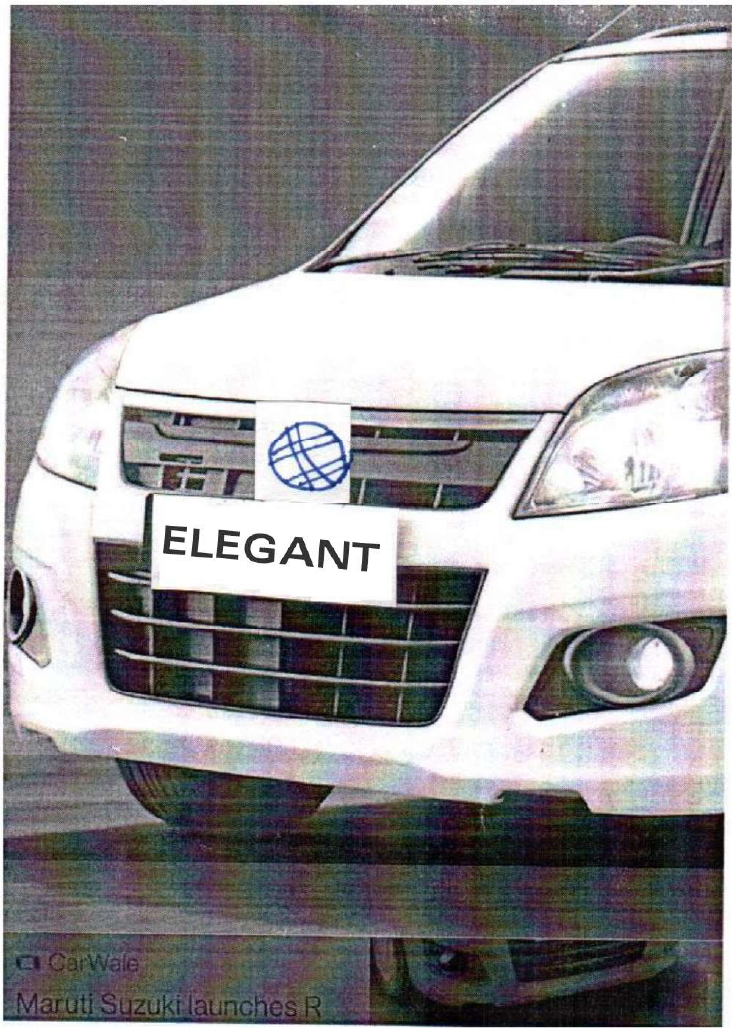
The symbol which appears on all the 'Elegant' cars and which is not utterable is known as its:
'A good physical distribution system should provide for an accurate and speedy processing of orders in the absence of which goods will reach the customers late or in wrong quantity.'
The component of physical distribution highlighted above is:
________ involves a variety of programmes designed to promote or protect a company's image and its individual products in the eyes of the public.
Beena has been using 'Klean', a famous detergent available in the market. On watching numerous advertisements in the television, she decided to try a new brand of detergent. When she went to the near-by store to purchase the same, she saw detergents of other producers making similar claims of whiteness and stain removing abilities. Hence she could not make up her mind as which detergent to purchase. Name the objection of advertising being discussed in this case.
Give the meaning of 'Physical Distribution' as an element of Marketing Mix.
What is meant by 'Marketing Management'?
Why is the understanding of 'Marketing Management Philosophies' important?
'Buy one get one free' is printed on the label of the package of a mosquito repellant.
State the labelling function being performed by this statement.
Mansi took her niece, Ridhima, for shopping to 'Mega Stores' to buy her a bag for her birthday. She was delighted when on payment of the bag she got a pencil box along with the bag free of cost.
Identify the technique of sales promotion used by the company.
Name the function of marketing which is concerned with the cost and location of target market.
3 marks: short answer
'KUL', an eco-friendly stationery brand: in corporate gifting it appoints salespersons to contact prospective clients and make sales; in the international market it manages public opinion and builds goodwill and a positive image; in the domestic retail market it offers cash discounts and free gifts for immediate purchase. Identify and state the three promotion tools.
Solution
Explain the marketing functions: (i) marketing planning (ii) customer support services.
Solution
(ii) After-sales service, handling complaints and adjustments, credit, maintenance and technical services, consumer information; they give maximum satisfaction, repeat sales and brand loyalty.
Explain the factors affecting price: (i) extent of competition (ii) marketing methods used.
Solution
(ii) Distribution system, quality of salesmen, advertising, sales promotion and packaging affect pricing; uniqueness in any of them gives competitive freedom in fixing price.
'Premier Ltd', a clothing company, designs clothes after understanding the needs of present and prospective buyers, believing profit is maximised only when all decisions aim at customer satisfaction. It also cares for society's long-term well-being: organic cotton and recycled polyester, a return-old-clothes recycling scheme with discounts, and part of profits for environmental education. Identify and explain two marketing philosophies.
Solution
(2) Societal marketing concept: the task is to identify the needs and wants of the target market and deliver satisfaction effectively and efficiently so that the long-term well-being of consumers and society is taken care of.
Differentiate between marketing concept and selling concept on (i) meaning (ii) main focus (iii) means.
Vani launched millet namkeens named 'Pure Millets' (a name reflecting natural ingredients), packed in eco-friendly biodegradable packets that keep freshness and convenience; stickers on packets show the name, the tagline 'Power Your Health', nutritional information and 'Organic Certified'. Identify and give the meaning of three product-related decisions besides features and quality.
JTM Ltd. launched 'Buddyline', an exercise book and comprehensive stationery brand name comprising of ball pens, gel pens and geometry boxes after identifying the target market and understanding the needs and wants of the consumers of that market. All their products were of good quality and eco-friendly but expensive. They wanted to distinguish their product from that of their competitors. They spent lot of effort, time and money in creating the brand name, as they knew that without a brand name, they can only create awareness for the generic product and can never be sure of the sale of their products. The effort paid off and the demand for the products started growing. The customers liked the brand and became habitual to it. They did not mind paying a higher price.
Over a period of time, it became a status symbol to buy 'Buddyline' brand because of its quality. The consumers felt pride in using them.
(i) Identify the marketing management philosophy followed by JTM Ltd.
(ii) Explain the advantages of branding to the marketers highlighted in the above case.
Hemant, Guddu and Toshita were friends from college days and presently they were doing different kinds of business. They regularly meet and discuss their business ideas, and exchange notes on customer satisfaction, marketing efforts, product designing, selling techniques, social concerns, etc.
In one of such meetings, Hemant drew the attention of Guddu and Toshita towards the exploitation of consumers. He told that most of the sellers were exploiting the consumers in various ways and were not paying attention towards the social, ethical and ecological aspects of marketing, whereas he was not doing so. Guddu told that they were under pressure to satisfy the consumers but stated that the consumers would not buy or not buy enough unless they were adequately convinced and motivated for the same.
Toshita stressed that a company cannot achieve its objectives without satisfying the needs of the customers. It was the duty of the businessmen to keep consumer satisfaction in mind, because business is run by the resources made available by the society. She further stated that she herself was taking into consideration the needs of the customers.
Identify the various types of thinking that guided Hemant, Guddu and Toshita in the marketing efforts of their business. Also, state one more feature each of the various types of thinking identified that is not given in the above paragraph.
4 marks: case-based / source-based
'Eco Care', a start-up, plans to launch a reusable water bottle for environmentally conscious millennials and Gen Z. For this, they conducted a market research to identify the needs of the customers so that an informed decision could be taken for successful marketing of the product. They wanted to work carefully on the design to make the bottle attractive to the target customers. On the basis of consumer views and opinions, they developed a stylish stainless steel bottle with double wall insulation to keep beverages cold for 24 hours, giving it a competitive advantage in the market. They named the bottle 'Eco-Sip' creating a brand identity focused on sustainability and simplicity. It would also help in product differentiation. The packaging was made using hundred percent recyclable cardboard, with details of sustainability, features, price etc. printed on it. State the four functions of marketing that are carried out by 'Eco Care' in the above case.
Solution
'Nat-Ayur' launched a herbal face cream costing ₹ 60 a tube to produce, pack, distribute and sell, the minimum price; a survey showed high demand and willingness to pay more for herbal products; similar creams sold at ₹ 80–120, so it priced at ₹ 99; eco-friendly packaging, free home delivery and online advertisements gave it competitive freedom in pricing. Identify and explain two factors in pricing.
Solution
(2) Utility and demand (high demand, willingness to pay more): utility and intensity of demand set the upper limit of price.
(3) Extent of competition (creams at ₹ 80–120): competitors' prices, quality and features must be studied; free competition keeps price low.
(4) Marketing methods used (eco-friendly packaging, home delivery, online ads): uniqueness in other marketing elements gives competitive freedom in pricing.
'Priya Motors' designed the 'Moto Glide III' bike to appeal to youth: sleek body, sharp headlights, digital speedometer, better aerodynamics and fuel efficiency, giving a competitive edge; strict quality standards for every part gave uniformity and consistency; it offered versions at different prices by features (Bluetooth, colours). Identify and explain two marketing functions.
Solution
(2) Standardisation and grading: standardisation means producing goods of predetermined specifications for uniformity and consistency (strict quality standards); grading classifies products into groups by important characteristics such as quality and features (versions with different features and prices).
Four friends planned a water-bottle business. Rahul: produce on a large scale to make bottles available and affordable. Amit: very good quality with time markers, filters, infusers. Priya: first identify the needs of present and prospective buyers and satisfy them (personalised, sports, insulated bottles). Sneha: also consider long-term social welfare: reusable bottles from eco-friendly materials. Identify and state their philosophies.
Solution
Rhea sells handmade candles online. Before Diwali she processed a big order from a gift-store chain promptly, knowing that accurate and speedy processing prevents late or wrong deliveries, then arranged a vehicle to move cartons from her workshop to the chain's warehouse before the rush. (a) Identify the two components of physical distribution she managed. (b) Explain the other two she needs to work on.
Solution
(b) (1) Warehousing: storing and assorting products to create time utility, needed because production and consumption times differ. (2) Inventory control: deciding the level of inventory; a higher level gives better service but higher carrying cost as capital is tied up; it balances cost and customer satisfaction.
Anika, a busy MNC employee, saw an attractive poster of a gym near her house; at the gym she found a 50% discount on the weight-loss fee, a free coach and free protein diet, valid only for 10 days, and joined at once. (i) Identify and give the meaning of the element of marketing mix. (ii) Identify and explain the tools of communication highlighted.
Solution
(ii) (1) Advertising (the poster): an impersonal form of communication paid for by an identified sponsor to promote goods or services; no face-to-face contact, and the sponsor bears the cost. (2) Sales promotion (50% discount, free coach and diet for 10 days): short-term incentives to encourage immediate purchase, such as cash discounts, free gifts, contests, samples.
'BNG Ltd' makes kettles, toasters, blenders and irons on a large scale, so average cost is low and products are widely available at affordable prices. 'KMV Ltd' focuses on superior quality, performance and features, with an R&D team improving quality continuously. (a) Identify and explain the marketing philosophy of each. (b) Differentiate them on (i) main focus (ii) ends.
Solution
(b) (i) Main focus: production concept: quantity of product; product concept: quality, performance and features. (ii) Ends: production concept: profit through volume of production; product concept: profit through product quality.
'Reliable Appliances' mass-produces affordable basic refrigerators, believing customers prefer widely available, affordable products, attracting budget-conscious buyers. 'Modern Appliances' makes premium refrigerators with Wi-Fi, touch screens and advanced cooling, believing customers prefer superior quality and innovative features, and keeps improving them. (a) Identify their philosophies. (b) Differentiate on (i) main focus (ii) means (iii) ends.
Solution
(b)
| Basis | Production concept | Product concept |
|---|---|---|
| Main focus | quantity of product | quality, performance and features of product |
| Means | availability and affordability of product | product improvements |
| Ends | profit through volume of production | profit through product quality |
Ashwin sells designer clothes online under the brand 'Kogue'; good fabric, intricate designs and skilled craftsmanship make them expensive to produce. Since the online market is very competitive, he charges a reasonable price that covers cost of production and sale and gives a 10% margin over cost. Identify and explain two factors affecting price determination.
Solution
(2) Extent of competition ("online market is very competitive… reasonable price"): under keen competition price tends to the lower level; the firm must consider competitors' prices and reactions.
Explain the marketing functions: (i) customer support services (ii) product designing and development.
Explain advertising and personal selling as tools of promotion.
Arushi's bookstore 'Children's Delight' has 16 stores, its own well-managed inventory management, storage and warehousing to deliver books all over India, and regularly communicates the availability, features and merits of books to target customers, persuading them to buy. Quoting lines, identify and explain two elements of marketing mix besides product.
Differentiate between production concept and marketing concept on (a) meaning (b) main focus (c) means (d) ends.
Explain the marketing functions: (i) product designing and development (ii) standardisation and grading.
Explain the four elements of marketing mix.
Explain any four points of difference between Marketing and Selling.
Explain the following functions of marketing:
(i) Product designing and development
(ii) Standardization and Grading
A company was marketing 'Juicers' which were very popular due to their quality and after-sale-services provided to the customers. The company was a leading company in the market and earning huge profits. Because of huge profits the company ignored the after sales services. As a result its relations with the customers got spoiled and the image of the company in the public was damaged. Top management became concerned when the profits for the current quarter fell steeply. On analysis it was revealed that ignoring the after sales services was its reason. Therefore the company took all possible measures to protect and promote its favourable image. As a result the goodwill of the company improved in the society.
(a) Name and state the communication tool used by the marketer in the above case to improve its image.
(b) Also explain role of the tool as identified in Part (a).
5 marks: long answer
After acquiring the necessary knowledge and skills on starting an Aloevera Farm, Ashok wanted to be the leading manufacturer of Aloevera products worldwide. He observed that the products were expensive as the demand of the products was more than the supply. He was also keen to promote methods and practices that were economically viable, environmentally sound and at the same time protecting public health.
Ashok's main consideration was about the amount of money paid by the consumers in consideration of the purchase of Aloevera products. He also thought that competitors' prices and their anticipated reactions must also be considered for this.
After gathering and analysing information and doing correct marketing planning, he came to know that the consumers compare the value of a product to the value of money which they are required to pay. The consumers will be ready to buy a product when they perceive that the value of the product is at least equal to the value of money which they would pay.
Since he was entering into a new market, he felt that he may not be able to cover all costs. He knew that in the long run the business will not be able to survive unless all costs are covered in addition to a minimum profit.
He examined the quality and features of the products of the competitors and the anticipated reactions of the consumers. Considering the same he decided to add some unique features to the packaging and also decided to provide free home delivery of the products.
The above case relates to a concept which is considered to be an effective competitive marketing weapon. In conditions of perfect competition most of the firms compete with each other on this concept in the marketing of goods and services.
(a) Identify the concept.
(b) Explain briefly any four factors discussed in the above case related to the concept so identified.
Solution
(b) Factors affecting price determination discussed:
(1) Utility and demand ("consumers will be ready to buy a product when they perceive that the value of the product is at least equal to the value of money"; "demand… was more than the supply"): demand sets the upper limit of price; when demand is high, a higher price can be charged.
(2) Product cost ("unless all costs are covered in addition to a minimum profit"): the price should cover all costs (fixed, variable, semi-variable) plus a margin in the long run.
(3) Extent of competition ("competitors' prices and their anticipated reactions must also be considered"): the price is set keeping competitors' prices in mind.
(4) Marketing methods used ("add some unique features to the packaging and… free home delivery"): packaging, services and distribution methods add to cost and affect the price charged.
(Also: government and legal regulations, and pricing objectives.)
6 marks: long answer
Explain the following elements of Marketing Mix: (i) Product (ii) Price (iii) Promotion
Solution
(ii) Price: the amount customers pay to obtain the product; the level of price affects demand; decisions on pricing objectives, factors affecting price, basic price, discounts and credit terms.
(iii) Promotion: activities communicating availability, features and merits and persuading customers to buy, using advertising, personal selling, public relations and sales promotion.
Explain the following components of physical distribution: (i) Order Processing (ii) Warehousing (iii) Inventory Control
Solution
(ii) Warehousing: storing and assorting products to create time utility; needed because goods are produced at a different time from when they are consumed.
(iii) Inventory control: deciding the level of inventory; a higher level gives better service but ties up capital and raises carrying cost, so a balance is kept, based on correct demand forecasts.
'Novel Stores', a grocery chain, is known for high-quality products (bakery, dairy, ready-to-cook kits) stocked on customer feedback; it offers 'buy one get one free' and weekly discounts advertised on its website; and once goods are made, packed, branded and promoted it makes them available at the right place, quantity and time, with online ordering, home delivery or store pick-up. Identify and explain the elements of marketing mix highlighted.
Solution
(2) Promotion: activities that communicate information about the products to target customers and persuade them to buy, using advertising, personal selling, public relations and sales promotion.
(3) Place (physical distribution): activities that make products available to target customers: selecting dealers or intermediaries, managing inventory, storage and warehousing, and transportation from place of production to place of need.
DG Ltd, an E-plane car company has developed a revolutionary flying car for passenger mobility. This hybrid flying car can accommodate upto two persons and features innovative wing like doors for comfortable entry. The seats are designed for utmost comfort, crafted from high quality materials. The distinguishing feature of this flying car is that its production will be in India and it will utilise biofuel alongside electricity, ensuring a sustainable mode of transportation. DG Ltd. has obtained the first testing approval for its category. Priced at 2.5 crores, the company has to take decisions in respect of discounts to customers, credit terms etc., so that the customers perceive the price to be in line with the value of the product. To make the flying car available to the target customers, DG Ltd. is in the process of selecting dealers or intermediaries to reach the customers, providing support to the intermediaries etc. To communicate the availability, features, merits etc. of the product to the target customers and persuade them to buy the flying car, DG Ltd. decided to go in for digital marketing campaigns, press releases and demos conducted by influencers and journalists. The above case describes the combination of elements used by DG Ltd. to prepare its market offering. Quoting lines from the above para, identify and explain the elements.
Solution
(2) Price: "Priced at ₹ 2.5 crore, the company has to take decisions in respect of discounts to customers, credit terms etc." Price is the amount customers pay to obtain the product; decisions on basic price, discounts, credit terms.
(3) Place (physical distribution): "…selecting dealers or intermediaries to reach the customers, providing support to the intermediaries." Activities that make products available to target customers: channels, inventory, storage, warehousing, transportation.
(4) Promotion: "…digital marketing campaigns, press releases and demos conducted by influencers and journalists." Communicating availability, features and merits and persuading customers to buy, using advertising, personal selling, sales promotion and publicity.
'Energylights' makes high-quality LED lights with unique features, needing heavy investment that raised costs. To price them they wanted to cover all costs and earn a margin, which set the floor price; high demand and utility set the upper limit. Despite enough competition they kept prices above competitors' because of quality, features, product differentiation and unique advertising and sales promotion. Quoting lines, identify and explain three factors in pricing.
Solution
(2) Utility and demand: "The high demand and the utility provided by these lights will set the upper limit of the price". The buyer pays up to the point where utility at least equals the price; inelastic demand allows a higher price.
(3) Extent of competition: "Though there was enough competition… they kept the price higher than the competitors because of good quality and its features". With less competition price approaches the upper limit, with free competition a lower level; competitors' prices, quality and features must be studied. (Also marketing methods used: "product differentiation and unique methods of advertising and sales promotion" justify a higher price.)
Megha started 'Good Bakers', focusing on customers' needs, making healthy millet biscuits and cakes without artificial preservatives; she takes orders directly from customers and also through retailers, so products are available where customers want them; she offers free samples at stalls in markets and malls. Explain the components of marketing mix discussed.
Solution
(2) Place ("directly take orders from the customers, but also through retailers"): activities making products available to target customers: channels of distribution, support to intermediaries, inventory, warehousing and transport.
(3) Promotion ("offer free samples… at stalls in prominent markets and shopping malls"): communicating availability, features and merits and persuading customers to buy, through advertising, personal selling and sales promotion (free samples are sales promotion).
'Sound-it', a startup, gathered feedback through online surveys and websites, identified its target market (young tech-savvy users) and needs (battery life, water resistance, connectivity); designed comfortable, noise-cancelling, lightweight, water-resistant earbuds with a competitive edge; priced them below competitors after considering cost, competitors' prices, utility and demand; and informed customers by digital advertisements on social media, discounts and free gifts. Identify and explain four marketing functions.
Solution
(2) Product designing and development: the design makes the product attractive to target customers and improves performance, giving a competitive advantage.
(3) Pricing of product: deciding the amount customers pay, considering cost, competitors' prices, utility and demand; decisions on basic price, discounts and credit terms.
(4) Promotion: communicating availability, features and merits and persuading customers to buy through advertising (social media ads), personal selling and sales promotion (discounts, free gifts).
Explain any four major components of physical distribution.
Solution
Explain any four communication tools used by marketers to inform and persuade customers.
'Ramneek Bros.' runs a high-end concierge service: it offers customised exclusive services to ultra-wealthy clients (restaurant reservations, private jets, show tickets); charges premium prices reflecting exclusive top-quality offerings; provides a mobile app to access and request services from anywhere; and advertises in high-class magazines and relies on word-of-mouth recommendations. Quoting lines, identify and explain three elements of marketing mix.
Ayush and Rhea were passionate about sustainable agriculture and healthy living. They wanted to start a business selling organic produce. They had a small farm in a rural area where they began growing fresh organic produce and herbs.
In the beginning, they faced challenges in marketing their organic products. They realized that their high quality produce needed better presentation and a strong identity to stand out in a competitive market.
They named the business 'Earthy Store' which indicated the products' benefits and qualities and reflected the values of the business — sustainablility and health. They chose a 'logo' that incorporated elements of nature and used earthy colours to convey their organic commitment. They designed and developed eco-friendly biodegradable bags and reusable containers to courier their products to the customers. They also added personal touch by including handwritten notes in each bag.
They also designed and developed product stickers with detailed information about organic certification, nutritional benefits, date of manufacture, date of expiry, etc. The stickers so developed were put on the bags and reusable containers for customers convenience.
'Earthy Store' created a user-friendly website and established strong media presence to inform potential customers about their products and persuading them to buy the same. Within a couple of months, they had built a loyal customer base which made them earn profits even in a competitive environment. In a year, they were able to secure contracts with local grocery stores and restaurants.
Quoting lines from the above paragraph, identify and explain the three functions of marketing discussed in the above case.
Explain the marketing functions: (i) marketing planning (ii) branding (iii) pricing.
Explain advertising, sales promotion and public relations as elements of promotion mix.
'X Ltd.' is engaged in the manufacturing of cars. The company surveyed the market and found that customers need a car which runs on eco-friendly fuel instead of petrol or diesel. Keeping the needs of customers as well as social, ethical and ecological aspects of marketing in mind, the company launched a new model of car that runs on bio-diesel. The launch event was covered by the top news channels and newspapers. This was done to disseminate information about the car and build goodwill of the business. 'X Ltd.' understands that it is imperative to manage public opinion and company's relations with the public on a regular basis.
(a) Identify and explain the marketing philosophy involved in the above case.
(b) Identify and explain the communication tool that was used by the company.
(c) Explain any two other promotional tools that can be used by 'X Ltd.' to achieve its objectives.
Vasvi purchased a bottle of pickle from the local grocery shop. The information provided on the bottle was not clear. She fell sick on consuming it. She filed a case in the District forum under Consumer Protection Act and got the relief.
(a) Identify the important aspect neglected by the marketer in the above case.
(b) Explain briefly the functions of the aspect identified in (a) above.
Get every solution for all chapters
- Every board question of every chapter, each fully solved the way the board gives marks
- 11 complete board papers, each followed by its solutions
- Weightage and most-asked topics for every chapter
- Instant PDF download, colour and black & white print copies
Revising the chapter first? Complete Business Studies Notes for Class 12 (NCERT 2026-27, CBSE Board 2027) →
What you get in the pack
- Questions from 114 CBSE Business Studies papers, 2016 to 2026: every set code available (2020 is not on the CBSE website)
- Complete: 1843 different questions and parts from all set codes, 11 chapters and 11 full papers
- Part A: all 11 chapters, questions sorted chapter-wise and by marks
- Year-wise weightage table and most-asked topics for every chapter
- Part B: each full board paper followed by its complete solutions
- Case studies answered with the concept, quoted lines and explanation
- Consumer law answers state the law now in force
All chapters in this pack
- PYQ Ch 1 Nature and Significance of Management
- PYQ Ch 2 Principles of Management
- PYQ Ch 3 Business Environment
- PYQ Ch 4 Planning
- PYQ Ch 5 Organising
- PYQ Ch 6 Staffing
- PYQ Ch 7 Directing
- PYQ Ch 8 Controlling
- PYQ Ch 9 Financial Management and Financial Markets
- PYQ Ch 10 Marketing Management
- PYQ Ch 11 Consumer Protection
- Board Paper 2026 Set 66-1-1 with Solutions
- Board Paper 2026 Set 66-1-2 with Solutions
- Board Paper 2026 Set 66-1-3 with Solutions
- Board Paper 2025 Set 66-1-1 with Solutions
- Board Paper 2024 Set 66-1-1 with Solutions
- Board Paper 2023 Set 66-1-1 with Solutions
- Board Paper 2022 Term 2 Set 66-1-1 with Solutions
- Board Paper 2019 Set 66-1-1 with Solutions
- Board Paper 2018 Set 66-1 with Solutions
- Board Paper 2017 Set 66-1 with Solutions
- Board Paper 2016 Set 66-1 with Solutions