
Directing: Class 12 PYQs 2016–2026 with solutions
All 75 CBSE board questions asked from Directing in 22 board papers, with the year, set and marks of each. 40 are solved free below. The Class 12 Business Studies PYQ Book: Solved Board Papers 2016-2026 (CBSE) has every solution, all chapters and 11 full board papers.

Directing: board weightage
Board weightage 2016–2026
| Year | 2016 | 2017 | 2018 | 2019 | 2022 | 2023 | 2024 | 2025 | 2026 |
|---|---|---|---|---|---|---|---|---|---|
| Questions | 3 | 3 | 2 | 2 | 2 | 2 | 16 | 28 | 18 |
| Marks | 12 | 8 | 7 | 9 | 5 | 8 | 40 | 93 | 61 |
Most asked topics
76 questions from 22 papers. Repeated questions are shown once with every year they were asked.
Jump to: 1 mark2 marks3 marks4 marks5 marks6 marks
1 mark: MCQ and Assertion–Reason
Identify the element of communication process from the above picture:
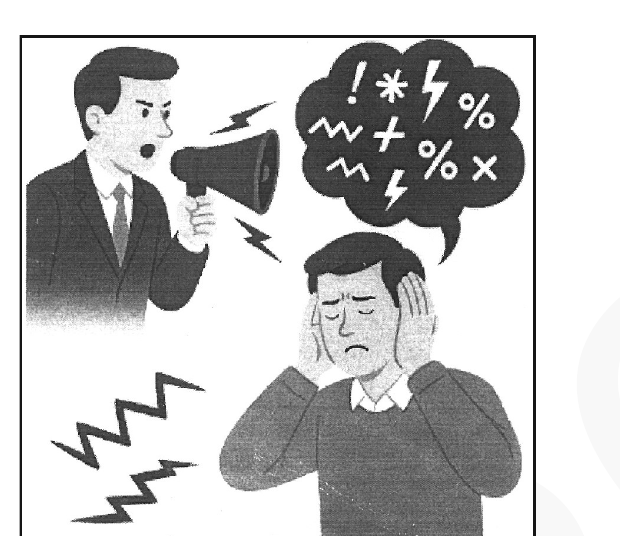
(For Visually Impaired Candidates: The element of communication process that converts the message into communication symbols is: (A) Feedback (B) Media (C) Decoding (D) Encoding)
Solution
Which of the following is NOT an organisational barrier to communication?
Solution
The question mark in the picture (a company car, house and medical facility given with salary) is a financial incentive: (A) pay and allowances (B) retirement benefits (C) productivity-linked wage incentives (D) perquisites. (Visually impaired: authority, responsibility, rewards, perquisites and prestige of a job indicate which non-financial incentive? (A) job enrichment (B) job security (C) status (D) organisational climate.)
Solution
Assertion (A): Motivation can be either positive or negative. Reason (R): Individuals are heterogeneous in their expectations, perceptions and reactions. (A) both true, R explains A (B) both true, R does not explain A (C) both false (D) A true, R false
Solution
Identify the incorrect statement about features of directing: (A) continuous process (B) flows from top to bottom (C) takes place at top level only (D) initiates action
Solution
Which statement is incorrect about Maslow's need hierarchy? (A) behaviour is based on needs (B) needs are in hierarchical order (C) only a satisfied need can motivate (D) a person moves to the next level only when the lower need is satisfied
Solution
Statement I: In democratic style, followers get a high degree of independence to formulate their own objectives and ways to achieve them. Statement II: In autocratic style, communication is one-way, subordinates acting only on commands. (A) I true, II false (B) I false, II true (C) both true (D) both false
Solution
Statement-I: Motivation is a complex process as individuals are heterogeneous in their expectations, perceptions and reactions. Statement-II: Motivation can be either positive or negative. Choose the correct option from the following:
Solution
Motivation is complex because people differ in their needs and reactions, and it can be positive (rewards, promotion) or negative (punishment, stopping increments). Both are true. Answer: (C)
Assertion (A): Directing facilitates introduction of needed changes in the organisation. Reason (R): Directing increases resistance to changes. (A) both true, R explains A (B) A true, R false (C) A false, R true (D) both true, R does not explain A
Solution
Atul, a sincere worker promoted to supervisor of his own team, knew he could not get the best work merely by formal authority; he understood the causes of people's behaviour and got even reluctant workers to work efficiently towards organisational objectives. The concept he used is: (A) leadership (B) financial incentives (C) motivation (D) non-financial incentives
Solution
Nimesh, Production Manager of H.L. Ltd, sought approval to buy copper at 60% discount from a vendor closing down in 15 days, but due to rigid rules and cumbersome procedures the sanction was delayed and the order could not be placed. The communication barrier is: (A) semantic (B) psychological (C) organisational (D) personal
Solution
The leadership style in which subordinates act according to the command given by the manager and communication is one way, is known as: (A) autocratic (B) democratic (C) free-rein (D) none of the above
Solution
'Homely Space', an interior design company, lacks facilities like frequent meetings, suggestion box, complaint box, social and cultural gatherings, hindering its objectives. The barrier is: (A) semantic (B) psychological (C) organisational (D) personal
Solution
'A poor telephone connection' is an example of which element of communication? (A) message (B) media (C) decoding (D) noise
Identify the incorrect statement about the importance of directing: (A) it initiates action (B) brings stability and balance (C) facilitates needed changes (D) establishes standards for controlling
Identify the financial incentive in the picture (a retired employee receiving pension and gratuity): (A) stock option (B) perquisites (C) productivity-linked wage incentive (D) retirement benefits. (Visually impaired: an incentive offered over and above wages/salary is: (A) productivity-linked wage incentive (B) bonus (C) profit sharing (D) stock option.)
For taking the company out of losses, Ravi Kumar took over as the Managing Director of the struggling 'Vova Watch Company' in January 2020. As soon as he joined, he tried to find out the reason for the company not doing well. He found that the employees were not involved in decision-making and they had to just follow orders, resulting in low morale of employees.
Recognising the need for change, Ravi Kumar started on a journey to bring back the enthusiasm and motivation of the employees. He initiated open dialogues and encouraged them to actively participate in decision-making. Together, they developed action plans to address the company's challenges regarding outdated designs and inefficient production processes etc.
As time passed, 'Vova Watch Company' transformed from a struggling enterprise to a profit making enterprise. Identify the leadership style of Ravi Kumar:
Akash Mehra, Marketing Manager of 'Kedanta Enterprises', gives orders and expects obedience; communication is one-way, subordinates acting only on his commands. His style: (A) authoritative (B) participative (C) free-rein (D) pragmatic
Choose the incorrect statement about the importance of directing: (A) it initiates action towards desired objectives (B) it integrates employees' efforts so every individual effort contributes to organisational performance (C) it facilitates introduction of needed changes (D) it helps in estimating manpower requirements
Lack of confidence of a superior in his subordinates is a: (A) personal barrier (B) psychological barrier (C) semantic barrier (D) organisational barrier
Identify the incorrect assumption of Maslow's theory: (A) behaviour is based on needs (B) a satisfied need can no longer motivate (C) needs are in hierarchical order (D) a person moves to a lower level of need only when a higher level need is satisfied
Statement I: Leadership indicates the ability of an individual to influence the behaviour of others. Statement II: Leadership is exercised to achieve the personal goals of the leader. (A) I true, II false (B) II true, I false (C) both true (D) both false
Which is not a feature of directing? (A) initiates action (B) takes place at every level (C) ensures activities are performed as per plans (D) flows from top to bottom
CEO Naman and Production Manager Vineet, childhood friends, chat over lunch; Naman communicated an order for 5,000 dinner sets to Vineet over the intercom, who executed it on time. The type of communication: (A) formal (B) informal (C) online (D) visual
Give the meaning of 'supervision' as an element of directing.
2 marks: very short answer
Give the meaning of 'Communication' as an element of directing.
Solution
3 marks: short answer
State any three measures to improve communication effectiveness.
Solution
State any three features of leadership.
Solution
Give meaning of 'Communication'. State first two elements in the process of communication.
Solution
First two elements: (1) Sender: the person who conveys his thoughts or ideas to the receiver. (2) Message: the content of ideas, feelings, suggestions, orders etc. intended to be communicated.
State any three 'Organisational barriers' to Communication.
Solution
Radhika's high-class facial kits failed to gain ground in parlours in Kagpur; her marketing manager found there was no proper exchange of facts, ideas and views between Vicky, the Kagpur in-charge, and the parlour employees, who therefore did not grasp the product's benefits and could not convince clients. (i) Identify the concept. (ii) State the first five elements of its process.
Solution
(ii) (1) Sender: the person who conveys his thoughts or ideas (Vicky). (2) Message: the content of ideas, feelings, suggestions or orders to be communicated. (3) Encoding: converting the message into communication symbols such as words, pictures, gestures. (4) Media: the path through which the encoded message is sent: written, face to face, phone, internet. (5) Decoding: converting the encoded symbols of the sender into meaning by the receiver. (Then receiver, feedback and noise.)
At 'Capro Ltd', technical head Shrinivas sat near the conference-room door during an important meeting; constant movement near the door distracted him and he missed important points. (a) Identify and state the element of communication that caused this. (b) State two other elements.
Solution
(b) (1) Sender: the person who conveys his thoughts or ideas. (2) Feedback: actions of the receiver showing that he has received and understood the message. (Also message, encoding, media, decoding, receiver.)
Explain any three psychological barriers to communication.
Solution
'Directing helps in effective and efficient functioning of the organisation.' Explain by giving any three points.
What is meant by non-monetary incentives? State any two non-monetary incentives.
State 'Job Enrichment' and 'Employee Participation' as non-financial incentives. How do they motivate employees?
Sandhya is a successful manager at Mansions Enterprises. She has a team of twelve people working under her. She encourages them to set their own objectives and take decisions. She respects their opinions and supports them, so that they can perform their duties and accomplish organisational objectives. To manage and exercise effective control she uses forces within the group. As an intelligent manager, at times, she also makes use of positive aspects of informal communication. This way, she is able to unify diverse interests and ensure that targets are met.
(a) There are many theories and styles of influencing people's behaviour. Identify the style used by Sandhya which is based on the use of authority.
(b) State two positive aspects of the communication discussed above, which Sandhya is using as an intelligent manager.
Explain briefly any three semantic barriers to communication.
Mr. Fernandes is the owner of Unibie Enterprises, carrying on the business of manufacturing electrical appliances. There is a lot of discontentment in the organisation and targets are not being met. He asked his son, Michel, who has recently completed his MBA, to find out the reason. Michel found that all decision making of the enterprise were in the hands of his father. Moreover, his father did not have confidence in the competency of the employees. Thus the employees were not happy.
(a) Identify any two communication barriers because of which 'Unibie Enterprise' was not able to achieve its target.
(b) State one more barrier each of the types identified in part (a) above.
4 marks: case-based / source-based
At 'GW Textiles', new factory manager Leena saw some sincere workers and others showing little interest and avoiding responsibility; she spent time weekly on the shop floor interacting with workers and made them act in the desired manner to achieve goals, creating a positive environment, better efficiency and revenues. (i) Identify the element of directing. (ii) State three features.
Solution
(ii) (1) An internal feeling: urges, drives, desires and needs influence behaviour. (2) Produces goal-directed behaviour, improving performance. (3) Can be positive (pay rise, promotion, recognition) or negative (punishment, stopping increments). (4) A complex process, as individuals differ in expectations, perceptions and reactions.
State any four psychological barriers to communication.
Solution
Explain the non-financial incentives: (i) status (ii) organisational climate.
Solution
(ii) Organisational climate: characteristics (autonomy, reward orientation, consideration for employees, risk-taking) that describe and distinguish an organisation and influence behaviour.
State any four points of importance of 'Directing' function of Management.
Solution
Explain the following non-financial incentives which motivate employees for higher performance: (i) Employee participation (ii) Organisational climate
Solution
(ii) Organisational climate: the characteristics that describe an organisation and distinguish it from others; positive features such as individual autonomy, reward orientation, consideration for employees and risk-taking build a better climate that motivates employees.
Ganesh Jain is the Marketing Manager at 'KL Foods Ltd'. He has a team of four employees working under him-Kavya, Ritesh, Pooja and Madhav. Kavya and Ritesh are temporary employees while Pooja and Madhav's job is permanent. All four of them have been working hard and consistently met all targets. Ganesh Jain wanted to reward them for their good performance. He understood that in all human beings, there exists a hierarchy of needs. So, he identified the need level of each of the employees to provide motivation to them. Kavya and Ritesh were made permanent in the job with a good pension plan while Pooja and Madhav were given an autonomy status. (i) Identify and state the need of employees recognized by Ganesh Jain in the above case. (ii) State any two assumptions on which Maslow's Need Hierarchy Theory is based on.
Solution
(ii) (1) People's behaviour is based on their needs; satisfaction of needs influences behaviour. (2) Needs are in a hierarchical order from basic to higher needs. (Also: a satisfied need no longer motivates; a person moves to the next level only when the lower need is satisfied.)
State any four features of motivation.
Solution
Explain the non-financial incentives: (i) job enrichment (ii) employee participation.
Solution
(ii) Employee participation: involving employees in decisions on issues related to them, through joint management committees, work committees, etc.
Explain 'organisational climate' and 'employee recognition' as non-financial incentives.
Solution
Employee recognition: acknowledging and appreciating employees' work by congratulating them, giving awards or certificates, displaying their achievements; appreciated employees feel motivated to work at a higher level.
Explain any two psychological barriers to effective communication.
Solution
State any four features of motivation.
Solution
State any four points of importance of directing.
'Inaya Ltd' gives car allowance, medical aid and children's education allowance to staff above Manager level; contributes to EPF and pays gratuity on retirement; offers employees its shares at a price below market; and keeps aside funds for a bonus of one per cent of base salary. Explain four incentives.
State any four features of directing.
Explain the semantic barriers: (i) technical jargon (ii) body language and gesture decoding.
'Shanta Enterprises', flooded with solar-panel orders, made contract workers Arvind and Yogesh permanent, giving them stability about future income; R&D Head Ekta got the 'Best Employee of the Year Award'. (a) Identify and explain the incentives. (b) State the Maslow needs met.
At BPO 'Chromosome', which converts physicians' voice reports into text, some employees could not decode messages properly because they were not proficient in the language of the voice message, making mistakes that changed the meaning; they also did not understand technical words in the reports. Identify and explain the two barriers.
Nitya is a student of class XII of a well-known school. She has a preconceived notion that her teacher always finds fault in her work. One day while checking the project work of class XII, her teacher wanted to appreciate Nitya for her hard work and good performance, but before she could complete her sentence, Nitya left the room without listening to her teacher.
(a) Identify the 'barrier to communication' and also the type/category of barrier to which it is related.
(b) Explain two other communication barriers of the type/category identified in (a) above.
'Zeto Ltd.' offers its employees shares at a price which is less than the market price.
(a) Identify the incentive offered by the company and state the type of incentive discussed above.
(b) State two other incentives of the type of incentive identified in (a) above.
Ram Murthy, the CEO of 'Goodcare Hospitals', a leading chain of hospitals, decided to reward the good work of the doctors of his organisation. For this he instituted two running trophies. A 'Healthcare Achievers Trophy' to acknowledge and appreciate the tireless efforts of the doctors who rendered selfless services to the patients and another 'Beti Bachao Trophy' to recognise the outstanding work done by the doctors in saving the girl child.
The CEO also wanted to improve the health services in rural areas all over the country. He decided that all doctors must work in rural areas for at least six months. He also decided that the paramedical staff should be employed locally.
(a) Identify the incentive provided by 'Goodcare Hospitals' to its doctors through running trophies.
(b) Which need of the doctors will be satisfied through the incentive identified in part (a)? State.
(c) State any two values that the CEO of 'Goodcare Hospitals' is trying to communicate to the society.
Avdhesh is the Managing Director of Delta Ltd. The company had established a good name for itself and had been doing well. It was known for timely completion of orders. The Production Manager, Ms. Priyanka was efficiently handling the processing of orders and had a team of ten motivated employees working under her. Everything was going on well. Unfortunately, Priyanka met with an accident. Avdhesh knew that in the absence of Priyanka, the company may not be able to meet the deadlines. He also knew that not meeting the deadlines may lead to customer dissatisfaction with the risk of loss of business and goodwill. So, he had a meeting with his employees in which accurate and speedy processing of orders was planned. Everybody agreed to work as a team because the behaviour of Avdhesh was positive towards the employees of the organisation. Everyone put in extra time and efforts and the targets were met on time. Not only this, Avdhesh visited Priyanka and advised her to take adequate rest.
(a) Identify the leadership style of Avdhesh and draw a diagram depicting the style.
(b) Also, identify any two values highlighted by the behaviour of Avdhesh.
'A.S. Environs Ltd.' is dealing in Environment-Consultancy. To get the business, the team leader and his team used to travel to different states to give presentation to their clients. As per the policy of the company, the team leader used to travel by air whereas his team travelled by road/train. It was not only time consuming but also at times forced the female team members to travel alone.
As a result, the subordinates were not acting in a desired manner to achieve organisational goals. The CEO of the company came to know about it. He called the team leader, discussed the matter with him and decided to change the travel policy of the company. It was decided that in future all the members including the leader would travel together and usefully utilise the travelling time in discussion about the presentation to be given to the clients. This made a positive impact and every member of the team started acting in a manner as desired by the team leader.
State the features of the element of the function of management used by the CEO.
5 marks: long answer
Prateek is working in a multi-national company in Noida. He was running temperature for the last many days. When his blood was tested, he was found positive for malaria. He was admitted in the hospital and a blood transfusion was advised by the doctors as his condition was very serious. One of his colleagues sent a text message to his superior 'Mr. B. Chatterjee'. Mr. B. Chatterjee, immediately sent a text message to the employees of the organisation requesting them to donate blood for Prateek. When the General Manager came to know about it he ordered for fumigation in the company premises and for cleaning the surroundings.
(a) From the above para quote lines that indicate formal and informal communication.
(b) State any two features of informal communication.
(c) Identify any two values that are being communicated to the society in the above case.
Solution
Informal communication: "One of his colleagues sent a text message to his superior 'Mr. B. Chatterjee'" or "Mr. B. Chatterjee, immediately sent a text message to the employees of the organisation requesting them to donate blood for Prateek."
(b) Any two: (1) it takes place without following the formal lines of communication; (2) it arises out of the social needs of employees; (3) it spreads rapidly and may get distorted; (4) it is difficult to detect its source.
(c) Any two: (1) concern for health and hygiene (fumigation, cleanliness); (2) blood donation / helping colleagues in need; (3) concern for employees' welfare.
6 marks: long answer
Explain the following non - financial incentives: (i) Status (ii) Organisational climate (iii) Job security
Solution
(ii) Organisational climate: characteristics that describe and distinguish an organisation; autonomy, reward orientation, consideration for employees and risk-taking build a better climate.
(iii) Job security: stability of future income and work, so employees work with greater zeal; especially important where jobs are few and aspirants many.
Explain any four semantic barriers to communication.
Solution
Explain any four points of importance of directing.
Solution
'Alpha Electronics', a highly centralised organisation where free communication was not encouraged, faced a malfunctioning production line during a big order. Production Manager Suresh, known to be unapproachable and conscious of his seniority, rarely let subordinates speak freely. Senior technician Manoj, whose negligence caused the damage, feared that telling Suresh would hurt his interests. Suresh stayed pre-occupied with a file while Manoj explained, so Manoj held back information and the problem was not fixed on time. Identify and explain four communication barriers.
Solution
(2) Status (organisational barrier): a superior's status creates psychological distance; a status-conscious manager may not let subordinates express feelings freely.
(3) Lack of attention (psychological barrier): the pre-occupied mind of the receiver and resulting non-listening.
(4) Unwillingness to communicate (personal barrier): subordinates may not communicate with superiors if they think it may adversely affect their interests.
Explain any four psychological barriers of communication.
Solution
(2) Lack of attention: the receiver's pre-occupied mind and non-listening; it disappoints the sender.
(3) Loss by transmission and poor retention: successive transmissions through levels lose or distort information; inattentive or uninterested people cannot retain it long.
(4) Distrust: parties who do not believe each other cannot understand each other's message in its original sense.
Explain the non-financial incentives: (i) status (ii) organisational climate (iii) job enrichment (iv) employee participation.
Solution
(ii) Organisational climate: characteristics that describe an organisation and distinguish it from others; individual autonomy, reward orientation, consideration for employees and risk-taking develop a better climate.
(iii) Job enrichment: designing jobs with greater variety of work content, higher knowledge and skill, more autonomy and responsibility, and opportunity for growth; the interesting job itself motivates.
(iv) Employee participation: involving employees in decisions on issues related to them, e.g. joint management committees, work committees.
Ankita, MD of 'Tech Smart', cannot retain employees despite good salaries and stable income. Her friend Prachi, an HR MBA, said money does not satisfy all needs; psychological, social and emotional factors matter. Explain any four such incentives.
Solution
Identify and explain the barrier and its broad category: (i) Project manager Ajit explains new AI software using terms like 'cloud computing' and 'machine learning' to non-specialist employees, who cannot understand. (ii) General Manager Kumar keeps glancing at a file, nodding, without eye contact, while Rajesh describes his workload, and says "Okay Rajesh, just try to manage". (iii) Technician Suresh's idea for reducing idle machine time is appreciated in a meeting, but manager Pankaj offers no award.
Explain any four features of the directing function.
Explain any four features of motivation.
Sara, an automobile engineer, wants her father's EV business to partner with the government for charging stations. "Sara shared her thoughts and ideas with her father." Her proposal "contained her ideas, feelings and suggestions which she intended to convey to the government". "She then converted her ideas, feelings and suggestions into words and pictures", using clear language, charts and graphs. She chose a path to transmit it: "Sara had a face-to-face meeting with the government". (a) Identify and explain the element of a management function. (b) Quoting lines, name four elements of this concept. (c) State three other elements not discussed.
Explain any four points of importance of 'Directing' function of management.
Pratap Singh is the Chief Executive Officer of Nissar Enterprises. It is an automobile parts manufacturing company. The enterprise has a functional structure, in which jobs of similar nature have been grouped together as Production, Finance, Marketing and Human Resource. Nissar Enterprises has its manufacturing unit at Manesar. The factory has been plagued with many problems for a long time which was in the knowledge of the Production Manager, Varun Sharma. The workers had internal differences. Time and again, there were misunderstandings between the management and the workers. Keeping the problems in mind, Varun Sharma appointed, Siyaram Singh who had 14 years of experience of working with the actual work force and passing on instructions of the middle management to the workers.
Siyaram Singh met Varun Sharma to understand what the management wanted? Thereafter he met the workers and conveyed the ideas of management to them. He also promised the workers to convey their problems to the management. In this way, he cleared the misunderstanding between the management and the workers.
He also sorted out internal differences and was able to unite the workers within a month of his joining. His work was acknowledged by management and he was given a certificate of good performance along with 10% increase in salary.
(i) Siyaram Singh performed some of the functions which are required to be performed at the position he is working at. State any five other functions Siyaram Singh is expected to perform.
(ii) Name the incentives provided to Siyaram Singh.
Get every solution for all chapters
- Every board question of every chapter, each fully solved the way the board gives marks
- 11 complete board papers, each followed by its solutions
- Weightage and most-asked topics for every chapter
- Instant PDF download, colour and black & white print copies
Revising the chapter first? Complete Business Studies Notes for Class 12 (NCERT 2026-27, CBSE Board 2027) →
What you get in the pack
- Questions from 114 CBSE Business Studies papers, 2016 to 2026: every set code available (2020 is not on the CBSE website)
- Complete: 1843 different questions and parts from all set codes, 11 chapters and 11 full papers
- Part A: all 11 chapters, questions sorted chapter-wise and by marks
- Year-wise weightage table and most-asked topics for every chapter
- Part B: each full board paper followed by its complete solutions
- Case studies answered with the concept, quoted lines and explanation
- Consumer law answers state the law now in force
All chapters in this pack
- PYQ Ch 1 Nature and Significance of Management
- PYQ Ch 2 Principles of Management
- PYQ Ch 3 Business Environment
- PYQ Ch 4 Planning
- PYQ Ch 5 Organising
- PYQ Ch 6 Staffing
- PYQ Ch 7 Directing
- PYQ Ch 8 Controlling
- PYQ Ch 9 Financial Management and Financial Markets
- PYQ Ch 10 Marketing Management
- PYQ Ch 11 Consumer Protection
- Board Paper 2026 Set 66-1-1 with Solutions
- Board Paper 2026 Set 66-1-2 with Solutions
- Board Paper 2026 Set 66-1-3 with Solutions
- Board Paper 2025 Set 66-1-1 with Solutions
- Board Paper 2024 Set 66-1-1 with Solutions
- Board Paper 2023 Set 66-1-1 with Solutions
- Board Paper 2022 Term 2 Set 66-1-1 with Solutions
- Board Paper 2019 Set 66-1-1 with Solutions
- Board Paper 2018 Set 66-1 with Solutions
- Board Paper 2017 Set 66-1 with Solutions
- Board Paper 2016 Set 66-1 with Solutions